
(via)
(via)
The most effective way I have found to turn negative corrections into active instructions is by referencing the dancer’s anatomy. For example, a common correction at the barre is “don’t roll (the foot) in.” However, the action of simply pulling the arch of the foot off of the floor may have an unintended consequence of shifting the weight too far into the outer edge of the foot.
What I am really asking the dancer to do is keep all five toes on the ground, thereby centering the weight in the foot. When I change the wording of this correction from “don’t roll in” to “(do) keep all five toes on the floor,” I notice that more students seem to understand, and are able to apply it to their dancing. Other common negative corrections that I have since re-written include:
- Don’t slouch -> (do) elongate your spine
- Don’t sit in your hips -> (do) distribute your pelvic girdle evenly into your femur heads
- Don’t stick your chest out -> (do) ‘close’ your rib cage
By changing from negative corrections to active instructions, I notice a greater understanding and retention among the students. Additionally, the dancers begin to cultivate a greater awareness of their body on a skeletal and muscular level.
(via)

A new online resource to support the teaching of dance in schools has been launched by award-winning company Balletboyz.
Launching today, the resource consists of a series of lessons for different key stages. Within each, a lesson plan ties together specialist videos, inspired by BalletBoyz’ use of digital content in its artistic work.
Featured videos include the deconstruction and teaching of choreography, as well as some taken from the BalletBoyz archive.
(via)
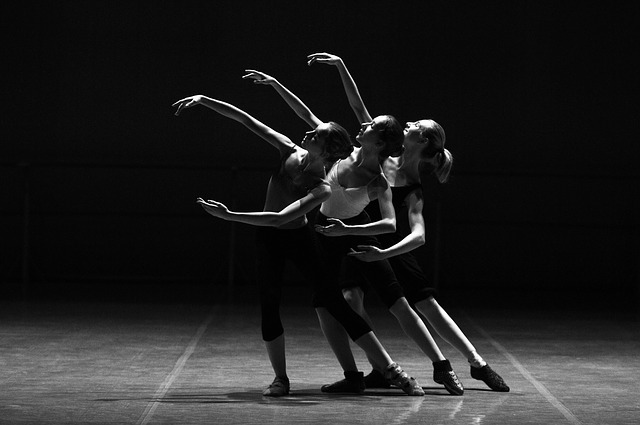
The Choreographing Brain
Brain dominance begins early – 22 days after conception the spinal cord and brain appear. Week 4 the eyes, nose, ear and mouth form. Week 28 thalamic brain connections form to mediate sensory input. The brain is a three pound winked mutable (changeable) mound influenced by lived moving experience, bodily feelings, perceptions, culture, society, and the environment.
The brain is comprised of about 100 billion electrically active neurons (cells), each connected to tens of thousands of its neighbors at perhaps 100 trillion synapses (the spaces between neurons where information transfers can occur). These atoms of thought relay information through voltage spikes that convert into chemical signals to bridge the gap to other neurons.
Many parts of the brain make a dance
More than 400 studies related to interdisciplinary neuroscience reveal the hidden value of dance. For instance, we acquire knowledge and develop cognitively because dance bulks up the brain. Consequently, the brain that “dances” is changed by it. As neuroscientist Antonio Damasio points out, “learning and creating memory are simply the process of chiseling, modeling, shaping, doing, and redoing our individual brain wiring diagrams.”
Dance is a language of physical exercise that sparks new brain cells (neurogenesis) and their connections. We thought that humans had limited brain cells that decreased with age. But now, beginning my eighth decade, I’m still dancing—now flamenco, belly dance, jazz, and salsa!
The neuron connections are responsible for acquiring knowledge and thinking. Dancing stimulates the release of the brain-derived protein neurotropic factor that promotes the growth, maintenance, and plasticity of neurons necessary for learning and memory. Plus, dancing makes some neurons nimble so that they readily wire into the neural network. Neural plasticity is the brain’s remarkable ability to change throughout life.
(via)

