
Their art form already feels distant to some audiences. Do choreographers just make things worse by coming up with obscure names for their shows?
CHOREOGRAPHER
[News] English National Ballet Presents World Premiere Of New Work By William Forsythe

From 12 – 21 April 2018, English National Ballet will present the world premiere of a new work by one of the most revered choreographers working today, William Forsythe, his first creation for a UK ballet company in over 20 years.
“For a while now I have wanted to dedicate a programme to the abstract, neoclassical style of ballet that is born out of America” – says Tamara Rojo. “It gives me great pleasure to now be doing so with a new work created especially for us by the genius that is William Forsythe.”
(via)
The Life of a Young Choreographer
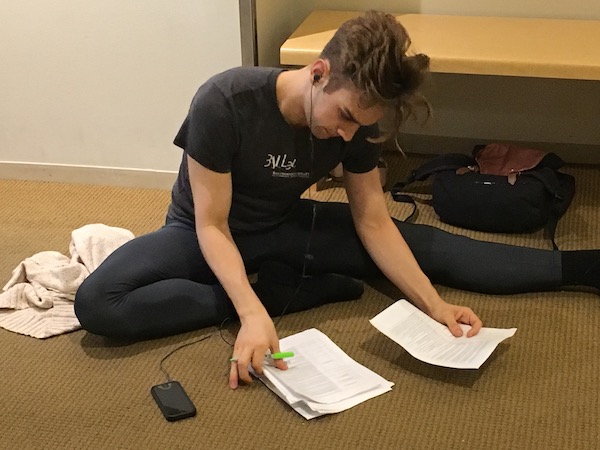
Myles Thatcher the young choreographer who in 2014 won a mentorship under Alexei Ratmansky (through the Rolex Mentor & Protégé Arts Initiative), continues to make waves at San Francisco Ballet.
“I like to make sure my hips and feet are warm so I can jump back into rehearsal after giving notes to dancers.”
“The movement [for Ghost in the Machine] is all set, so today we’re talking about the emotional intention behind a few of the moments in the ballet. Choreography is a continuous process, and I even changed some of the first movement the day of opening night.”
(via)
What Does a Ballet Mistress Do?
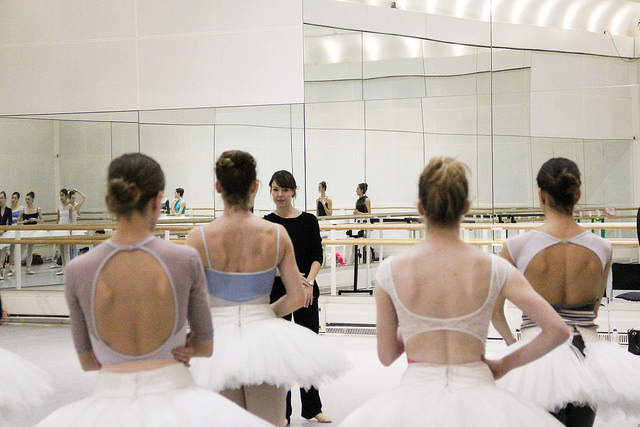
What does a typical day entail for a ballet mistress?
I’ll be in studio for six hours a day – usually until 6pm or 5.30pm if there’s a performance. I’ll then check-in with the dancers 30 minutes before curtain up before taking my seat in the auditorium to watch the performance. The dancers like to be told corrections and ways they can improve their performance, so I’ll give a few notes after each show to ensure that their dancing stays at a high standard.
How do you teach choreography?
Choreography is written down using Benesh Notation but I prefer to use my own notes and drawings to help me teach it.
A new dancer will have to learn a lot of ballet in their first few years. I usually start new dancers off with a big corps de ballet number. Often students of The Royal Ballet Upper School will join, so they can slowly pick up the patterns and counts in the choreography.
In rehearsals with the rest of the Company, I focus on the fine details like eye-line and arm height. Keeping straight lines and order is an essential part of a strong corps de ballet. I then have to push the dancers to increase their stamina so they can handle the run of performances on stage.
(via)
3 Lessons From Choreographer Liam Scarlett
1. Create Safety to Experiment
Scarlett says that a rehearsal should be a place to make mistakes, not be afraid of looking silly, and that when laughter arises in the process, the artists are “laughing with each other, not at one another.”
2. Filter Movement Through Emotion
Though Scarlett’s Vespertine is abstract, it’s all about feelings, specifically those reflecting the definition of “vespertine”– an “active, flowering, or flourishing in the evening.” (Merriam-Webster Dictionary)
Scarlett believes that, in dance, a glance can be more powerful than a virtuosic display like 32 fouettés.
3. Remember That Choreography Lives Through Performers
As a choreographer, Scarlett admits that he is sad when the creation process is over. Yet, he points out that finishing a dance work is “not like finishing a painting.” Choreography goes on living. Performers bring it to life again and again. He says, “It’s different every night, different for every interpreter.”
(via)
Think Dance Isn’t For You? No Wonder With Titles Like These
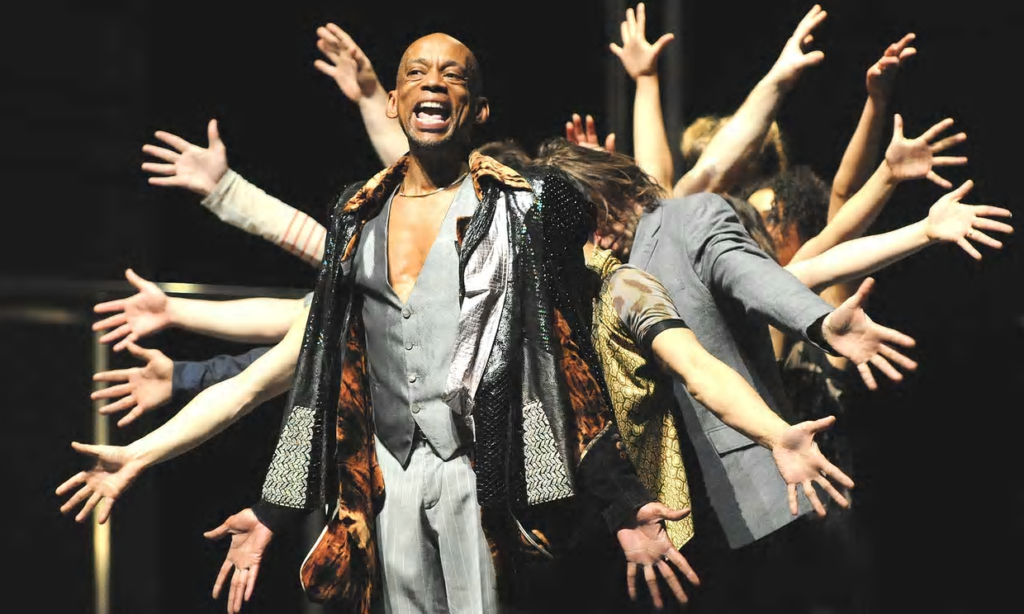
Why does it matter? It’s the choreographer’s prerogative, of course, but in an art form that already feels distant and unreadable to some audiences, being wilfully abstruse in your labelling doesn’t exactly help. As Lyn Gardner noted recently, it can feel as though artists are attempting to prove their cleverness and exclusivity when jargon actually functions as a barrier rather than an invitation.
(via)