5 Reasons Why You Should Thank Your Villains

1. Villains make us face what we dislike about ourselves.
Just for fun, think of three people you strongly dislike in your life. What is the main attribute you don’t like about them? More than likely, these main attributes are traits that you don’t want to admit you are capable of having, or are traits you know you have.
2. Villains give us our strength.
Friends, guides, and allies support you along your journey. That support is helpful, but it is opposition that tests your strength of character.
3. Villains show us our weaknesses.
Those that love us judge us on the qualities they find good; we love them because they seek out our good qualities. Villains, however, loathe your good qualities. The only thing the villains in your life enjoy about you are your weaknesses.
4. Villains make us question our beliefs.
A good villain has strong motivation for what they are doing. There is logic behind all the actions they take. Many stories have what I call the Villain’s Appeal. This is when the villain tries to convince the protagonist that the way the villain views the world is the right way.
5. Villains remind us of what we could become.
The choices we make define us. These choices shape our realities and make us who we are.
(via)
Destiny Takes You On The Right Path

10 Ways To Stop Stage Fright
- Prepare, prepare and then prepare some more. Prepare until you know your role backwards, sideways and standing on your head then keep preparing until you are sick of it. I’ll always remember preparing for a show at college and I told the tutor I was sick of looking at the script as it was coming up to show time. She said “Good, that means we’re getting somewhere. Go to scene 8…” If you are not thoroughly prepared, your brain monkeys are much more likely to come into play, telling you it could all go wrong and setting off the fight or flight response.
- Avoid caffeine, nicotine and any other stimulating substances.
- Relax. Arrive in plenty of time for your performance to give you time to do some stretching, deep breathing and visualization exercises. This will trigger the same part of the brain that releases the hormones to kick off the protective mechanisms, to now release hormones that trigger relaxation.
- Don’t entertain any negative thoughts that come into your head… They are not serving you. Focus on the positives and what could go RIGHT.
- Focus on your performance, not your audience.
- Take enough time before the scene to focus and get into your flow. If you are fully immersed in your scene, you won’t be thinking about the audience.
- Accept that nerves will never completely go away, nor should they. They energize your performance and make it come to life when you don’t let them control you.
- If a mistake happens, it’s not the end of the world. Recover and move on… Do not allow yourself to dwell on it.
- Hypnosis is a great way to combat stage fright!
- Practice improvisation until you are confident that you’d be able to recover seamlessly from any mistakes without the audience even suspecting a thing!
(via)
3 Life Lessons My Students Learn In Dance Class
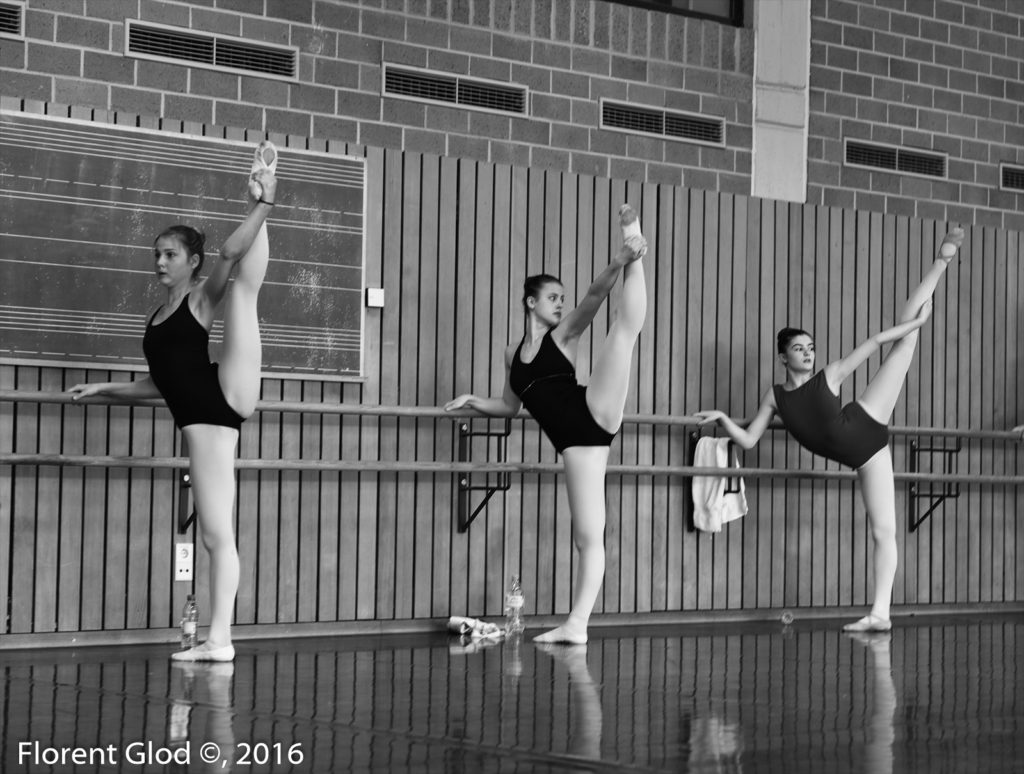
Shate’L. Edwards is a professional choreographer and dance educator in Dallas, TX. She gives us 3 life lessons her students learn in dance class.
1. Embrancing risks
One of the main concepts I reinforce is the importance of taking risks and pushing yourself to grow. I teach tons of hip-hop classes, and while the idea of dancing to your favorite songs in class sounds fun, you’d be surprised how fear takes over once they realize they’re actually learning stylized movement and are charged with the ever-so-dreaded task of freestyling.
2. The importance of progress over perfection
It’s in those moments, I must remind them that they didn’t all start at the same place, and therefore shouldn’t be expected to perform at the same levels. I talk a lot about not comparing yourself to others and about learning to be comfortable where you are. And wouldn’t you know, even with all of my experience and credits, I’m still learning to take my own advice in that area.
3. Not fearing failure
Finally, at least within the confines of this article, I emphasize to students that there is life after their mistakes. I notice that fear of failure causes students to either quit once they’ve made a mistake, or decide not to try at all. I’m sure you’ve seen it too. When it’s time to perform the combination in groups, there are always a few who completely freeze after a mistake or those who conveniently need to excuse themselves to the restroom.
Photograph by Florent Gold
(via)
5 Starting Points For Songwriters

Inspiration may be impossible to define or control or predict, but that doesn’t mean that we have to just sit around idly waiting for it. There are many ways in which we can make ourselves more receptive to inspiration and quicker to recognize it when it comes.
1. Babble.
If you ever write music before words, chances are you sing nonsense phrases or just raw sounds that fit the melody and rhythm. Usually you need to get rid of these placeholders and write “real” words (we’re all glad that Paul McCartney came up with “yesterday” to replace his original words, “scrambled eggs”), but pay attention to your spontaneous utterances. Sometimes they’ll point you in an interesting direction, and besides, these words or sounds are beautifully matched with the music—that’s why you sang them in the first place. Run your recorder and just let the sounds flow without editing or filtering. You can look back later for usable ideas or just toss out the whole thing.
2. Make mistakes.
Many guitar-playing songwriters have gotten hooked on using alternate tunings because a new tuning undercuts what they know how to play and creates an environment for weird and interesting accidents. That’s just one example of how mistakes can generate great ideas and why they are worth cultivating.
3. Collect titles.
Many songwriters keep lists of potential song titles. Woody Guthrie was an avid collector. His manuscript “How to Make Up a Ballad-song” (in the Woody Guthrie Archives) describes how he spent hours thinking of song titles and had thousands of them “laid away like postal savings bonds.” John Fogerty has kept a title book for his whole career, and told me about its auspicious beginnings.
4. Arrange and rearrange.
If the silence is deafening and you’re tired of staring at a blank page, try working with existing material. Write lyrics to a favorite melody, or set some lyrics or poetry to a new melody. Or simply take a favorite song and change it a little; that’s how Alynda Lee Segarra of Hurray for the Riff Raff, like many other songwriters, got started.
5. Use a template.
Another way to write without starting from scratch is to take the structure of an existing song and fill it in with your own words and music. In terms of lyrics, for instance, the song can provide you with a template for the number of lines in each section, the number of syllables in each line, and where the rhymes fall.
Photograph by ultomatt
(via)