SONG
Types of Spotify playlists that can feature your song

Curated Spotify playlists
So how do you get the attention of the Spotify editorial team? Well, the old “who-you-know” methods still apply: connected publicists, managers, labels, distributors, digital promotion experts, etc. — people in the industry that have the ear of a Spotify playlist curator or two.
But there’s another way, one that doesn’t require you to have connections or a big promotion budget: start DIY, get your songs onto lots of smaller playlists, and begin teaching Spotify’s algorithm to be on the lookout for more song activity from you.
The more activity your songs get, and in particular, the more your songs are added to playlists, the more likely it becomes that Spotify’s editorial team will take notice.
Branded playlists
These are Spotify playlists managed by third parties, such as Pitchfork, or major-label playlists such as Topsify.
Your own playlists
Just what they sound like: you create them, you promote them, and (assuming you’re verified) you feature them on your artist discography page!
(via)
The 9-Minute Songwriter Workout
These three songwriting exercises are designed to get you into the flow of writing without thinking.
1.Write down every song title that comes to mind without censoring yourself.
Work fast. Spit out titles. No judgement. Go wherever your thoughts take you. Note: These are your own original titles, not pre-existing song titles!
2.Choose one of your titles to play word association.
Write down every word or phrase that relates to your title. Don’t think! Just work as quickly as possible. This will free up your subconscious.
3.Choose a word in your title and play poor man’s rhyming dictionary.
Write down as many rhymes as you can.
(via)
5 Starting Points For Songwriters

Inspiration may be impossible to define or control or predict, but that doesn’t mean that we have to just sit around idly waiting for it. There are many ways in which we can make ourselves more receptive to inspiration and quicker to recognize it when it comes.
1. Babble.
If you ever write music before words, chances are you sing nonsense phrases or just raw sounds that fit the melody and rhythm. Usually you need to get rid of these placeholders and write “real” words (we’re all glad that Paul McCartney came up with “yesterday” to replace his original words, “scrambled eggs”), but pay attention to your spontaneous utterances. Sometimes they’ll point you in an interesting direction, and besides, these words or sounds are beautifully matched with the music—that’s why you sang them in the first place. Run your recorder and just let the sounds flow without editing or filtering. You can look back later for usable ideas or just toss out the whole thing.
2. Make mistakes.
Many guitar-playing songwriters have gotten hooked on using alternate tunings because a new tuning undercuts what they know how to play and creates an environment for weird and interesting accidents. That’s just one example of how mistakes can generate great ideas and why they are worth cultivating.
3. Collect titles.
Many songwriters keep lists of potential song titles. Woody Guthrie was an avid collector. His manuscript “How to Make Up a Ballad-song” (in the Woody Guthrie Archives) describes how he spent hours thinking of song titles and had thousands of them “laid away like postal savings bonds.” John Fogerty has kept a title book for his whole career, and told me about its auspicious beginnings.
4. Arrange and rearrange.
If the silence is deafening and you’re tired of staring at a blank page, try working with existing material. Write lyrics to a favorite melody, or set some lyrics or poetry to a new melody. Or simply take a favorite song and change it a little; that’s how Alynda Lee Segarra of Hurray for the Riff Raff, like many other songwriters, got started.
5. Use a template.
Another way to write without starting from scratch is to take the structure of an existing song and fill it in with your own words and music. In terms of lyrics, for instance, the song can provide you with a template for the number of lines in each section, the number of syllables in each line, and where the rhymes fall.
Photograph by ultomatt
(via)
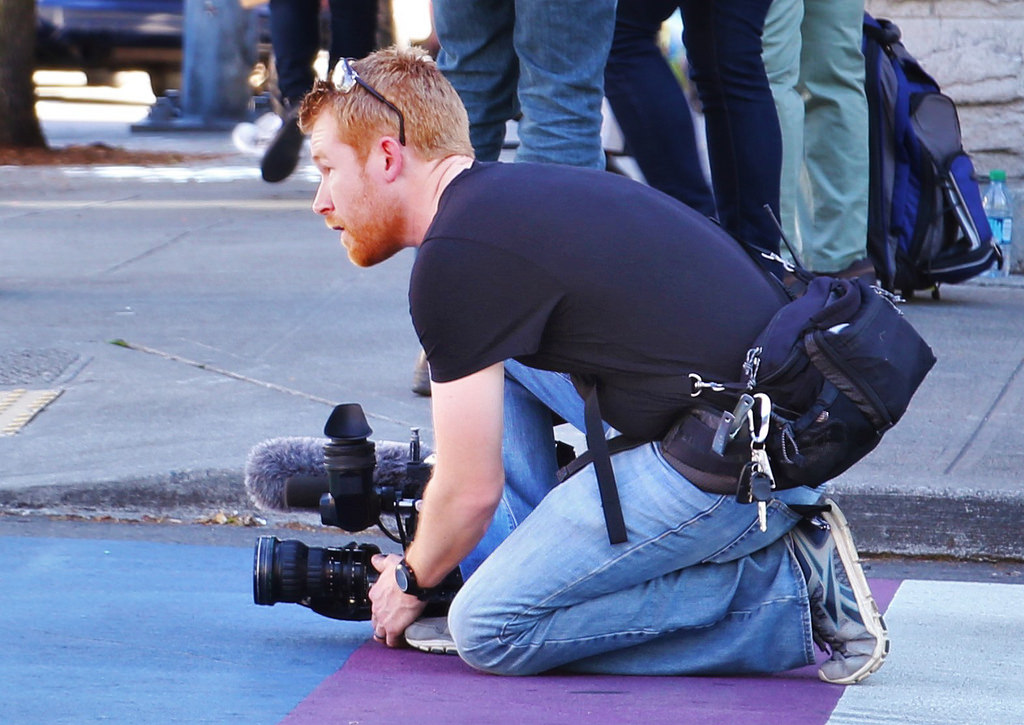
Behind the Scenes on the Making of a Music Video
The Initial Mistake (Almost) Every Jazz Musician Makes

A jazz musician needs to know, by heart, as many standards as possible (hundreds). It doesn’t matter where you live in the world, most jazzers don’t rehearse and don’t decide on a set list in advance.
If you don’t know some of the tunes being called, then it doesn’t matter how great you play, you won’t get called back. You won’t believe how many times I’ve met musicians that consider themselves jazz musicians that can barely play ten songs without the realbook.
Photograph by Josep Tomás.
(via)
Do Your Music Videos Pass This 10-Point Test?
Ask yourself the following questions. According to the Creator Academy, you don’t need to answer “yes” to every single one in order to make a quality video. But the more times you hear yourself saying “yes,” the more confident you should feel that you’re onto something good.
1. Shareability — Is the video relatable, topical, or remarkable? Does it help someone solve a problem? Will the viewer feel cool or knowledgeable when they share the video with friends?
2. Conversation — Does this video help me communicate with my fans, either directly IN the video, or as a conversation starter for other interactions (in the comments section on YouTube or elsewhere)? Will I appear comfortable and authentic?
3. Interactivity — Does the video involve the audience in some way? Does it ask a question of them, showcase their participation, or encourage them to contribute to future videos?
4. Consistency — Is there an element in this video that occurs throughout all my videos? A familiar face, setting, technique, or theme? Is the video “packaged” in a way that seems consistent with my other videos? Am I posting on a schedule?
5. Targeting — Do I know who this video is FOR? Who is my audience, and is this video going to entertain or inform that audience? Will that audience be interested in only THIS video, or will they enjoy my other videos too?
6. Sustainability — Do I have what it takes to keep doing this?
7. Discoverability — Will my video show up in YouTube search results and be recommended as a related video? Am I using smart keywords and titles?
8. Accessibility — Can a new viewer watch this video and appreciate it without having seen any of your previous videos? In other words, can this video stand alone?
9. Collaboration — Is there an opportunity to work with another artist with a loyal following on YouTube? Can I feature them in such a way so they’re proud of the results, and will want to share this video with their audience?
10. Inspiration — Do I really want to make this video?
Photograph by Sea Turtle.
(via)