• Skip to primary navigation
  • Skip to content

RESPIRO E MOVIMENTO®

DISCOVER YOUR REAL POTENTIAL

  • Book a session
  • Events
  • Testimonials
  • Blog
  • Gallery
  • Media
  • Contact

The Brain As Choreographer, Dancer And Spectator

July 11, 2016 By Respiro E Movimento · Follow us: Facebook · Twitter · Instagram · YouTube

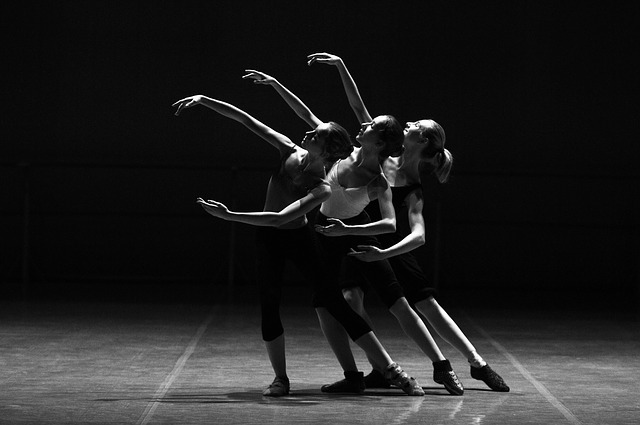
brain ballet

The Choreographing Brain

Brain dominance begins early – 22 days after conception the spinal cord and brain appear. Week 4 the eyes, nose, ear and mouth form. Week 28 thalamic brain connections form to mediate sensory input. The brain is a three pound winked mutable (changeable) mound influenced by lived moving experience, bodily feelings, perceptions, culture, society, and the environment.

The brain is comprised of about 100 billion electrically active neurons (cells), each connected to tens of thousands of its neighbors at perhaps 100 trillion synapses (the spaces between neurons where information transfers can occur). These atoms of thought relay information through voltage spikes that convert into chemical signals to bridge the gap to other neurons.

Many parts of the brain make a dance

More than 400 studies related to interdisciplinary neuroscience reveal the hidden value of dance. For instance, we acquire knowledge and develop cognitively because dance bulks up the brain. Consequently, the brain that “dances” is changed by it. As neuroscientist Antonio Damasio points out, “learning and creating memory are simply the process of chiseling, modeling, shaping, doing, and redoing our individual brain wiring diagrams.”

Dance is a language of physical exercise that sparks new brain cells (neurogenesis) and their connections. We thought that humans had limited brain cells that decreased with age. But now, beginning my eighth decade, I’m still dancing—now flamenco, belly dance, jazz, and salsa!

The neuron connections are responsible for acquiring knowledge and thinking. Dancing stimulates the release of the brain-derived protein neurotropic factor that promotes the growth, maintenance, and plasticity of neurons necessary for learning and memory. Plus, dancing makes some neurons nimble so that they readily wire into the neural network. Neural plasticity is the brain’s remarkable abil­ity to change through­out life.

(via)

Filed Under: BALLET, BALLET DANCERS, BRAIN, CHOREOGRAPHER, CHOREOGRAPHY, DANCE, DANCERS

Acting Advice From Robert De Niro

July 8, 2016 By Respiro E Movimento · Follow us: Facebook · Twitter · Instagram · YouTube

Filed Under: ACTING, ACTORS, ROBERT DE NIRO, VIDEO

Marcel Dzama’s Costumes for the New York City Ballet

July 8, 2016 By Respiro E Movimento · Follow us: Facebook · Twitter · Instagram · YouTube

Two O'Clock: Adam and Eve, dancers Rebecca Krohn and Adrian Danchig-Waring. Photo by Erin Baiano
Two O’Clock: Adam and Eve, dancers Rebecca Krohn and Adrian Danchig-Waring. Photo by Erin Baiano


One O'Clock: The Cuckoo Bird, dancer Tiler Peck. Photo by Erin Baiano
One O’Clock: The Cuckoo Bird, dancer Tiler Peck. Photo by Erin Baiano


The Princess, dancer Sterling Hyltin. Photo by Erin Baiano

Filed Under: BALLET, BALLET DANCERS, COSTUMES, NYC BALLET, PHOTOGRAPHY

How to become an opera director

July 8, 2016 By Respiro E Movimento · Follow us: Facebook · Twitter · Instagram · YouTube

opera director

‘Before taking on this placement, I had plenty of experience of working in theatre – as both Assistant Director and Director – but none in opera’, says Ellie Taylor who has recently completed an observership.

‘I was lucky enough to be offered a placement with The Royal Opera’s Staff Directing department, and worked on the recent revival of Nabucco starring Plácido Domingo. As well as working on a production featuring one of the world’s greatest singers, I had the opportunity to shadow the Revival Director and work closely with other members of staff including the Movement Director. After an initial period of getting used to the opera world’s way of working, I had the opportunity to become more actively involved, which was fantastic’.

‘There’s a myth that you can only be a theatre or opera director, and that at some point you have to choose between the two. Obviously different art forms have different inherent conventions, but fundamentally you’re still telling a story, with the aim to create the best possible world for the tale to emerge from. As long as you embrace the rehearsal room, and are willing to be challenged, you’ll find your way from page to stage’.

(via)

Filed Under: OPERA, OPERA DIRECTOR

Melbourne Theatre Productions Show The Difference 40 Years of Feminism Make

July 7, 2016 By Respiro E Movimento · Follow us: Facebook · Twitter · Instagram · YouTube

melbourne

Melbourne Theatre Company’s production of Double Indemnity is both gorgeous to look at and a great romp. Tom Holloway’s adaptation of James M Cain’s noir novel is slick, director Sam Strong’s direction is fluid, and the design team has excelled themselves in the realisation of its smoky, 1940s California.

But MTC’s show is not so much a loving homage to a bygone era as it is a postcard from a rapidly fading view of the world. The bold costume design flatters the stereotypes it presents, but the image of “woman” that floats across the lightscapes of the stage are more a reminder of what male writers such as Cain used to think about women, rather than what women theatre-makers do.

Phyllis, for instance, is clung in silk: the femme fatale, she lures her male prey into a web of deceit and murder. The girlishness of her virginal stepdaughter Lola provides a direct contrast – but Phyllis is eventually unspun by the plain, hardworking Nettie: the maternal and unrewarded office assistant, dressed in dour beige, who twigs to the mechanics of Phyllis’s plan.

(via)

Filed Under: FEMINISM, THEATRE

Why You Should Share YouTube Playlist Links (and How)

July 7, 2016 By Respiro E Movimento · Follow us: Facebook · Twitter · Instagram · YouTube

Filed Under: MUSIC, VIDEO, YOUTUBE

Natalie Lynn Roy on the Power of Meditation and Visualization

July 7, 2016 By Respiro E Movimento · Follow us: Facebook · Twitter · Instagram · YouTube

Natalie-Lynn-Roy

Natalie Lynn Roy, co-founder of C.R.E.A.T.E., a workshop series designed to help artists break through their limiting beliefs.

Douglas Taurel: Do you wake up every morning and think of something specifically or is it on a general whole message trying to connect to?

Natalie Roy: Every person is different but the general rule of thumb for creating a Bhavana for yourself, so that it is successful is that you want to be positive, concrete and specific about what you want.

Douglas Taurel: Can you give an example?

Natalie Roy: Sure. For example, I’m going to visualize how great going to the gym will be today. “I woke up and I had so much energy out of nowhere. It’s like I never felt better. Everyone was super nice to me. I got a free towel, I had the most amazing workout. It was like my lungs kept expanding and growing.”

Douglas Taurel: This is before you even went to the gym?

Natalie Roy: That’s right. Before I even go to the gym. You talk and visualize how you want your workout to feel and go. You expect it to go the way you visualize it.

Douglas Taurel: It’s a leap of faith. You’re having faith that it’s going to happen.

Natalie Roy: That’s right. Interesting that it feels easy for us to expect negative outcomes but really hard for us to think of positive expectations and outcomes.

(via)

Filed Under: BREATH, INTERVIEW, MEDITATION, VISUALIZATION

  • « Previous Page
  • Page 1
  • …
  • Page 179
  • Page 180
  • Page 181
  • Page 182
  • Page 183
  • …
  • Page 210
  • Next Page »

Copyright © 2026 · Respiro e Movimento®· All rights reserved

  • Facebook
  • Twitter
  • Instagram
  • YouTube