• Skip to primary navigation
  • Skip to content

RESPIRO E MOVIMENTO®

DISCOVER YOUR REAL POTENTIAL

  • Book a session
  • Events
  • Testimonials
  • Blog
  • Gallery
  • Media
  • Contact

LEARNING

How To Make The Most Of Your Dance Classes

June 17, 2016 By Respiro E Movimento · Follow us: Facebook · Twitter · Instagram · YouTube

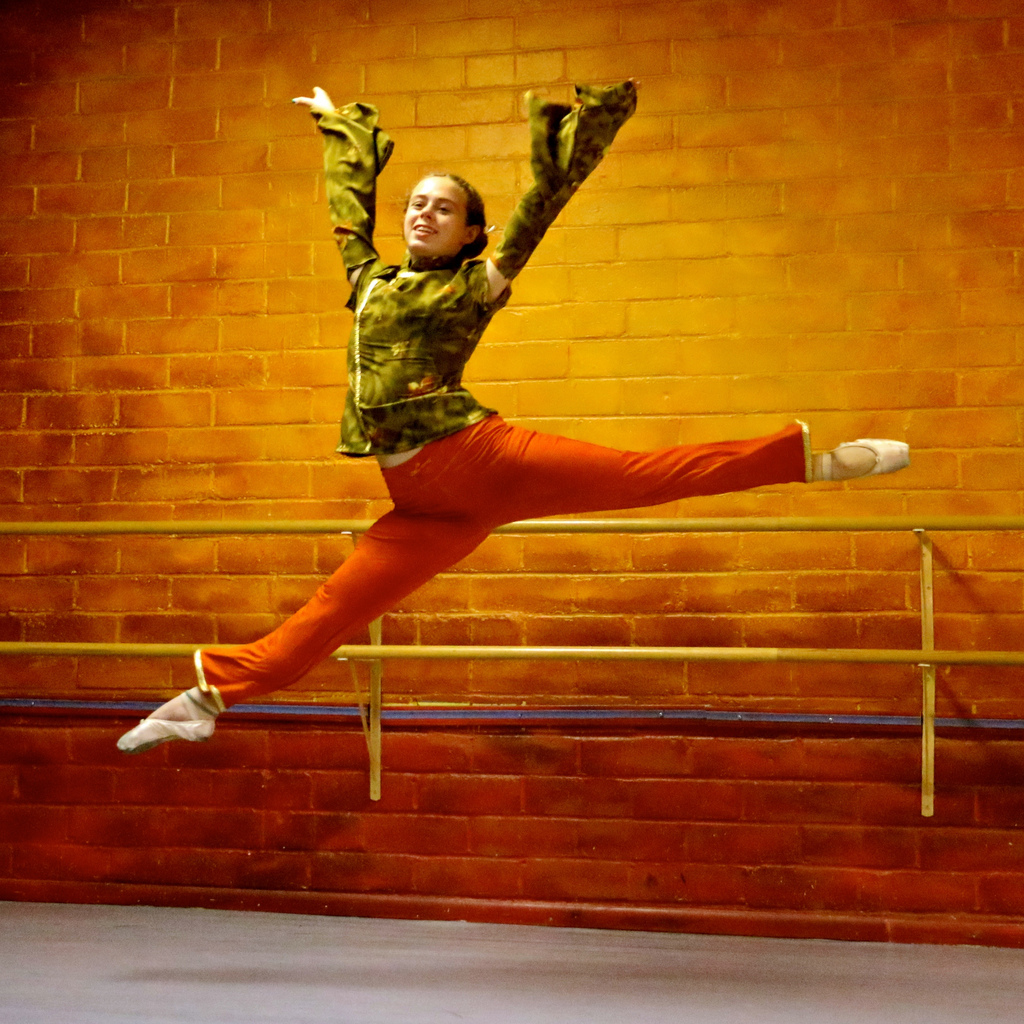
26802157210_cc816cfc3f_b

What are some ways to do that and take responsibility for learning in dance class?

  • Arrive early
  • Come prepared
  • Practice proper dance class etiquette
  • Stay focused
  • Take and apply corrections and direction
  • Ask and listen to questions and really absorb the answers
  • Take notes
  • Think ahead
  • Spend more time on the things that need work than the things that don’t
  • Be eager to revisit the basics
  • Listen to your body and keep it in top form with cross-training or conditioning
  • Develop professional relationships with your teachers and mentors
  • Find great teachers you can trust and then actually put your faith in their methods

Photograph by Chicbee04

(via)
Filed Under: BALLET, BALLET DANCERS, DANCE, DANCERS, LEARNING, MOVEMENT

Why Being Too Quick To Offer Feedback Can Degrade Learning

June 15, 2016 By Respiro E Movimento · Follow us: Facebook · Twitter · Instagram · YouTube

Feedback for optimal learning

76 college students were recruited for a study designed to explore how the timing of feedback might affect the learning process.

They were split into 3 groups, and asked to learn a relatively straightforward motor task1.

The goal of the motor task was to be able to execute the specific movement, and have it take exactly 1000 milliseconds. Sort of like telling someone that they have to conduct a bar of 3/8, and their movements have to take precisely 1 second from one downbeat to the next.

Everyone was given 90 practice trials to learn this new skill, and were given their time score after each attempt, so they could get a sense of how well they were doing.

But not everyone received their time score (i.e. feedback) about their performance at the same time.

One group – the instantaneous feedback group – was allowed to see their time score instantly, as soon as they completed the motor task.

Another group – the delayed feedback group – had to wait 8 seconds before being shown their time score.

The third group – the delay/estimation group – had to wait 8 seconds before getting their time score too. But in addition, they had to estimate what their time score was, and report their best guess 4 seconds after finishing each practice attempt.

Retention tests

During the practice phase, there were no significant differences in performance between the 3 groups. They all performed better as practice went on of course, but improved their performance at about the same rate.

However, we know from other research, that the rate at which our performance improves during practice is NOT a very good indication of how effectively we’re learning. As in, just because the level of our playing improves rapidly (or not) during today’s practice session, doesn’t mean that we’re going to be able to play at this level tomorrow or next week.

So the researchers did some “retention” tests, to see how well the participants would be able to perform this new skill after taking a break. They also took the timer away, so none of the participants received any feedback about their time score, or how they were doing.

10 minutes later…

The first set of retention trials was done 10 minutes after their initial training. Which is not a huge gap, but you know, sometimes we can get into a groove and feel good about a passage, but when we come back to it a few minutes later, it’s gone back to crap again, as if we hadn’t worked on it at all.

In any case, at the 10-minute retention test, there were no significant differences in performance between the three groups.

2 days later…

But then they had everyone come back to the lab 2 days later. And this is where the differences in learning between the groups began to reveal itself.

Those who received instantaneous feedback during practice performed the worst, with time scores that averaged 156.9 milliseconds off of the target time. Their performance also seemed to be a bit more erratic.

Those who received feedback after an 8 second delay, did better. Their average scores were 131.3milliseconds off of the target time (a 17.7% difference).

The participants in the delay/estimate group, who had an 8-second delay plus were asked to estimate their own performance after each trial, did the best. Their average time score was 90.8milliseconds off of the target time (a 53.4% difference).

Takeaways

I once had a tennis coach who made me call out “good” or “bad” after hitting each ball. Not in terms of whether the ball went in the court or not, but in terms of whether I made good contact. The idea being, for me to become increasingly less dependent on his feedback, and more in tune with my own sense of whether I was hitting the ball cleanly or not.

To me, the study suggests that we can sometimes give others too much feedback about their performance. Specifically, that providing immediate feedback all the time can stunt the development of one’s error-detection.

(via)

Filed Under: FEEDBACK, LEARNING

3 Life Lessons My Students Learn In Dance Class

June 6, 2016 By Respiro E Movimento · Follow us: Facebook · Twitter · Instagram · YouTube

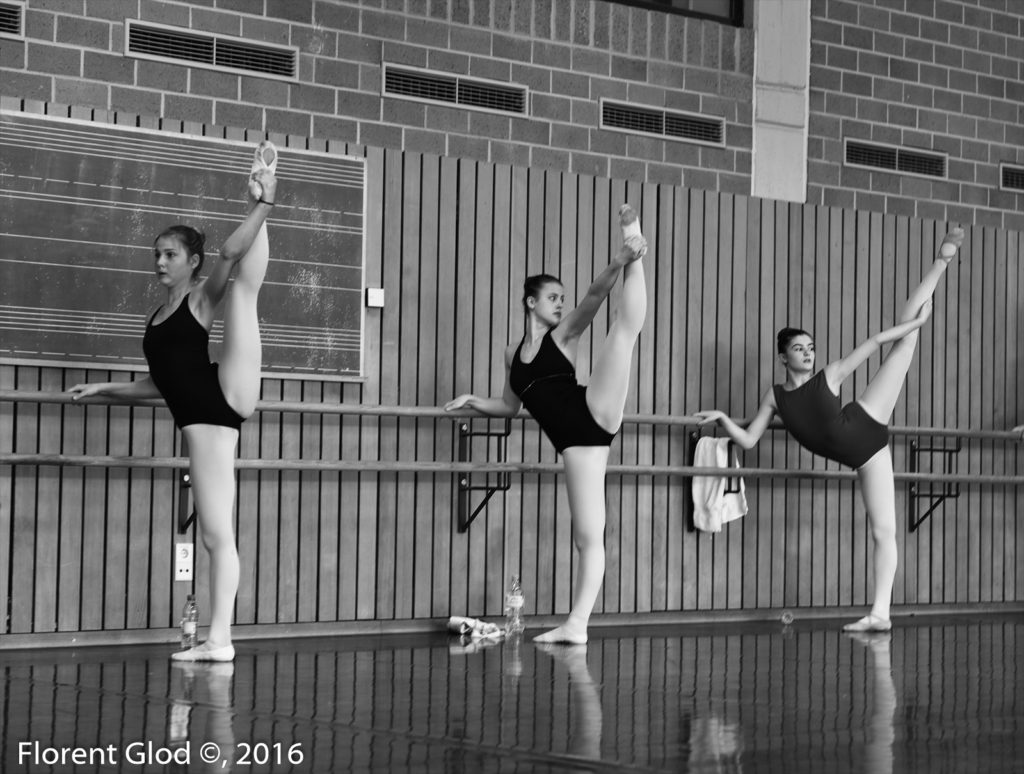
26720430413_445ca7f2ab_o

Shate’L. Edwards is a professional choreographer and dance educator in Dallas, TX. She gives us 3 life lessons her students learn in dance class.

1. Embrancing risks

One of the main concepts I reinforce is the importance of taking risks and pushing yourself to grow. I teach tons of hip-hop classes, and while the idea of dancing to your favorite songs in class sounds fun, you’d be surprised how fear takes over once they realize they’re actually learning stylized movement and are charged with the ever-so-dreaded task of freestyling.

2. The importance of progress over perfection

It’s in those moments, I must remind them that they didn’t all start at the same place, and therefore shouldn’t be expected to perform at the same levels. I talk a lot about not comparing yourself to others and about learning to be comfortable where you are. And wouldn’t you know, even with all of my experience and credits, I’m still learning to take my own advice in that area.

3. Not fearing failure

Finally, at least within the confines of this article, I emphasize to students that there is life after their mistakes. I notice that fear of failure causes students to either quit once they’ve made a mistake, or decide not to try at all. I’m sure you’ve seen it too. When it’s time to perform the combination in groups, there are always a few who completely freeze after a mistake or those who conveniently need to excuse themselves to the restroom.

Photograph by Florent Gold

(via)

Filed Under: BALLET, BALLET DANCERS, DANCE, DANCERS, LEARNING

Breathing Techniques For Singers

June 2, 2016 By Respiro E Movimento · Follow us: Facebook · Twitter · Instagram · YouTube

Breathing Techniques

Filed Under: BREATH, INFOGRAPHIC, LEARNING, SINGERS, TO SING

9 Things You Should Be Doing to Become a Better Screen Actor

June 2, 2016 By Respiro E Movimento · Follow us: Facebook · Twitter · Instagram · YouTube

the-revenant-review-1

  1. Watch amazing film actors.
  2. Watch how they almost do nothing on screen. Most of the great film actors are ever actually acting. They’re just being. Doing. Existing.
  3. On stage we try so hard to be seen and heard. In film, you don’t have to do any of that. You don’t have to try, because the camera picks up everything. All you have to do is experience.
  4. To practice this transition, film yourself acting, perhaps a piece you worked on stage. Then watch yourself (sucks I know). Notice how much bigger (probably) your expressions are. Much too big for film. Maybe your voice sounds stagey or unrelaxed. Notice these things, then look back at your film idols and compare. What did they do that worked? What did you do that didn’t? That’s typically step 1 for transitioning from stage to film.
  5. Usually the answer is relaxation. It is much easier to go from stage to film, because it is easier to tone things down than it is to learn to crank them up.
  6. As for facial expressions. On stage, you can often get away with forcing certain expression. You can get away with emoting. You shouldn’t force expressions on stage, but we all have done it and do it often, because we gotta reach that back row. Now on film, the back row is the camera. Any forced expression, and I mean any, even something you think is small- will read super false on film. Because the camera picks up every tiny detail. So don’t try to make facial expressions on film. They will always read as false. Believable, real expression will come naturally from being in the circumstances and playing your objectives.
  7. Stage- speak loudly.
  8. Film- think loudly.
  9. Thinking will translate to your facial expressions. All in the eyes. Watch humans in real life. Nobody forces facial expressions in real, human moments. They happen because thinking and feeling happens. Film is much closer to real life than stage.

Filed Under: ACTING, ACTORS, LEARNING, MOVIE, SKILLS

10 Tips For Your First Adult Ballet Class

May 26, 2016 By Respiro E Movimento · Follow us: Facebook · Twitter · Instagram · YouTube

wearing pointe shoes

1)  Check out the studios website and find their dress code.  Most studios require black leotards with either pink or black ballet tights and pink ballet slippers!

2) Wear your hair in a bun (if it’s long enough).  Even if it’s not required, your hair WILL get in the way and be detrimental to your focus.

3) Buy ballet tights at an actual ballet store (online, such as Discount Dance or a brick and mortar store), they don’t have the lines running up from the thighs like tights from target or any other clothing store will!  Ballet tights are also thicker and more durable = less runs and more coverup.

4) You will be completely confused for your first…many…classes.  Ballet changes your entire body, you now have to turn out, hold your arms different, remember a thousand different french words and what they mean, and learn to dance to classical music.  Don’t give up!  Once you begin to “get it” you will be on top of the world, and remember no one ever reaches “perfection” in ballet, though we never stop striving for it.

5) If a leotard and tights is the uniform, don’t wear underwear!  It’s impossible to avoid panty lines in leo’s and people will see your underwear through your tights, avoid this at all costs!

6) Ballet class étiquette: Never talk to your peers during class, and raise your hand if you have a question.  Ballet instructors are highly respected and the ballet world is a bit harsher than real world. At Metropolitan Ballet Academy there won’t be a word muttered for the entire three hour class, only focus and intense concentration.

7) If you don’t like feet, you’re in for a struggle – get used to talking, looking, breathing, feet.  Being a ballerina is painful and the pain is something that you grow to love. 

8) Many ballet studios require certain types of ballet slippers, which should be listed on the website.  However, if you have a choice, most ballerina’s choose canvas vs. leather slippers.  The canvas slippers show off your point better, and look nice for a longer period of time.

9) Never buy ballet shoes from Payless. Never.

10) Enjoy your class!  Even if your overwhelmed, give it a few tries, ballet is an art that is absolutely beautiful and is extremely rewarding, physically and mentally!

(via)

Filed Under: BALLET, BALLET DANCERS, DANCE, DANCERS, LEARNING

Tips For Italian Fouettés

May 20, 2016 By Respiro E Movimento · Follow us: Facebook · Twitter · Instagram · YouTube

Filed Under: BALLET, BALLET DANCERS, LEARNING, VIDEO

  • « Previous Page
  • Page 1
  • Page 2
  • Page 3
  • Page 4
  • Page 5
  • Next Page »

Copyright © 2026 · Respiro e Movimento®· All rights reserved

  • Facebook
  • Twitter
  • Instagram
  • YouTube