• Skip to primary navigation
  • Skip to content

RESPIRO E MOVIMENTO®

DISCOVER YOUR REAL POTENTIAL

  • Book a session
  • Events
  • Testimonials
  • Blog
  • Gallery
  • Media
  • Contact

LEARNING

A Step-By-Step Process For Refining Technique

May 19, 2016 By Respiro E Movimento · Follow us: Facebook · Twitter · Instagram · YouTube

Matthew Shipp

Have you ever found yourself at a fork in the road with your technique? A time when it feels like you’ve gone as far as you can go with your current approach, and that in order to go to the next level, you have to make a change of some kind?

Based on the relevant research findings that do exist, they put together a 5-stage model of change. Named the “Five-A Model,” it is a framework for understanding how best to refine skills in performers whose technique is already highly automatized.

Stage 1: Analysis

The first, and perhaps most important step in the process, is to ask whether a substantive change to technique is really necessary.

Is the inconsistency of our sound under pressure due to some funky bow arm technique? Or simply because we haven’t figured out how to deal more effectively with nerves? Maybe both?

Is our thumb injury due to the questionable mechanics of our playing? Or because we didn’t warm up properly? Or played way too much when we shouldn’t have?

Stage 2: Awareness

One of the great things about having done something for a long time is that we don’t have to think about the details. Complex skills can operate automatically, out of conscious awareness, at an extremely high level. You don’t have to think about what your thumb does when you shift to 5thposition any more than you think about what your mouth is doing when you eat a quesadilla. You just do it.

Stage 3: Adjustment

If Stage 2 was about making the unconscious conscious, and developing some level of comfort with the new way of doing things, Stage 3 is about flipping things. In other words, internalizing the new way, and being able to execute with greater accuracy and consistency. To the point where the oldway starts feeling awkward and the new way feels more comfortable.

Stage 4: Re-automation

So by Stage 4, we’re feeling pretty good about the new way. But, wait! We’re not done yet!

This is kind of a precarious stage, because the new way is comfortable, but isn’t really “pressure-proofed” yet. Under pressure, we’re liable to default back to our old technique. Or, we might be tempted to think too much about specific technical elements instead of executing the whole movement in a holistic way.

Stage 5: Assurance

The last stage is about building confidence and trust in our new approach. Where we practice letting go of conscious control, and prove to ourselves that our new technique has been so deeply ingrained that it works on autopilot (or reveal that it doesn’t quite yet). 


Photograph.

(via)

Filed Under: AUDITION, LEARNING, MUSIC, MUSICIANS

Opera Voices and Their Ranges

May 4, 2016 By Respiro E Movimento · Follow us: Facebook · Twitter · Instagram · YouTube

Opera voices and their ranges

In opera, you can subdivide the human voice into dozens of finely differentiated categories, but the above figure shows the Big Six and their ranges shown on a piano keyboard.

(via)

Filed Under: LEARNING, OPERA, OPERA SINGERS

The Importance Of Practicing Tricky Passages In Rhythm

April 28, 2016 By Respiro E Movimento · Follow us: Facebook · Twitter · Instagram · YouTube

Piano player

Noa Kageyama, Ph.D., performance psychologist and musician teacher, shares his take on rhythmicity and performance.

Like every other instrumentalist, I had to take piano lessons in grad school. I had a very thoughtful student-teacher who observed that I had a tendency to play at a tempo which matched the most well-learned sections of the piece. So when I was playing parts that were comfortable for me and felt secure, I sounded great (not “great” in the literal sense, but you know, passable, for a non-pianist who practiced maybe 10 minutes the night before the lesson). But when I got to the sections which were less secure, I’d often fumble around in a panic or even flat-out stop while I organized my fingers for the next phrase. And even if I got the general rhythm of the music ok, played the notes mostly at the right time, and kept things going, the rhythmicity of my movements was off.

He acknowledged that it’s fun to hear ourselves playing the good parts in tempo, but encouraged me to put my ego on hold, and play at a more sustainable tempo, based not on the best-learned sections, but on the weakest passages. So that when I played through the piece, I would be able to comfortably play the most difficult parts without feeling quite so rushed and frantic when I got there.

To be clear, this is not about practicing with a metronome per se. Because you can still play in time, but with herky-jerky shifts that have poor rhythmicity. The idea, is that if faced with a difficult shift (as an example), it’s probably not enough to just practice the movements involved in the shift, and functionally getting from note A to note B. If we really want to maximize consistency and accuracy, we may have to practice the rhythmicity of the shift as well. So that whether we are practicing slowly, at tempo, or even above tempo, the rhythm of the shift is itself a target of our practice efforts.

Photograph by Hugo Enrique Garcia Ximenez.

(via)

Filed Under: LEARNING, MUSIC, MUSICIANS, PERFORMANCE ANXIETY, PIANO, RHYTHMICITY

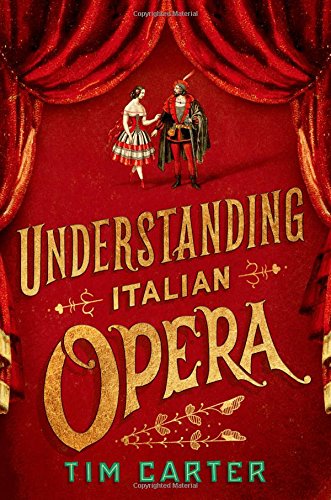
Understanding Italian Opera

April 26, 2016 By Respiro E Movimento · Follow us: Facebook · Twitter · Instagram · YouTube

Understanding Italian Opera


Opera is often regarded as the pinnacle of high art. A “Western” genre with global reach, it is where music and drama come together in unique ways, supported by stellar singers and spectacular scenic effects. Yet it is also patently absurd — why should anyone break into song on the dramatic stage? — and shrouded in mystique.

In this engaging and entertaining guide, Understanding Italian Opera, renowned music scholar Tim Carter unravels its many layers to offer a thorough introduction to Italian opera from the seventeenth to the early twentieth centuries.

Filed Under: BOOKS, DRAMA, LEARNING, MUSIC, OPERA, OPERA SINGERS

Do We Really Sound As Bad As We Sometimes Think We Do?

April 26, 2016 By Respiro E Movimento · Follow us: Facebook · Twitter · Instagram · YouTube

musician rehearsal

Research suggests that the performers were able to evaluate the quality of their performances more accurately when they did so based on a video of their performance. When relying on only their memory of the performance, their evaluations were less accurate.

Why the difference?

Well, the major difference between dress rehearsal and concert performances, of course, is the amount of anxiety we experience. Might it be that our nerves make a difference in how we perceive the quality of our playing?

How to self-evaluate?

So if you want to avoid triggering the downward spiral of negativity and doomsday thinking, don’t try to evaluate how well you are playing in the middle of a performance. Save it for later – there will be plenty of time for beating yourself up afterwards, if you’re so inclined.

Photograph by Matthew Parrish Bassist.

(via)

Filed Under: LEARNING, MUSIC, MUSICIANS, PERFORMANCE ANXIETY, SELF-EVALUATION

Walk Your Path And Learn

April 25, 2016 By Respiro E Movimento · Follow us: Facebook · Twitter · Instagram · YouTube

Prince

Filed Under: LEARNING, MUSIC, MUSICIANS, QUOTES, WISDOM

Training Wheels Only Teach You How To Imitate A Skill

April 20, 2016 By Respiro E Movimento · Follow us: Facebook · Twitter · Instagram · YouTube

imitation

Miranda Wilson, an international performing cellist, explains how training wheels only teach you how to imitate a skill, but don’t teach you how to perform it self-sufficiently.

Here’s how to practise solfege wrong. You prop your textbook on the piano and play the assignment before you sing it. Perhaps you sing along with it. You do this a few times, nail it once or twice without the piano, and scoot off to your sight-singing lesson with that tyrant Dr. Wilson.

And you totally bomb it, because it turns out that you can’t replicate your practice-room success under the pressure of performance.

Why?

Because you trained yourself to imitate a skill without truly understanding how to do it self-sufficiently. And then you couldn’t perform that skill, because what happens in performance is a direct reflection of what happens in practice.

You thought you were riding a bicycle, when all you were really doing was pedaling. But when you ride a grown-up bike, you have to be able to balance before you can pedal.

The whole point of learning to sight-sing is that generating your own pitch. Of course you can use the piano to play a tonic triad; of course you can hit your starting pitch. But then you have to step away from the piano, otherwise those training wheels never let you sing self-sufficiently.

Photograph by Richard Holzer.

(via)

Filed Under: EXERCISE, LEARNING, MUSIC, SKILLS

  • « Previous Page
  • Page 1
  • …
  • Page 3
  • Page 4
  • Page 5

Copyright © 2026 · Respiro e Movimento®· All rights reserved

  • Facebook
  • Twitter
  • Instagram
  • YouTube