• Skip to primary navigation
  • Skip to content

RESPIRO E MOVIMENTO®

DISCOVER YOUR REAL POTENTIAL

  • Book a session
  • Events
  • Testimonials
  • Blog
  • Gallery
  • Media
  • Contact

INTERVIEW

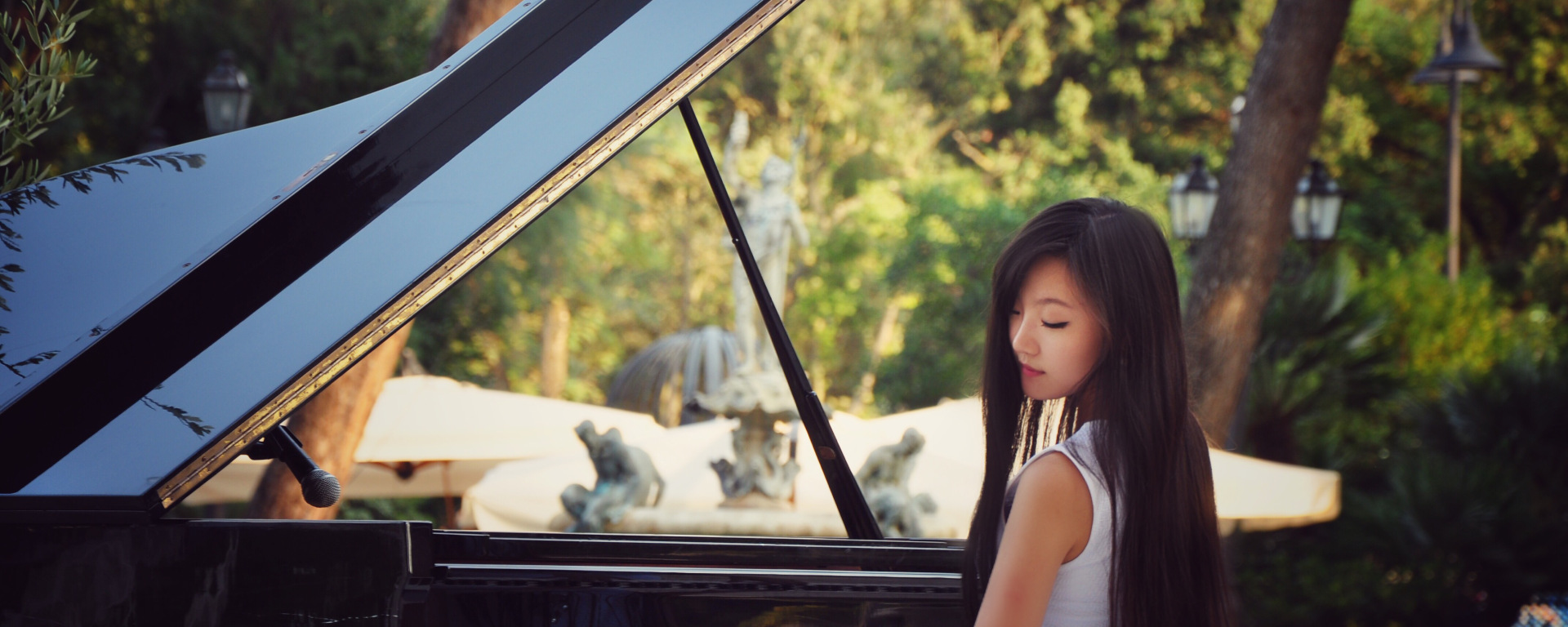
Interview: Sunny Li, Pianist

December 27, 2016 By Respiro E Movimento · Follow us: Facebook · Twitter · Instagram · YouTube

Sunny Li

Who or what inspired you to take up the piano and pursue a career in music?

I was fortunate to be born into an artistic family that opened the door for me to explore music when I was very young. While both my parents were not in the music business, my dad had a strong passion for classical music. He exposed me to the grace and magnificence of classical music as early as I can remember. I began to love classical music under his influence and wanted to carry his passion forward. I started learning piano at the age of four and had my first public performance at age of six, by then piano has become an integral part of my life.

Who or what were the most important influences on your musical life and career?

I had the privilege to be tutored by some of the most skilled and talented pianists in my budding career. Every one of them had taught me different aspects in mastering the piano, notably for techniques, discipline and emotion.

In my years in Royal Academy of Music, I studied under Professor Carole Presland. Under her rigorous tutorage, I was able to build a solid foundation in piano works and her relentless pursuit of perfection imparted to me. She had vastly increased my exposures to various composers and repertoires, laying paths for me to explore the immense universe of classical music. Her passion for music still inspires me deeply today that I always set higher targets for myself and only achieve the best that I can be.

Professor Paul Janes coached me during my Masters of Performance studies in Royal Northern College of Music. He is very meticulous and trained me to focus on the small, intrinsic parts of a play. As such, I refined my piano techniques enormously under his guidance. At the same time, he helped me to develop my interpretation and control in higher forms of classical music. This allowed me to inject my emotions into details during performances, thereby representing classical music in my very own style.

I was honored to be coached by Deniz Gelenbe for my Artist diploma: she helped me to refine my style. Critically, she opened my eyes to look at each piece of performance in an art form more than a demonstration. I am also very grateful for all the opportunities that she presented to me to achieve further in my performance career.

Last but not least, Professor Gabriele Bolducci inspired me deeply with his passion and showed me the dedication and romantic side of music. He taught me to strike the perfect balance between control and spontaneous during a performance, as well as to comprehend music deeply from within the heart.

(via)
Filed Under: INTERVIEW, PIANIST, PIANO, SUNNY LI

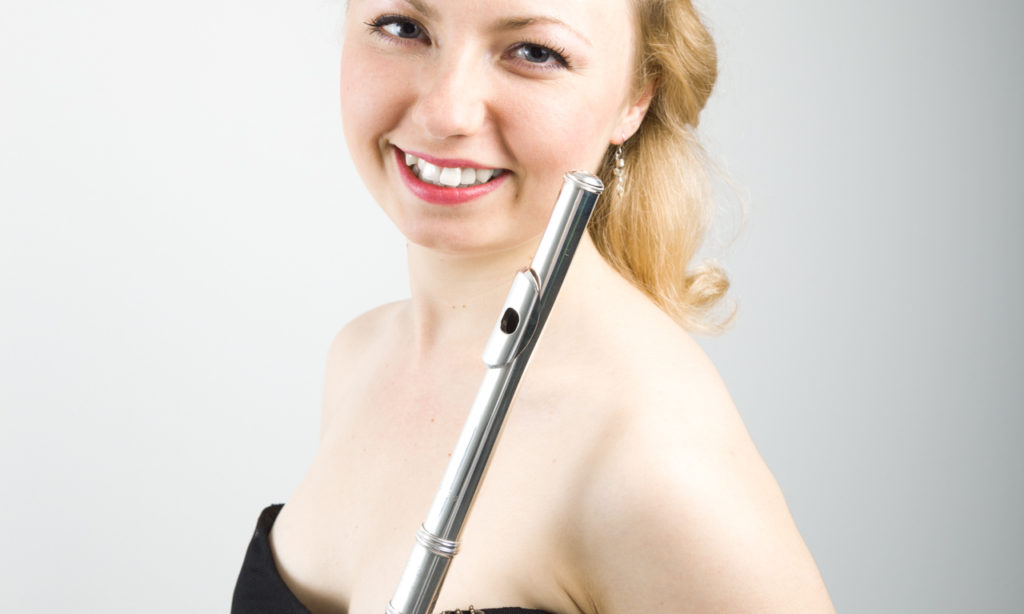
Interview: Alena Lugovkina, Flautist

December 21, 2016 By Respiro E Movimento · Follow us: Facebook · Twitter · Instagram · YouTube

Alena Lugovkina

Who or what inspired you to take up flute and pursue a career in music?

Thinking back to how I’ve started flute and came to the UK, I think of the phrase “it was meant to be”.

According to my parents, every time I heard music, I would start singing, so I’ve been singing since I was a few months old. Because of my singing and love of music, my parents thought that this is something that I wanted to do or would wish to do when I grew up. So it is my parents who really made it happen, for which I will be forever grateful .

One day my mom was on the tube and heard a young girl quietly singing (she was just sitting preparing solfeggio homework). She was singing so beautifully that my mom approached mother of that girl asking where she was studying. They gave us an address of that school and few days later my mom and I went to that school and apparently as soon as I’ve entered the door to the school I said “I will be studying here”. That turned out to be one of three finest music schools in whole Russia – called Gnessin Special Music School.

Even though I was only six years old and it was a 3 hour commute to that school every day, I was so determined to study there. First I started on piano, but as the school was a special music school (similar to The Purcell School or Chetham’s School of Music in UK), my piano teacher demanded that we bought piano so that I could practice at home. As we didn’t have money for piano, I was transferred to a recorder, which was the cheapest instrument at the time. The system in the school was that you played recorder first and then when you were 10 or 12 years old, you transferred to other woodwind instrument. When the time came for me to choose which instrument I wanted to play, I couldn’t make up my mind.

One day I got a CD from a friend. The person who gave it to me didn’t know who was playing or what they were playing, as they’d got a copy of it from someone else who also didn’t know who was playing on CD. I put that mysterious CD into the CD player and almost stopped breathing when I heard it. It was the first time that I’d heard such a deep, mesmerising and enchanting sound of the flute. It was just a simple charming French suite, but the musicianship and this amazing sound had a great impact on me. I remember saying then “if a flute can sound like this – I would like to play the flute”.

Who or what were the most important influences on your musical life and career?

So here my story continues. A couple of years later, I went to a competition in Romania, where I became friends with two flute players – one from Israel, other from South Korea. One day I received a letter from my Korean friend with a list of summer schools that she recommended for me to attend. My English wasn’t that great then, so looking at the websites of the summer schools, trying to choose, I am not sure how I’ve made my choice – probably again that magical “meant to be”.

The summer school took place in Surrey with flautist William Bennett. It changed my life and opened my eyes to a whole new world of flute playing. The level playing was so high and William Bennett’s teaching so musical and inspiring, that the whole experience of summer school made me suddenly want to practice rather than having to practice. I realised straight away that William Bennett (also known as “Wibb”) was THE teacher I wanted to study with and I was very happy to hear that he liked my playing and suggested I audition for the Royal Academy of Music. I was very lucky to get a full scholarship from the Royal Academy of Music and so I was able to come London and study.

One day (I think that was my 2nd year at RAM), I brought the Godard Suite to Wibb for a lesson. He said: “before we start the lesson, listen to this recording”. He put the recording on his Gramophone. It was that very recording that I’ve heard when I was 11 and that made me take up the flute. I asked: “WHO is playing?!” And Wibb replied: “Me. Why?”

I feel that was meant to be….. Wibb continues to be my endless inspiration.

(via)

Filed Under: ALENA LUGOVKINA, FLAUTIST, INTERVIEW

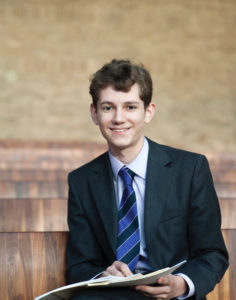
Interview: Luke Navin, Composer

December 13, 2016 By Respiro E Movimento · Follow us: Facebook · Twitter · Instagram · YouTube

Luke Navin

Who or what inspired you to take up composing, and pursue a career in music?

I’ve always bought into the idea that you have to do what you’re good at and you have to do what you love, and I’m very lucky that the two are one and the same. For as long as I can remember I’ve always thought musically. Long before any formal education in music or the piano, it seemed an obvious and natural form of expression. My mind has always been full of musical invention – as much now as when I was five years old – the only conscious decision I made was when I was 15, when I decided to write some of it down.

Who or what were the most significant influences on your musical life and career as a composer?

I think that discovering opera played a pivotal role in shaping my attitude towards composition and music as a whole, in that it convinced me of exactly what I wanted from a piece of music. I saw Tosca at Covent Garden, which was a perfect introduction as it clearly said to me, ‘this is what music should be, and this is how it should make you feel’. Ever since, Puccini has been extremely important to me, as has Italian opera as a whole.

Antonio Pappano at Covent Garden and James Levine at the Met Opera in New York have broadened both mine and thousands of other peoples’ love of music. On a more personal level, I am exceedingly grateful to my last piano teacher, Warren Mailley-Smith, for the mountain of support he gave me, in particular as a composer.

What have been the greatest challenges of your career so far?

I’m fortunate that I’ve never been lacking in inspiration or ideas. The greatest challenge has always been one of structure – I know what I want the music to do and have the musical ideas to express it, but sometimes putting it all together in an ordered and balanced way can prove elusive! Generally I find it just needs time – I leave something for a while, and after some time away, it either works itself out and fits together or it doesn’t. Usually it does!

(via)

Filed Under: COMPOSER, INTERVIEW, LUKE NAVIN

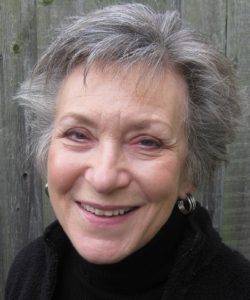
Interview: Thalia Myers, pianist

December 8, 2016 By Respiro E Movimento · Follow us: Facebook · Twitter · Instagram · YouTube

Thalia Myers

Who or what inspired you to take up the piano, and pursue a career in music?

There was no piano in the house when I was a small child, but whenever we visited my mother’s sister, a talented and accomplished amateur pianist, I was transfixed by the sound of her playing and longed to be able to do it too. And at the age of ten, I heard a recording of Dinu Lipatti playing Chopin and never looked back.

Who or what have been the most important influences on your musical life and career?

Three fine and generous teachers: Cyril Smith, Ilona Kabos and Peter Feuchtwanger; musical colleagues; my students

What have been the greatest challenges of your career so far?

Learning how to practise; learning how to harness performance nerves; learning how to balance perfectionism and realism.

(via)

Filed Under: INTERVIEW, PIANIST, THALIA MYERS

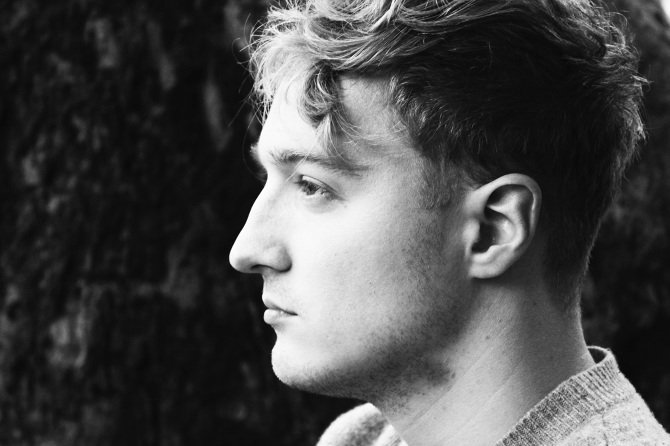
Interview: Daniel Pioro, Violinist

November 21, 2016 By Respiro E Movimento · Follow us: Facebook · Twitter · Instagram · YouTube

Daniel Pioro

Who or what inspired you to take up the violin and pursue a career in music?

A joyful introduction to the violin at the age of 4 left me utterly obsessed. It was, and still is, my toy. The career side of things just happened. There was no decision, just a natural process.

Who or what were the most important influences on your musical life and career?

Anyone I’ve ever loved, anyone who’s ever inspired me, anyone who I’ve observed pursuing their dreams without feeling a need to fit in. So much inspiration comes from literature or a chance conversation.

What have been the greatest challenges of your career so far?

For sure, working with groups of players who have no interest in selflessly pushing themselves to the highest level possible. It’s hard for me not to be affected when I work (increasingly rarely, luckily!) with those whose sense of their own achievements far outweighs what they are giving to the music.

It’s an unfortunate reality that this is an all too common experience in professional music making, although maybe the same is true in all walks of life.

Which performances/recordings are you most proud of?

None. I just can’t think in this way. Pride and nostalgia. I just play. I experiment in the room, I attempt to do something in that moment that I’ve not done before… and then I move on.

(via)

Filed Under: DANIEL PIORO, INTERVIEW, VIOLINIST

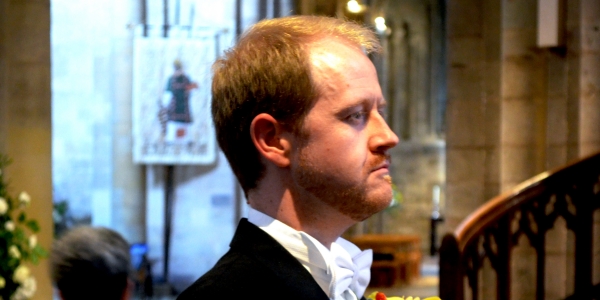
Interview: Jamie W Hall, Bass Baritone

November 17, 2016 By Respiro E Movimento · Follow us: Facebook · Twitter · Instagram · YouTube

baritone Jamie W Hall

Who or what inspired you to take up singing, and pursue a career in music?

I was something of a surprise to a thoroughly non-musical family so my first singing heroes came from the world of TV and musical theatre; Michael Crawford, Michael Ball and particularly Harry Secombe. It wasn’t until I found myself at university – a second-rate pianist being nudged towards the vocal department – that I began to take my own voice seriously. I was taken in hand by an excellent teacher and found inspiration from the absolutely wonderful recordings of Dietrich Fischer-Dieskau.

Who or what have been the most important influences on your musical life and career?

At 32 my career is barely begun but the biggest influence across all the branches of my career is my membership of the BBC Singers. I’ve been a part of the ensemble for 8 years and I most certainly would not be the musician I am today without that experience. When I joined the group I was in no way prepared for what would be expected of me day in day out. The great beauty of the group though, is that it is the vessel in which is contained a near-century of experience and expertise and I found myself surrounded by older colleagues who have taught me by their own example just about everything I know today. As a singer, as a conductor and as a composer I have been shaped by the BBC Singers.

What have been the greatest challenges of your career so far?

As a non-singer turned cutting-edge contemporary choral musician I suppose getting over the horror of sight-singing was a big hurdle. These days I think I’m probably as able a sight-singer as most.

(via)

Filed Under: BARITONE, INTERVIEW, JAMIE W HALL, OPERA, OPERA SINGERS

Interview: Elin Manahan Thomas, Soprano

November 14, 2016 By Respiro E Movimento · Follow us: Facebook · Twitter · Instagram · YouTube

Elin Manahan Thomas

Who or what inspired you to take up singing and pursue a career in music?

I’ve been singing since I was little. I started lessons when I was six (pretty normal in Wales) and always sang in choirs. When I was fifteen I joined the Swansea Bach Choir and the conductor, John Hugh Thomas, really became my mentor. That was one turning point in my singing life. Then after I had sung at Clare College Choir for three years at uni, I went to be an au pair for a while. It had never occurred to me that I would be a singer. By total chance during that year I was asked to sing for Sir John Eliot Gardiner and his year of Bach cantatas, with the Monteverdi Choir. That’s what started my life as a professional singer and I still thank the stars for the lucky break that got me that audition.

Who or what were the most important influences on your musical life and career?

Certainly John Hugh Thomas, he was my biggest inspiration when I was young, since he too had started out with Sir John Eliot Gardiner, and his immense musical knowledge and empathy taught me so much. Then it’s been other singers along the way: Emma Kirkby, Rosemary Joshua, Lisa Milne, and especially my peers who’ve surged ahead with fantastic careers, like Carolyn Sampson and Lucy Crowe.

What have been the greatest challenges of your career so far?

Getting the balance right. Between singing/presenting; work/family; music I know and love/new music that’s exciting but a lot to learn. It’s a constant juggling act but then, I suppose most careers are.

(via)

Filed Under: INTERVIEW, OPERA, OPERA SINGERS, SOPRANO

  • « Previous Page
  • Page 1
  • …
  • Page 14
  • Page 15
  • Page 16
  • Page 17
  • Page 18
  • Page 19
  • Next Page »

Copyright © 2026 · Respiro e Movimento®· All rights reserved

  • Facebook
  • Twitter
  • Instagram
  • YouTube