• Skip to primary navigation
  • Skip to content

RESPIRO E MOVIMENTO®

DISCOVER YOUR REAL POTENTIAL

  • Book a session
  • Events
  • Testimonials
  • Blog
  • Gallery
  • Media
  • Contact

COMPOSER

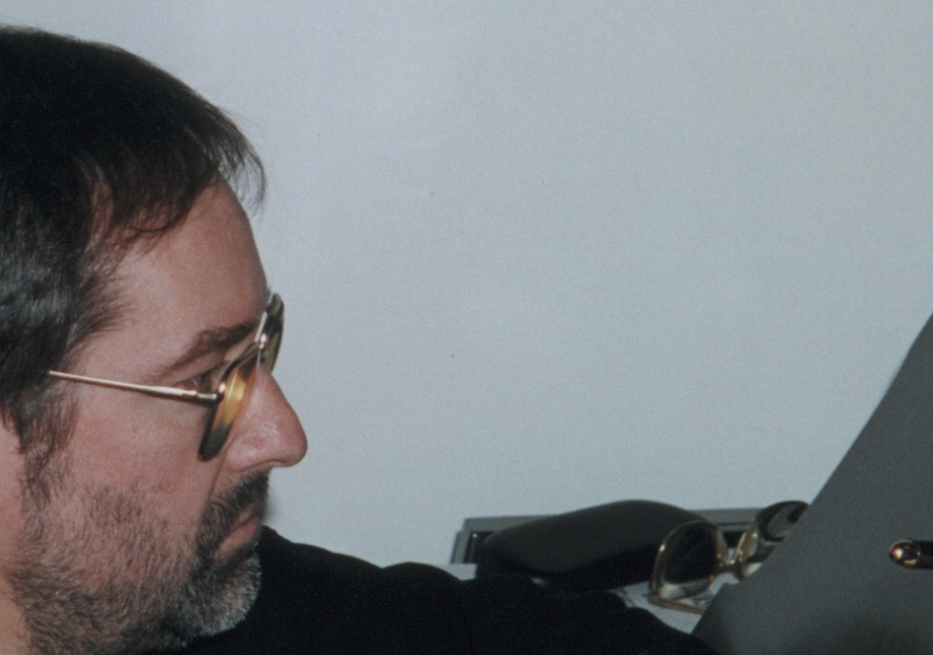
Interview: Celeste Oram, Composer

August 24, 2018 By Respiro E Movimento · Follow us: Facebook · Twitter · Instagram · YouTube

Celeste

As a musician, what is your definition of success?

A few times a younger musician has come up to me to tell me that they had been somewhat in the doldrums creatively, but that their experience of a piece of mine had opened a door for them onto new possibilities, and motivated them to keep it up. Success, I think, means making room in that way: creating art that is generative, that begets more art.

What do you consider to be the most important ideas and concepts to impart to aspiring musicians?

If you sense that the people to whom you habitually present your art don’t get it or don’t value it, then don’t change your art: change your audience.

(via)
Filed Under: CELESTE ORAM, COMPOSER

Interview: Alistair Hinton, Composer

August 16, 2018 By Respiro E Movimento · Follow us: Facebook · Twitter · Instagram · YouTube

Alistair Hinton

As a musician, what is your definition of success?

Getting a piece to work in the best way that it can, especially if it pleases performers.

What do you consider to be the most important ideas and concepts to impart to aspiring musicians?

Just listen to as much music of all kinds that you can, figure out from your own instincts and from that listening experience where you want to go next and never be afraid of hard work towards the end of finding your own way, whatever the cost.

(via)

Filed Under: ALISTAIR HINTON, COMPOSER

Interview: Luis Tinoco, Composer

July 24, 2018 By Respiro E Movimento · Follow us: Facebook · Twitter · Instagram · YouTube

Luis Tinoco

As a musician, what is your definition of success?

Professionally, success means having the opportunity to work with musicians, ensembles, stage directors, choreographers, librettists, etc., whose work one considers to be at the highest artistic level. On a more personal level, I always find that success should mean achieving our standards as artists. I mean, to be as close as one can be to finishing a score with the feeling that its quality as a work was accomplished and is quite satisfying. Not getting closer to what I consider to be the desired quality for a musical work, then that is my definition of failure.

What do you consider to be the most important ideas and concepts to impart to aspiring musicians?

Well, apart from the obvious “work hard” advice, I would add self-criticism, nonconformity, the will to dare and to be curious, this last one including a true curiosity (and also respect) for other musicians’ work.

(via)

Filed Under: COMPOSER, INTERVIEW, LUIS TINOCO

Interview: Jessica Dannheisser, Composer

July 6, 2018 By Respiro E Movimento · Follow us: Facebook · Twitter · Instagram · YouTube

Jessica Dannheisser

As a musician, what is your definition of success?

Regularly working on projects I truly care about, with the freedom from my collaborators to compose the music I can stand by, from both an artistic as well as narrative/filmic perspective. However, we live in a material world, so I’d probably have to add having the recording and production budgets to perfectly realise these creative visions!

What do you consider to be the most important ideas and concepts to impart to aspiring musicians?

Self belief is key, I think. We live in a world where it’s very easy to compare oneself to others and this can be damaging. Everyone is on their own path, if you have the determination to learn your craft to the best of your ability, and practice it as much as possible, then shout that to the rooftops and keep the faith.

(via)

Filed Under: COMPOSER, INTERVIEW, JESSICA DANNHEISSER

Interview: Yerkesh Shakeyev, Composer

June 14, 2018 By Respiro E Movimento · Follow us: Facebook · Twitter · Instagram · YouTube

Yerkesh Shakeyev

As a musician, what is your definition of success?

I am sure that for a musician the most important thing is not fame or money, but an opportunity to  move people emotionally with music.

(via)

Filed Under: COMPOSER, INTERVIEW, YERKESH SHAKEYEV

Interview: Juliana Hall, Composer

May 24, 2018 By Respiro E Movimento · Follow us: Facebook · Twitter · Instagram · YouTube

Juliana Hall

How do you work?

Before beginning on a new song or cycle, I choose a subject, poet, or idea and find a text that seems to illuminate what I have in mind. I look for texts that are primarily lyrical, and texts that seem to me to have music in them. Then I study the texts, looking up definitions of various words where multiple meanings may apply, reading them out loud to hear the actual sounds of the words and feel the rhythms in my voice in a very physical way, and arranging them in a way as to form either a concrete narrative arc or at least a logical progression (where a continuous story is not as strongly implied).

Because I’m a pianist by training, I’ve found the most natural way for me to write music is to improvise – playing various possibilities at the piano, while singing vocal lines until I find a combination of piano and vocal music that seems to fit the text properly. I usually do this very quickly (what my first teacher, Frederic Rzewski, used to call “crashing through”), often getting an entire song done in a day or two.

Editing is next, and here is where everything slows way down. After writing a song in a day, I can often spend a week or two inputting the music into Sibelius software, and then going through and asking all the appropriate questions. Did I get the right notes? What are the dynamics? Are tempos such that text can be easily sung so an audience doesn’t have to strain to hear the words? Is that vocal line going to be enjoyable to sing?

Once the details of the music have been established, I hand off the Sibelius file to my husband (a highly trained musician) who also works in electronic publishing. He prepares the final layout for the score before we proofread it.

The proofreading stage can also take a while. It is so hard to see one’s own work in an objective way. Here, too, my husband works with me. Between the two of us, we usually go through a series of round-trips through correcting, revising, and updating the engraved score…and after each update, we proofread until there is nothing remaining to change. We sometimes perform as many as six round-trips back and forth between us, correcting and revising as we go.

(via)

Filed Under: COMPOSER, JULIANA HALL

Interview: Daniela Mastrandrea, Pianist, Composer & Arranger

May 21, 2018 By Respiro E Movimento · Follow us: Facebook · Twitter · Instagram · YouTube

Daniela Mastrandrea

What do you consider to be the most important ideas and concepts to impart to aspiring musicians?

Always believe in yourself and in what you do, even if this involves a big sacrifice, as it often does. In the past, I would get discouraged and it will almost certainly happen again (we couldn’t not call ourselves human if it didn’t). Falling down is natural, getting back up is the real challenge. When you get up after a fall you are stronger than ever before! As Friedrich Nietzsche said “What does not kill you, fortifies you“, and he is right! Always pick yourself up and keep getting stronger!

(via)

Filed Under: ARRANGER, COMPOSER, DANIELA MASTRANDREA, PIANIST

  • Page 1
  • Page 2
  • Page 3
  • …
  • Page 6
  • Next Page »

Copyright © 2026 · Respiro e Movimento®· All rights reserved

  • Facebook
  • Twitter
  • Instagram
  • YouTube