• Skip to primary navigation
  • Skip to content

RESPIRO E MOVIMENTO®

DISCOVER YOUR REAL POTENTIAL

  • Book a session
  • Events
  • Testimonials
  • Blog
  • Gallery
  • Media
  • Contact

BALLET DANCERS

The Brain As Choreographer, Dancer And Spectator

July 11, 2016 By Respiro E Movimento · Follow us: Facebook · Twitter · Instagram · YouTube

brain ballet

The Choreographing Brain

Brain dominance begins early – 22 days after conception the spinal cord and brain appear. Week 4 the eyes, nose, ear and mouth form. Week 28 thalamic brain connections form to mediate sensory input. The brain is a three pound winked mutable (changeable) mound influenced by lived moving experience, bodily feelings, perceptions, culture, society, and the environment.

The brain is comprised of about 100 billion electrically active neurons (cells), each connected to tens of thousands of its neighbors at perhaps 100 trillion synapses (the spaces between neurons where information transfers can occur). These atoms of thought relay information through voltage spikes that convert into chemical signals to bridge the gap to other neurons.

Many parts of the brain make a dance

More than 400 studies related to interdisciplinary neuroscience reveal the hidden value of dance. For instance, we acquire knowledge and develop cognitively because dance bulks up the brain. Consequently, the brain that “dances” is changed by it. As neuroscientist Antonio Damasio points out, “learning and creating memory are simply the process of chiseling, modeling, shaping, doing, and redoing our individual brain wiring diagrams.”

Dance is a language of physical exercise that sparks new brain cells (neurogenesis) and their connections. We thought that humans had limited brain cells that decreased with age. But now, beginning my eighth decade, I’m still dancing—now flamenco, belly dance, jazz, and salsa!

The neuron connections are responsible for acquiring knowledge and thinking. Dancing stimulates the release of the brain-derived protein neurotropic factor that promotes the growth, maintenance, and plasticity of neurons necessary for learning and memory. Plus, dancing makes some neurons nimble so that they readily wire into the neural network. Neural plasticity is the brain’s remarkable abil­ity to change through­out life.

(via)

Filed Under: BALLET, BALLET DANCERS, BRAIN, CHOREOGRAPHER, CHOREOGRAPHY, DANCE, DANCERS

Marcel Dzama’s Costumes for the New York City Ballet

July 8, 2016 By Respiro E Movimento · Follow us: Facebook · Twitter · Instagram · YouTube

Two O'Clock: Adam and Eve, dancers Rebecca Krohn and Adrian Danchig-Waring. Photo by Erin Baiano
Two O’Clock: Adam and Eve, dancers Rebecca Krohn and Adrian Danchig-Waring. Photo by Erin Baiano


One O'Clock: The Cuckoo Bird, dancer Tiler Peck. Photo by Erin Baiano
One O’Clock: The Cuckoo Bird, dancer Tiler Peck. Photo by Erin Baiano


The Princess, dancer Sterling Hyltin. Photo by Erin Baiano

Filed Under: BALLET, BALLET DANCERS, COSTUMES, NYC BALLET, PHOTOGRAPHY

La Scala dancers talk about being in Ratmansky’s Swan Lake

July 5, 2016 By Respiro E Movimento · Follow us: Facebook · Twitter · Instagram · YouTube

Nicoletta-Manni-and-Timofej-Andrijashenko-rehearse-Swan-Lake-in-costume-–-photo-by-Brescia-and-Amisano-Teatro-alla-Scala-768x433

It is the second time that Manni has worked with Ratmansky as she was one of the Auroras in his The Sleeping Beauty last October.

It is interesting working on this Swan Lake, because with Aurora I was dancing the role for the first time, whereas I have danced Odette/Odile in other versions, so I am learning to see these characters from a different point of view. I think that for the audience the story is easier to follow even though the characters are multi-layered.

Apart from the work we’ve done on the technique, which is different to that we are used to, we have worked a great deal on the interpretation and the pantomime which is often pared down and not used to its full advantage. For us it has been wonderful working on this in detail whereas usually it is a secondary consideration.

It has been a privilege to be working with Alexei whose advice enriches us as artists and has also given us an opportunity of rehearsing in a way that is unusual nowadays. I hope that the audience manages to appreciate this work because for us it’s been indispensable.

(via)

Filed Under: BALLET, BALLET DANCERS, SWAN LAKE

Dancing Longer, Dancing Stronger

July 5, 2016 By Respiro E Movimento · Follow us: Facebook · Twitter · Instagram · YouTube

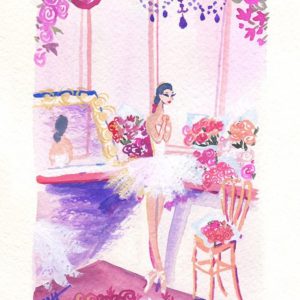
Featuring ballet, jazz, modern, and aerobic, Dancing longer Dancing stronger includes exercises to complement in-class work or to enhance performance.
Filed Under: BALLET, BALLET DANCERS, BOOKS, DANCE, DANCERS

Designer By Day, Ballet By Night

July 4, 2016 By Respiro E Movimento · Follow us: Facebook · Twitter · Instagram · YouTube

pointebrush

If you are not following @Pointebrush on Instagram, you are really missing out.  Meet Margot, a designer and dancer out of NYC, who is re-imagining ballet every day on social media.

Rebecca King: Tell us about your early dance inspiration.

Margot: I was born and grew up in Hong Kong. When I was really young, my mom enrolled me in ballet classes at a small ballet school there. My mom had danced ballet in her youth so I imagine she must have been really excited to have a little girl and promptly brought me to the first ballet class for tots she could find. It was run by an elderly British lady named Carol, sort of a relic from colonial old Hong Kong.

When I was a little older, my mom could see that the training at that school wasn’t all that good for anything beyond young toddlers discovering creative movement so I was moved from this smaller school to a much larger, more vocational school which had a more structured system, and which followed the British RAD syllabus. It came as a real shock to me how strict and academic it was compared to my first school. I learned to do my pliés and tendus properly and every year we had the annual RAD exams where special examiners from the UK would fly in to town specifically to grade and evaluate each student. Because my mom was such a big fan of ballet, she often took me to performances of the Nutcracker, Swan Lake and other ballets that came to town. I even met Marcia Haydee and the great Dame Margot Fonteyn when she visited my school. I had no idea who she was at the time but I remember my mom gushing all about her (I was after all, named after her). My dad is also a huge fan of classical music so beyond just ballet, I developed a love of classical music that I still have to this day.


RK: How did you decide to stop dancing and pursue higher education focused in design?

Margot: Oh how I wish I had never stopped. I don’t think I would have ever gone on to become a professional but having come back to ballet after over a decade, I think quitting in my teens is one of my great regrets. The main reason why I stopped ballet was that the rigid academics of my school just sucked out all the joy and love of dance. It felt for a while like I was a robot just preparing for my annual exams and evaluations without any joy and artistry. It felt very cold and uninspired and I eventually just lost interest. The headmaster of my school sat down with me and my mom at the time and tried to discourage me from leaving but at that point I think I was just over it. I don’t blame the school or the teachers, perhaps I just wasn’t mentally prepared for the academic necessities of higher education in ballet. Ironically, it’s the love of classical music and artistry that brought me back to ballet many years later.

On the other hand, with design and visual arts, it’s always been a part of who I am as a person. Most friends and family remember me as the little girl who could be seated at a table or couch (or virtually anywhere) for hours and hours at a time as long as I had pencils and paper. That’s all I needed. My parents’ dinner guests were always wowed by how I could keep myself entertained for hours on end and they wouldn’t hear a peep from me no matter how late it got. I think deep down, I’ve always known that I’ve wanted to be a designer or artist. I never had an epiphany or made a decisions at any point in my life, I think I had always known all along that visual art in some, way, shape or form was going to be what I did for a living. I never really did anything extra-curricular with my art other than practicing and painting on my own. It’s when I applied to college and was accepted by a design school in New York (Parsons School of Design) that my higher education in art began.


(via)

Filed Under: BALLET, BALLET DANCERS, DESIGN, DESIGNER, ILLUSTRATIONS, INTERVIEW

Capturing Dance In Unexpected Places

June 23, 2016 By Respiro E Movimento · Follow us: Facebook · Twitter · Instagram · YouTube

dancer1
     Dancer Margarita Armas.               Photo by Jon Taylor.


dancer2
       Dancer Ella Titus. Photo by Jon Taylor.


dancer3
      Dancer Lily Balogh. Photo by Jon Taylor.


(via)

Filed Under: BALLET, BALLET DANCERS, DANCE, DANCERS, PHOTOGRAPHY

Foot Exercises Will Help Your Tendu

June 22, 2016 By Respiro E Movimento · Follow us: Facebook · Twitter · Instagram · YouTube

legs of young dancers ballerinas in class classical dance ballet

What exercises can I do with it?

  • the invert/evert ankle exercises
  • flex and point
  • clamshells
  • my new strengthener for the big toes. This will definitely help with rolling in or bunion prevention. Video shown below.
  • you might even think of some new ones for yourself!

(via)

Filed Under: BALLET, BALLET DANCERS, DANCE, DANCERS, VIDEO

  • « Previous Page
  • Page 1
  • …
  • Page 12
  • Page 13
  • Page 14
  • Page 15
  • Page 16
  • …
  • Page 22
  • Next Page »

Copyright © 2026 · Respiro e Movimento®· All rights reserved

  • Facebook
  • Twitter
  • Instagram
  • YouTube