
Body language affects how others see us, but it may also change how we see ourselves. Social psychologist Amy Cuddy shows how “power posing” — standing in a posture of confidence, even when we don’t feel confident — can affect testosterone and cortisol levels in the brain, and might even have an impact on our chances for success.
1. Clarify your vision
When you activate your imagination and visualize your success, you’re onto one of the best-kept secrets of Olympic athletes and high-level sport coaches. Visualization is the first step to creating anything.
Take a moment to close your eyes and clarify your vision.
2. Create affirmations
To affirm something means to declare it’s true. Write your affirmations down and post them where you can see them the first thing and throughout the day.
3. Focus on your process
Keep your attention on what you are doing and nothing else. No distractions, no comparisons.
4. Positive thinking
Remember, the thoughts that flicker your mind will either be helpful or hurtful, so strive to keep your thoughts positive.
5. Let yourself shine
Instead of worrying, think instead about how you can fly, then spread your wings and go for it. Smile, have fun and be yourself.
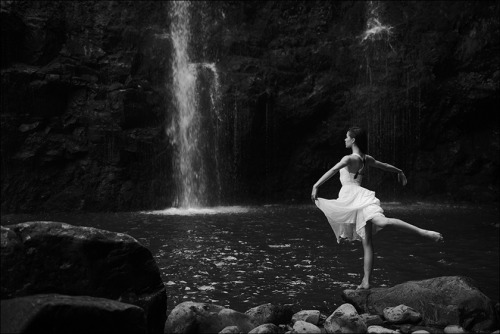
Photograph by Ballerina Project.
(via)
The future of opera, and the role of technology within it, is a question that for some time has been at the forefront of my mind, both as a PhD researcher and an opera lover. Presently, a whole generation of potential opera fans are coming of age in a time where world-class productions are relayed live to thousands of cinema screens across continental divides.
(via)

1. Movement training embodies Wu Wei: Effortlessness. Action through non-action.
A Taoist philosophy. This is the feeling of being mobilized to act, not forcing oneself to train out of a sense of need or guilt. Rather, movement training implies the want to explore motion, with an intrinsic momentum pushing you forward, curiously.
2. Movement quality vs. exercise quantity: How much do I really need to lift be “strong”?
Strength is only one component of fitness that dancers require. Too much “exercise” interferes with movement quality.
3. Exercise requires movement, but movement does not always imply exercise.
4. Movement helps us enter flow state.
Because there is a goal in mind beyond working hard and sweating, which is generally what comes to mind when we hear the word “exercise”.
5. Movement teaches us about ourselves and the world.
Photograph by Andrew Nash.
(via)
Can you imagine a party where every movement and every visual detail were governed by a complex system of rules and procedures? For centuries, such rituals were commonplace for European nobility. And while they’ve gone out of fashion, we recognize the components under a familiar label: ballet. Jennifer Tortorello and Adrienne Westwood outline the history of this graceful and precise dance.