• Skip to primary navigation
  • Skip to content

RESPIRO E MOVIMENTO®

DISCOVER YOUR REAL POTENTIAL

  • Book a session
  • Events
  • Testimonials
  • Blog
  • Gallery
  • Media
  • Contact

EXERCISE

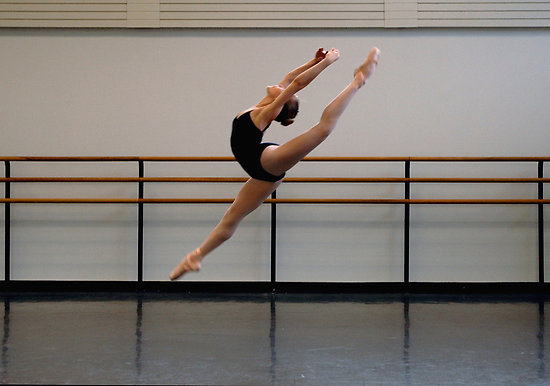
Should You Use Static Stretching to Improve Flexibility?

May 31, 2016 By Respiro E Movimento · Follow us: Facebook · Twitter · Instagram · YouTube

stretch

What Factors Could Affect Flexibility, if not Quantity of Stretching?

Static joint position: A habitual posture you can’t get out of, joints compressing to provide support and proprioception to your body and you don’t want to leave that “happy place”.

Nervous system putting on the the brakes. Your brain perceives something might be unsafe to move into and adds extra tension at rest as a protective measure. You can’t just “stretch away” this type of increased muscle tone.

Either stuff gets compressed, stuck short, and you can’t move out of or go further into that position because it feels unsafe,

OR

Stuff is already stretched out, stuck long, and under high tension, so you can’t move out of or go further into that position because it feels unsafe.

Which leads us to a very important myth we need to stop perpetuating: “If it feels tight, stretch it.” 

Photograph by October songs.

(via)
Filed Under: BALLET, BALLET DANCERS, BREATH, DANCE, DANCERS, EXERCISE

How To Improve Flexibility

April 29, 2016 By Respiro E Movimento · Follow us: Facebook · Twitter · Instagram · YouTube

ballet-grand-jete

Improve flexibility by performing a few cardiovascular exercises before stretching, in order to loosen up the muscles in the body and increase circulation. Increase flexibility by stretching the legs, quads and hamstrings with tips from a gymnastics coach in this free video on gymnastics. Watch the video below.

Filed Under: BALLET, BALLET DANCERS, DANCE, DANCERS, EXERCISE, FLEXIBILITY, VIDEO

Training Wheels Only Teach You How To Imitate A Skill

April 20, 2016 By Respiro E Movimento · Follow us: Facebook · Twitter · Instagram · YouTube

imitation

Miranda Wilson, an international performing cellist, explains how training wheels only teach you how to imitate a skill, but don’t teach you how to perform it self-sufficiently.

Here’s how to practise solfege wrong. You prop your textbook on the piano and play the assignment before you sing it. Perhaps you sing along with it. You do this a few times, nail it once or twice without the piano, and scoot off to your sight-singing lesson with that tyrant Dr. Wilson.

And you totally bomb it, because it turns out that you can’t replicate your practice-room success under the pressure of performance.

Why?

Because you trained yourself to imitate a skill without truly understanding how to do it self-sufficiently. And then you couldn’t perform that skill, because what happens in performance is a direct reflection of what happens in practice.

You thought you were riding a bicycle, when all you were really doing was pedaling. But when you ride a grown-up bike, you have to be able to balance before you can pedal.

The whole point of learning to sight-sing is that generating your own pitch. Of course you can use the piano to play a tonic triad; of course you can hit your starting pitch. But then you have to step away from the piano, otherwise those training wheels never let you sing self-sufficiently.

Photograph by Richard Holzer.

(via)

Filed Under: EXERCISE, LEARNING, MUSIC, SKILLS

Movement Vs Exercise: What Is The Distinction?

April 18, 2016 By Respiro E Movimento · Follow us: Facebook · Twitter · Instagram · YouTube

Photo Credit: A S Nash via Compfight cc

1. Movement training embodies Wu Wei: Effortlessness. Action through non-action.

A Taoist philosophy. This is the feeling of being mobilized to act, not forcing oneself to train out of a sense of need or guilt. Rather, movement training implies the want to explore motion, with an intrinsic momentum pushing you forward, curiously.

2. Movement quality vs. exercise quantity: How much do I really need to lift be “strong”?

Strength is only one component of fitness that dancers require. Too much “exercise” interferes with movement quality.

3. Exercise requires movement, but movement does not always imply exercise.

4. Movement helps us enter flow state.

Because there is a goal in mind beyond working hard and sweating, which is generally what comes to mind when we hear the word “exercise”.

5. Movement teaches us about ourselves and the world.


Photograph by Andrew Nash.

(via)

Filed Under: DANCE, DANCERS, EXERCISE, MOVEMENT

Copyright © 2026 · Respiro e Movimento®· All rights reserved

  • Facebook
  • Twitter
  • Instagram
  • YouTube