• Skip to primary navigation
  • Skip to content

RESPIRO E MOVIMENTO®

DISCOVER YOUR REAL POTENTIAL

  • Book a session
  • Events
  • Testimonials
  • Blog
  • Gallery
  • Media
  • Contact

Dance Filmmaking with Ezra Hurwitz

May 18, 2016 By Respiro E Movimento · Follow us: Facebook · Twitter · Instagram · YouTube

TeenVogue

Former MCB dancer Ezra Hurwitz is part of a new generation of dance filmmakers who are doing more than just filming beautiful steps. He’s using his unique insights as a professional dancer, combined with a keen eye for the conceptual and the unique, to elevate the medium.

One of my first real experiments was Heatscape, a film promoting Justin Peck’s first major commission for MCB. Justin and I are longtime friends, having trained in the same class at SAB. When he was in Miami, he approached me to direct and produce a short for the premiere of his work. Visually, there was the potential for an arresting piece, drawing on the stimulating mixture of Justin’s choreography with the work of visual artist Shepard Fairey. I jumped at the opportunity! Personally, it also represented a tribute to my time at MCB, which has so defined my career. Since then, I’ve been able to return a few times: I just filmed there recently for the production of A Midsummer Night’s Dream.

Photograph by Teen Vogue.

(via)

Filed Under: ACTING, ACTORS, BALLET, BALLET DANCERS, DANCE, DANCERS, DIRECTING, DIRECTORS, FILMMAKING, MOVEMENT

What’s Working In Indie Music Today?

May 18, 2016 By Respiro E Movimento · Follow us: Facebook · Twitter · Instagram · YouTube

Shannon Curtis

Ask singer songwriter Shannon Curtis about the key to her success as an independent musician, and she’ll tell you — literally — to hit the road.  She’ll encourage you to start touring with the help of your audience.

  1. Touring is the best way to interact with your audience and build your fanbase.
  2. Performing live can bring in more money than recordings, publishing and merchandise combined.
  3. You could win over more fans and make more money playing houses rather than clubs.
  4. Use social media to stay in close touch with her community, noting that Facebook is her most active channel.
  5. The New Artist Model is such a valuable tool.  That inspired me to put together a sponsorship application.

(via)

Filed Under: MUSIC, MUSICIANS, SINGERS, SUCCESS

Dancing Out Of Poverty In South Africa

May 18, 2016 By Respiro E Movimento · Follow us: Facebook · Twitter · Instagram · YouTube

Karl Schoemaker

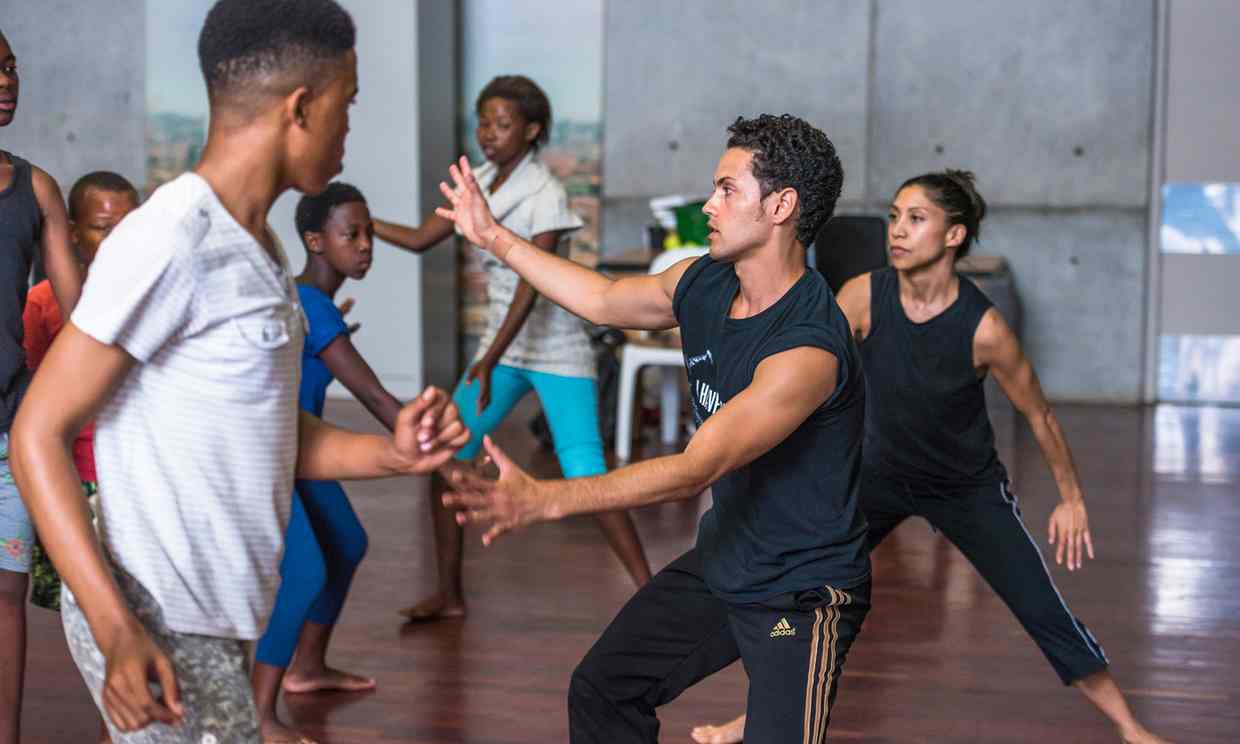
The school where Dane Hurst, star of Rambert dance company, learned to dance was eaten by termites and burned down by children. Thirteen years after he left South Africa, he has returned to the junction of Gelvandale and Helenvale in Port Elizabeth to show me where it was.

What does a child do in all this volatility? Well Dane, he danced. He tells Justin he wants to share this with other young people who want to escape the streets. I’ve recently bought a dance floor over in London and right now as we speak it’s on a ship being sent back here.

In the dance studio what colour you are means nothing. When music plays there are no barriers.

Gobisa believes: “If you are angry or sad or you’re feeling emotional, when you dance those things go.” This is Dane’s aim: to give them a way to survive that isn’t violent, because that’s what saved him.

Photograph by Karl Schoemaker.

(via)

Filed Under: ATTITUDE, BALLET, BALLET DANCERS, BREATH, COURAGE, DANCE, DANCERS, DETERMINATION, MOVEMENT

Do Your Music Videos Pass This 10-Point Test?

May 17, 2016 By Respiro E Movimento · Follow us: Facebook · Twitter · Instagram · YouTube

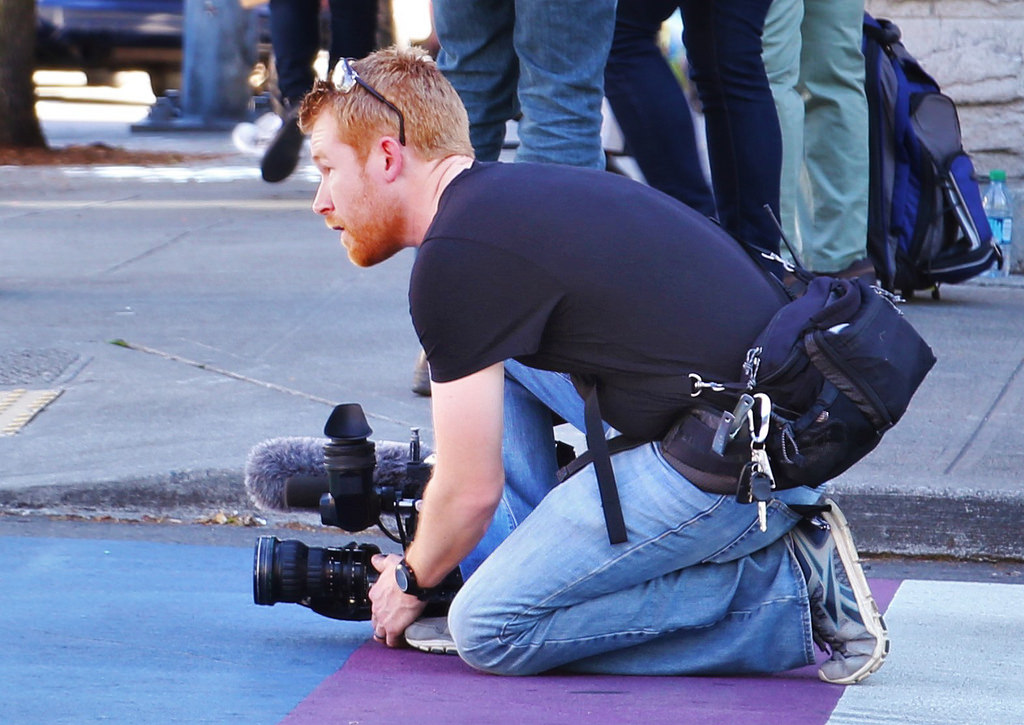
camera man

Ask yourself the following questions. According to the Creator Academy, you don’t need to answer “yes” to every single one in order to make a quality video. But the more times you hear yourself saying “yes,” the more confident you should feel that you’re onto something good.

1. Shareability — Is the video relatable, topical, or remarkable? Does it help someone solve a problem? Will the viewer feel cool or knowledgeable when they share the video with friends?

2. Conversation — Does this video help me communicate with my fans, either directly IN the video, or as a conversation starter for other interactions (in the comments section on YouTube or elsewhere)? Will I appear comfortable and authentic?

3. Interactivity — Does the video involve the audience in some way? Does it ask a question of them, showcase their participation, or encourage them to contribute to future videos?

4. Consistency — Is there an element in this video that occurs throughout all my videos? A familiar face, setting, technique, or theme? Is the video “packaged” in a way that seems consistent with my other videos? Am I posting on a schedule?

5. Targeting — Do I know who this video is FOR? Who is my audience, and is this video going to entertain or inform that audience? Will that audience be interested in only THIS video, or will they enjoy my other videos too?

6. Sustainability — Do I have what it takes to keep doing this?

7. Discoverability — Will my video show up in YouTube search results and be recommended as a related video? Am I using smart keywords and titles?

8. Accessibility — Can a new viewer watch this video and appreciate it without having seen any of your previous videos? In other words, can this video stand alone?

9. Collaboration — Is there an opportunity to work with another artist with a loyal following on YouTube? Can I feature them in such a way so they’re proud of the results, and will want to share this video with their audience?

10. Inspiration — Do I really want to make this video?


Photograph by Sea Turtle.

(via)

Filed Under: MUSIC, MUSICIANS, SINGERS, SONG, VIDEO

Gorgeous Opera Glasses

May 17, 2016 By Respiro E Movimento · Follow us: Facebook · Twitter · Instagram · YouTube

opera glasses

French opera glasses from the 1860s.

(via)

Filed Under: OPERA, OPERA GLASSES

Just Start

May 17, 2016 By Respiro E Movimento · Follow us: Facebook · Twitter · Instagram · YouTube

just start

Filed Under: BALLET, BALLET DANCERS, COURAGE, DANCE, DANCERS, QUOTES, START, SUCCESS, WISDOM

25 Things About Directing Actors

May 16, 2016 By Respiro E Movimento · Follow us: Facebook · Twitter · Instagram · YouTube

directing

They’ll tell you that 90 percent of filmmaking is casting. What they don’t mention is that even if you get the casting right, you can still really screw it up if you don’t know how to work with your actors. Here are 25 thoughts about directing actors, in no particular order.

  1. Acting is doing. Think in actions. Speak in actions, not results.
  2. Actors can’t act adjectives — don’t use them to describe what you want.
  3. Same goes for emotions. A1sk an actor to “be more angry” and you’re only going to get bad, melodramatic acting.
  4. And vague, generalized ideas will get you vague, generalized acting. Reach for specific, active verbs instead.
  5. Actors need time to prepare.
  6. They also need you to protect their concentration.
  7. Few actors realize how little they have to “act” to give a cinematic performance. Even fewer directors get it, too. Embrace subtlety.
  8. You might not see everything a good actor is doing standing even three feet away from their face — but the camera will. Trust it.
  9. It’s okay if you feel you have nothing to add to an actor’s performance. It’s their job to act, so if it’s working, let them do it.
  10. In other words, sometimes good directing is just getting out of the way.
  11. Good actors don’t always listen to your direction, but they realize what they’re doing isn’t working for you and do something different.
  12. Many times, the performance is in the listening. Get an actor to really listen in the scene, and the camera won’t want be able to look away.
  13. Listening happens in the eyes. Tell your actor to picture what the other actors are saying in their minds to help get a cinematic performance.
  14. Close ups are even more about the eyes. Direct an actor to focus on their scene partner’s downstage (closest to the camera) eye.
  15. Actors work well with directors who treat them as collaborators, instead of subordinates.
  16. Never give a line-reading.
  17. Psychoanalyzing and intellectualizing characters is often unhelpful and maybe even harmful to a performance. Stick to simple, key facts found in the script.
  18. Simplicity in a performance is magic — when you’re getting it, trust it.
  19. An actor’s ego isn’t actually that fragile until you start asking for things they can’t give you — like more or less (insert vague, non-specific direction/adjective/adverb here).
  20. Think very, very carefully before you try to change an actor’s natural and authentic reaction in a scene. Force something different and it might appear — forced.
  21. Bad directing (intellectualizing, emotionalizing, result-asking) will put an actor in their head, the exact opposite place you want them if you want a cinematic performance.
  22. If you’re asking for a beat for anything other than technical reasons, you might be overworking (that is, micromanaging) the actor’s performance.
  23. Rehearsals are exhausting — push while the camera is rolling instead (or skip the rehearsal all together).
  24. You, the director, should be the only one talking to an actor about their performance. No exceptions.
  25. The best actors have spent a lot of time learning how to stop acting, so don’t force them back into it.

Photograph by Museu del cinema.

(via)

Filed Under: ACTING, ACTORS, DIRECTING, DIRECTORS

  • « Previous Page
  • Page 1
  • …
  • Page 195
  • Page 196
  • Page 197
  • Page 198
  • Page 199
  • …
  • Page 210
  • Next Page »

Copyright © 2026 · Respiro e Movimento®· All rights reserved

  • Facebook
  • Twitter
  • Instagram
  • YouTube