• Skip to primary navigation
  • Skip to content

RESPIRO E MOVIMENTO®

DISCOVER YOUR REAL POTENTIAL

  • Book a session
  • Events
  • Testimonials
  • Blog
  • Gallery
  • Media
  • Contact

PERFORMANCE

“Thinking of Your Performance As a Gift”: Does This Really Work?

November 21, 2016 By Respiro E Movimento · Follow us: Facebook · Twitter · Instagram · YouTube

At the end of the day, yes, I think for some musicians, the “gift reframe” can be a helpful way to approach performances. With one caveat!

We have to make sure we don’t get too attached to whether the audience likes our gift or not.

The value of the gift reframe lies in its ability to focus our attention and energy on the doing and sharing and excitement behind our work, not the response to that gift by the intended recipients.

Do we wish our gifts would always be embraced with open arms, bright shiny eyes, and boundless joy and enthusiasm? Of course. But as any parent who has tried to find the perfect gift, cook the best meal, or buy the right clothes knows, the degree to which others will appreciate our efforts is not something we control… Good thing much of the fun is in the forethought and giving that comes before we see their reaction anyhow!

(via)
Filed Under: GIFT, MUSIC, MUSICIANS, PERFORMANCE

The Performance Benefits Of A “Can-Do” Attitude

September 6, 2016 By Respiro E Movimento · Follow us: Facebook · Twitter · Instagram · YouTube

Any time we learn something new, it can be easy to get discouraged by the level of our performance in the early going. It’s not fun when our ego takes a hit, and if we are accustomed to being good at what we do, and picking things up pretty easily, it can be tempting to give up on ourselves a bit prematurely.

But how quickly you learn a skill in the beginning stages is not necessarily predictive of how well you will be able to perform that skill in the end. So, whether it’s tackling a new genre of music (like joining a baroque ensemble and being flummoxed by the lack of chinrest), or exploring a new facet of your skillset (like improvisation, whether it be in classical or jazz), focusing less on how well you’re doing, and more on simply doing a little better next time seems like it could be a much better strategy for success both in the short term, and in the long run.

So yes, it turns out there is something to that line from the classic children’s book after all. Saying “I think I can” really does seem to help improve performance!

(via)

Filed Under: LEARNING, PERFORMANCE, SKILLS

Research Suggests That You Can Learn to Perform Well Even When You’re Nervous

August 11, 2016 By Respiro E Movimento · Follow us: Facebook · Twitter · Instagram · YouTube

Dutch basketball

One study involved two comparable Dutch national-level basketball teams.

Both teams started off with a baseline test of their free throw shooting abilities, with 20 free throw attempts under regular practice conditions (i.e. no pressure).

Then, they repeated the test – but with some pressure thrown in. To induce some anxiety, each team was split into two sub-teams, which competed against each other for a prize of €25. Their shooting performance was also videotaped, and they were told that experts would be reviewing the footage to evaluate their shooting technique. They were asked to imagine that each pair of free throws were the decisive points in a close game. And the coach and other players watched each shooter throughout the test.

During the next five weeks, over nine practice sessions, both teams took an additional 96 practice shots (which worked out to basically a few extra free throws after warmups, and again at the end of practice).

The only difference between the two teams, is that one of them (the anxiety-practice group), practiced their free throws under the same anxiety-producing conditions as their baseline test. While the other team (the regular-practice group), practiced their free throws in normal practice-like settings.

Then, the athletes retook the shooting test – 20 shots without any pressure. And then another 20 shots with the competition, videotaping, and other anxiety-producing elements added back in.

Does practicing with anxiety help?

During their baseline test, both teams performed worse when anxious. The regular practice team regressed from 75.4 points to 70.2 points1, and the anxiety practice team went from 77.1 points to 72.7 points.

After five weeks of training, however, things changed. The regular practice team again performed more poorly under pressure (73.1 with no anxiety; 67.9 with anxiety). But the team which practiced free throws under anxiety-provoking conditions not only didn’t regress under pressure; they performed even better. Specifically, 71.3 points with no anxiety, compared to 78.0 points with anxiety.

(via)

Filed Under: LEARNING, PERFORMANCE, PERFORMANCE ANXIETY

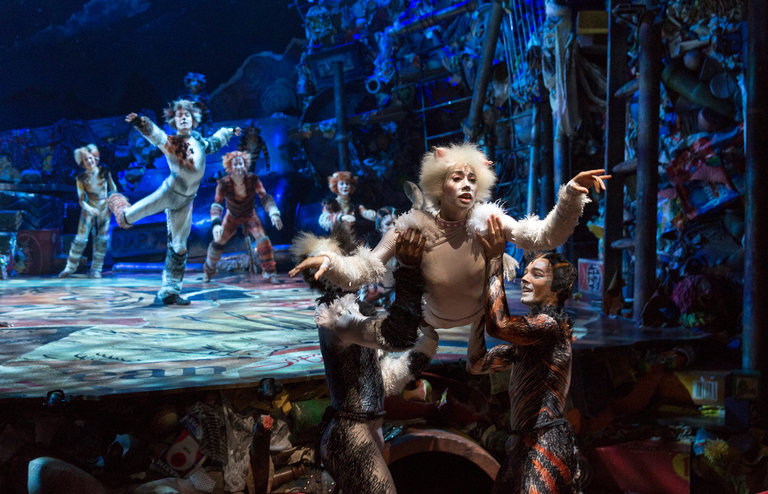
Review: Does ‘Cats’ Have Nine Lives on Broadway?

August 2, 2016 By Respiro E Movimento · Follow us: Facebook · Twitter · Instagram · YouTube

01CATS-master768


The overriding spirit of the revival appears to be the familiar motto: Don’t mess with success. Once again, the production is directed by Trevor Nunn, with sets and costumes by John Napier. Once again, a Broadway theater has been transformed into a grungy London junkyard, where trash piles up against the walls and spills out into the auditorium — albeit on a somewhat smaller scale. That levitating tire, as famous a set piece as a certain falling chandelier, presides once again at the back of the stage. (Apparently the license plate on the battered car, which reads “NAP 70,” is an in-joke indicating how many productions Mr. Napier has designed. Imagine how many leg warmers have been involved.)

The most significant nod to the intervening decades and changing tastes is the hiring of Andy Blankenbuehler — the Tony-winning choreographer of “Hamilton,” the newest now-and-forever musical (to borrow the marketing slogan from the first “Cats”) — to groom the original choreography by Gillian Lynne. (Ms. Lynne gave an interview to the website and newspaper The Stage in which she said she felt positively murderous at this betrayal.)

With its thread of a plot, about which feline will be chosen by the lord of the cat kingdom, Old Deuteronomy (an aptly august-acting Quentin Earl Darrington), to ascend to something called the “Heaviside Layer” on the night of the annual “Jellicle Ball,” “Cats” is basically a series of divertissements. The felines prance and romp and occasionally hiss at one another as they introduce themselves in songs that provide the show’s greatest allure, as well as its variety.

Mr. Lloyd Webber is a musical magpie who can compose soaring pseudo-classical music as smoothly as he can jaunty music-hall-style jingles or jazz-inflected rock songs. His dexterity as a composer has never been more vividly showcased as it was, and is, in “Cats.” (His “School of Rock,” with a zesty pop-rock score, is currently installed at the Winter Garden Theater, the original “Cats”-box.)

(via)

Filed Under: ACTING, ACTORS, CATS, PERFORMANCE, THEATRE

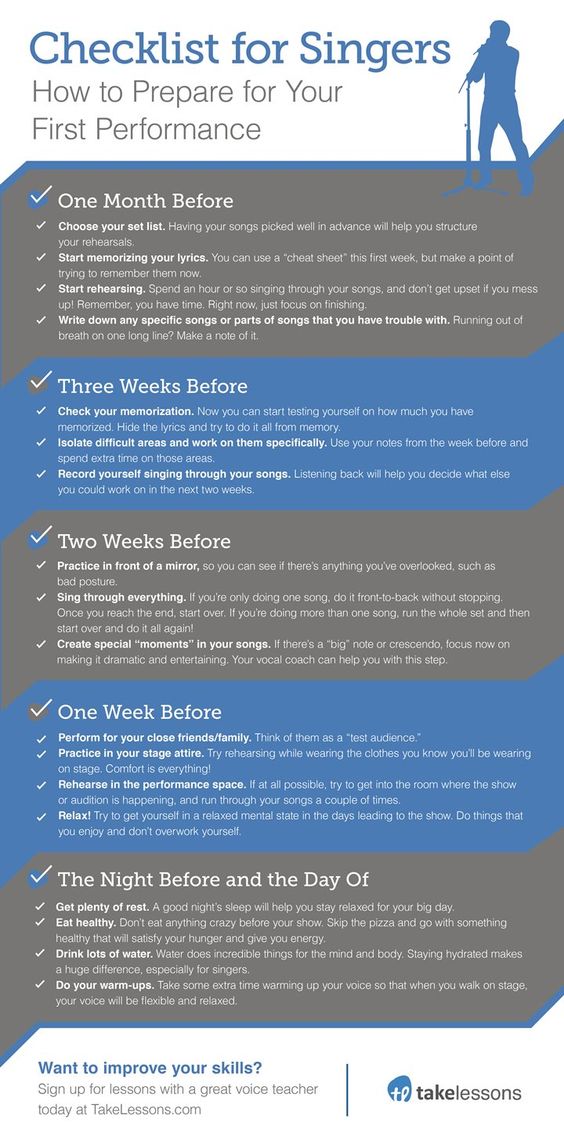
Checklist For Singers

June 10, 2016 By Respiro E Movimento · Follow us: Facebook · Twitter · Instagram · YouTube

checklist

Filed Under: CHECKLIST, PERFORMANCE, SINGERS

Injury Prevention: Understanding Pain

May 6, 2016 By Respiro E Movimento · Follow us: Facebook · Twitter · Instagram · YouTube

Filed Under: BALLET, BALLET DANCERS, DANCE, DANCERS, INJURY PREVENTION, MOVEMENT, PERFORMANCE, VIDEO

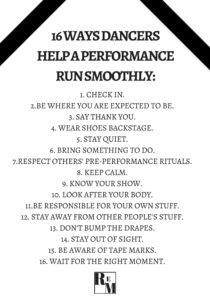
16 Ways Dancers Help A Performance Run Smoothly

May 6, 2016 By Respiro E Movimento · Follow us: Facebook · Twitter · Instagram · YouTube

16 Ways Dancers help a performance run smoothly


(via)

Filed Under: BALLET, BALLET DANCERS, DANCE, DANCERS, PERFORMANCE

  • « Previous Page
  • Page 1
  • Page 2

Copyright © 2026 · Respiro e Movimento®· All rights reserved

  • Facebook
  • Twitter
  • Instagram
  • YouTube