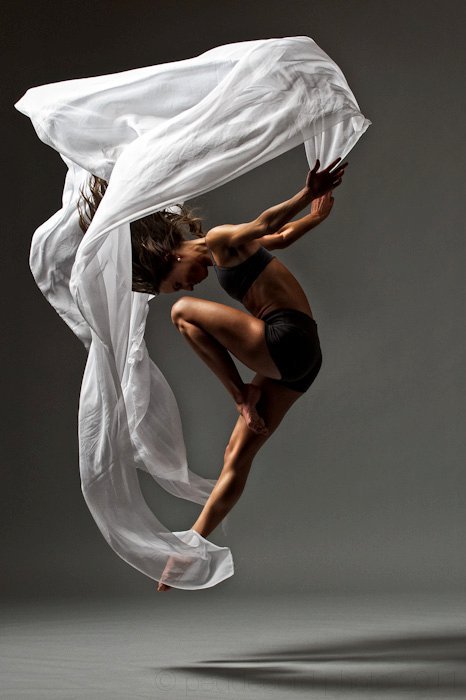
“Dancing is creating a sculpture that is visible only for a moment.”
EROL OZAN
Ballerina: Dayna Marshall.
Photograph by Christopher Peddecord.
EROL OZAN
Ballerina: Dayna Marshall.
Photograph by Christopher Peddecord.

Peter Quanz has created ballets for some of the world’s leading ballet companies. Here is part of an interesting interview on his work as a choreographer.
KM You make bold choices and continually seek out opportunities to collaborate – how have these different experiences informed your perspective as a choreographer?
PQ I am currently collaborating with Montréal Danse for the creation of a new piece. To spark the creative genesis of the piece, Artistic Director, Kathy Casey proposed a question to me – “How would you make a dance if you didn’t consider the audience?”. That flummoxed me, because for me, one of my hang ups is trying to gauge what an audience is going to relate to. But if you always try to make something an audience will like, soon you will end up only sitting in the audience with them.
We started out with an initial two week rehearsal period. We spent the better part of it figuring out different ways of connecting as a group of people, when I suddenly realized that what was most interesting about this collaboration was the bond that we had as a team. The idea became how to find a way to create a social connection with the audience: essentially, a “social experiment”.
We are now building a durational production where the whole audience is animated the whole time through technology. They will be using their phone and their signals will be turned on. We are playing with people’s connection to their phones. We are seeing the phone as an extension of their bodies, as an extension of themselves. We are playing with the idea of how we can be drawn together through this immediate technology while not getting so disconnected from ourselves physically that it ceases to be dance.
KM An interesting paradox.
PQ Oh it’s been fantastic! We are finding ways of using the phones to show us our bodies and our movement in ways you can’t see in a normal performance. We are using video that is taken live, utilizing different perspectives to see parts of an image; using the settings on the phone to both create light or diminish what you see in an image. This is how we build “community” in this performance; and we risk in being brought close together with an audience in an artistic relationship, which is very exciting.
No one on our team has ever done a project like this. We are learning how to define what is happening without over defining things, because this choreography is not about steps. One of our dancers coined the phrase “aesthetic of the situation”.
I’m interested in revealing how artists think in spontaneous ways, how they make choices based on their knowledge of movement and performance; I’m curious about dancers themselves being the vulnerable material from which our experience emerges.”
The work with dancers I have in Montréal requires a sensitivity to an ever shifting relational dynamic – between the artist, their relationships to technology and the structure we have all defined as a group. In contrast with that process, I’ve gone off to work with very classical ballet companies setting choreography that is highly determinate of the music and relates closely to architectural structures in movement, which of course has to be very precise.
Photograph by John Hall.
(via)

Want to be a dancer? Cara Marie Gary, Joffrey Ballet dancer, shares her 3 top challenges as a dancer.
1. Pain Management
Each morning I wake up refreshed, but often with minor aches and pains, and over the years, I’ve found some helpful remedies for this challenge. I often consult with my physical therapists about the pain I’m experiencing and they always offer specific strengthening exercises for weak areas that could be linked to the source of pain.
2. Personal vs. Professional Life
Although I’m passionate about dancing, I’m normally in the studio eight hours a day, five days a week, and I feel it’s important to focus on other interests and activities once work is completed for the day. To tackle this challenge, my roommate (also a dancer with The Joffrey Ballet) and I came up with some “house rules”.
First, we are intentional about limiting talk about work when we’re at home, and we also make sure to leave “work duties” at work – that means no bringing pointe shoes home to sew! Instead, we focus our attention on other aspects of our lives.
3. Adapting to Change
The beautiful thing about our art form is that it is constantly evolving, and dancers often have to learn to adapt to new choreography and styles as ballet and dance continue to push boundaries. It’s important to not be timid and learn to be bold when exploring new styles of movement. l try to watch and learn from fellow artists and apply corrections from ballet masters and choreographers, and I’ve found it always goes a long way to be polite and respectful to the people surrounding you as you learn together.
Photograph by Cheryl Mann.
(via)
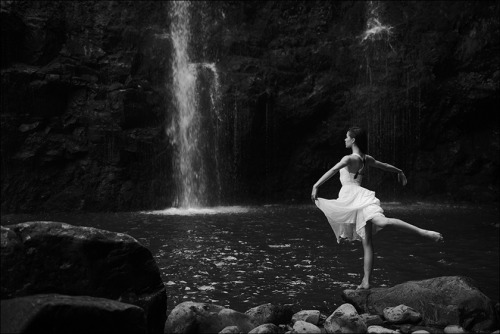
1. Clarify your vision
When you activate your imagination and visualize your success, you’re onto one of the best-kept secrets of Olympic athletes and high-level sport coaches. Visualization is the first step to creating anything.
Take a moment to close your eyes and clarify your vision.
2. Create affirmations
To affirm something means to declare it’s true. Write your affirmations down and post them where you can see them the first thing and throughout the day.
3. Focus on your process
Keep your attention on what you are doing and nothing else. No distractions, no comparisons.
4. Positive thinking
Remember, the thoughts that flicker your mind will either be helpful or hurtful, so strive to keep your thoughts positive.
5. Let yourself shine
Instead of worrying, think instead about how you can fly, then spread your wings and go for it. Smile, have fun and be yourself.
Photograph by Ballerina Project.
(via)

1. Movement training embodies Wu Wei: Effortlessness. Action through non-action.
A Taoist philosophy. This is the feeling of being mobilized to act, not forcing oneself to train out of a sense of need or guilt. Rather, movement training implies the want to explore motion, with an intrinsic momentum pushing you forward, curiously.
2. Movement quality vs. exercise quantity: How much do I really need to lift be “strong”?
Strength is only one component of fitness that dancers require. Too much “exercise” interferes with movement quality.
3. Exercise requires movement, but movement does not always imply exercise.
4. Movement helps us enter flow state.
Because there is a goal in mind beyond working hard and sweating, which is generally what comes to mind when we hear the word “exercise”.
5. Movement teaches us about ourselves and the world.
Photograph by Andrew Nash.
(via)
Can you imagine a party where every movement and every visual detail were governed by a complex system of rules and procedures? For centuries, such rituals were commonplace for European nobility. And while they’ve gone out of fashion, we recognize the components under a familiar label: ballet. Jennifer Tortorello and Adrienne Westwood outline the history of this graceful and precise dance.
Juliet – Tempe Town Lake Pedestrian Bridge, Arizona.