DANCE
Capturing A Dancer Out Of Her Environment
Photographer Albert Ayzenberg doesn’t photograph dancers on stage, quite often he doesn’t photograph dancers dancing either, but rather uses the form of their bodies to integrate or contrast with an outside environment. Dancers on the subway, in phone boxes… isn’t it all getting repetitive?
To me it’s a fine art project. Dancers are amazing athletes. You can put a ballerina in any location and make art. But it’s not just about capturing a beautiful silhouette against an interesting backdrop. I like to shoot close-ups. The face and the eyes tell a personal story. I try to capture the essence of the dancer in this way… to portray the whole human being.
I like to think my photos reveal the intimate side of a dancer in a way that a lot of commercial dance photography does not. I hope the audience finds my images both exquisite and very accessible.


(via)
Injury Prevention: Understanding Pain
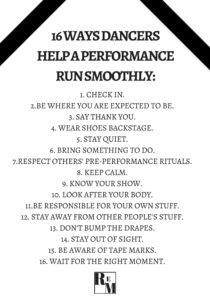
16 Ways Dancers Help A Performance Run Smoothly
How To Prepare Yourself For Dancing On An Unfamiliar Stage

Chelsea Bradley, a freelance choreographer based in Madison, Wisconsin, where she teaches contemporary at Monona Academy of Dance and serves as resident choreographer for Dance Wisconsin, gives us the following steps.
1. Find your spot
Spotting is easy in the studio. I often tell my dancers to use the mirror to look themselves in the eyes. However, when there is no mirror, we must adjust. The most common item in convention center ballrooms and theaters are “exit” signs. If there are none, look for non-moving lights or visible signs.
2. Survey the floor
If you are able to look at the stage before you perform, consider the following to visualize the spacing of your choreography:
- Are there wings (and if so, how many)?
- How many strips of flooring (or tape lines) are there?
- Are there markings for center or quarter?
If you will be wearing pointe shoes, always have rosin with you in case the stage appears slippery.
3. Check for distractions
Being aware of these distractions before you dance makes it less likely that they will disrupt your performance.
4. Visualize
Once you have surveyed your external surroundings, it is important to make sure that you are mentally prepared to perform. After you have warmed up, use an mp3 player to listen to your music.
Photograph by Mait Jüriado.
(via)
How To Improve Flexibility
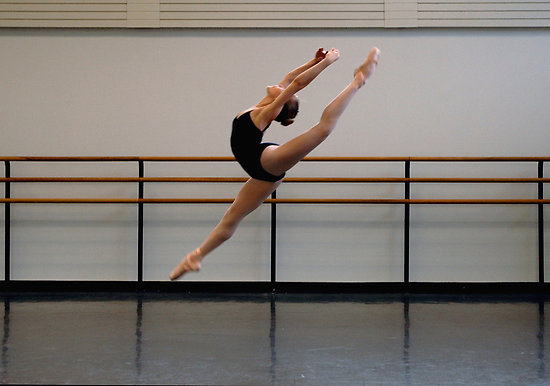
Improve flexibility by performing a few cardiovascular exercises before stretching, in order to loosen up the muscles in the body and increase circulation. Increase flexibility by stretching the legs, quads and hamstrings with tips from a gymnastics coach in this free video on gymnastics. Watch the video below.
The Body Is Living Art

Anna Halprin helped pioneer the experimental art form known as postmodern dance and referred to herself as the breaker of modern dance.