• Skip to primary navigation
  • Skip to content

RESPIRO E MOVIMENTO®

DISCOVER YOUR REAL POTENTIAL

  • Book a session
  • Events
  • Testimonials
  • Blog
  • Gallery
  • Media
  • Contact

COMPOSER

Interview: Joanna Lee, Composer

February 14, 2017 By Respiro E Movimento · Follow us: Facebook · Twitter · Instagram · YouTube

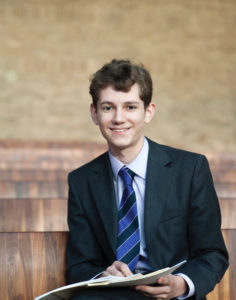
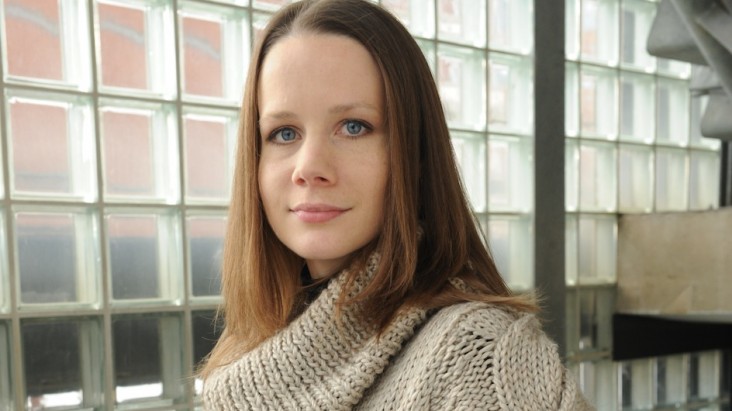
Joanna Lee

Who or what inspired you to take up composing, and pursue a career in music?

I essentially fell into composing – it was a required component of GCSE and A Level music so I started to compose for this and found the area of music I really loved; I preferred creating and experimenting with music rather than performing or repeating what already exists. I have played the piano since I was four – my Mother encouraged me to lessons – and I have never looked back; music has been my life and considering another career didn’t cross my mind.

Who or what were the most significant influences on your musical life and career as a composer?

There are several people that have been significant influences in my musical life. Initially, my childhood piano and school music teachers, who fed my endless musical appetite and encouraged me to composing and music college. From there, my undergraduate teacher Joe Cutler, the first person to teach me that there were actually living composers (!), whilst also having an open-minded approach to different styles of music. Plus other mentors who have selflessly shown faith and generosity to me as a young composer, such as Jane Manning and Oliver Knussen.

Hearing the Rite of Spring by Stravinsky during A Level was a revelation; I had not heard modern music before this. I am also from the east of Suffolk, where the incredible legacy of Benjamin Britten is strongly felt. A huge turning point was being introduced to the ‘avant garde’ composers and works of the 1950s/60s, e.g. Eight Songs for a Mad King by Peter Maxwell Davies, Aventures by Ligeti, Sequenza by Berio. This era initiated a prolonged period of inspiration and direction for my composition.

(via)
Filed Under: COMPOSER, INTERVIEW, JOANNA LEE

Philip Glass Plays…Minimalism!

January 27, 2017 By Respiro E Movimento · Follow us: Facebook · Twitter · Instagram · YouTube

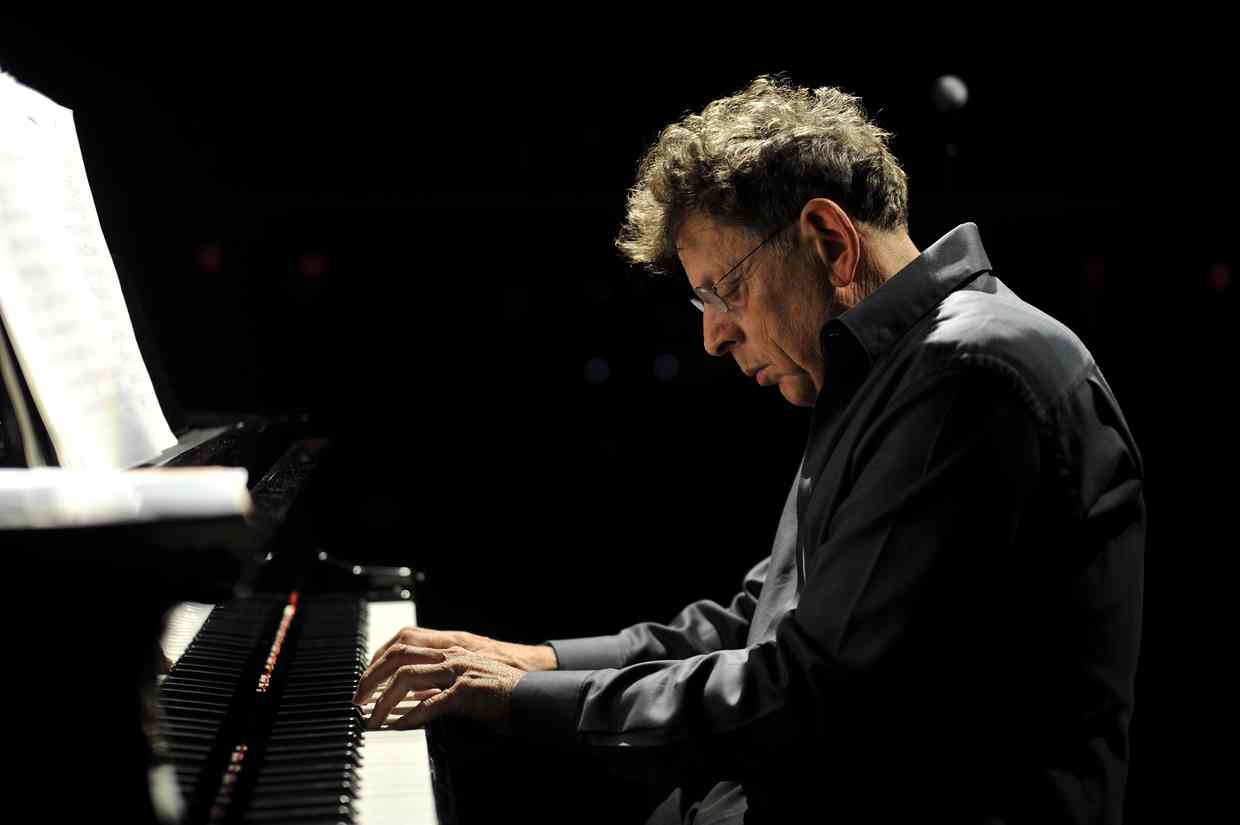
Philip Glass

It seems that no one – not you, or Steve Reich, or John Adams – likes being called a minimalist. What do we call you if not that?
Let’s talk about this. The problem is no one is doing minimalism now. It’s music we wrote in the 1970s. It’s over 30 years out of date. It’s a crazy idea to use a description made up by journalists and editors to cover all kinds of music. It’s more confusing than descriptive. What do I really do? Listen to me. I’ve written 26 operas, 20 ballets, I don’t know how many film scores. I write theatre music. I write concert and symphonies too. I’m working on a new film score right now. Then I’ll start a new stage piece. My problem is people don’t believe I write symphonies. But I’m premiering Symphony No 11 in a couple of weeks. These are all different forms of music. Maybe I do too many things.

But it’s the description that sticks: Philip Glass, the great American minimalist…
If people called me an American opera composer it would have the virtue of being what I actually do. This is reality. God forbid we should be accurate. I’m not making this stuff up. Would it be easier to say I’m an Icelandic composer who writes serial music? Would that be helpful? [Silence, then laughter.] I’m a theatre composer.

A lot of people want to hear my music of the 1970s and 1980s. And do you know what I do? I play it. I talk to Paul Simon or anyone like that and it’s the same. I say, “what do you play live, Paul?” and he says “I play my new songs and I play my hits”. And it’s true. If you go to hear Paul Simon, you want to hear Bridge Over Troubled Water. The new work, by the way, is beautiful, but it’s not why you buy the ticket. You want to hear the old ones. It’s the same for me when I play with my ensemble [the Philip Glass Ensemble]. We’ve been together 40 years. We play the familiar stuff, the highlights.

So you’re saying, then, you play… minimalism!
Well, yes, I admit I am part of the confusion. We’ve reworked a piece from 1971. And, guess what, it’s minimalist! OK OK OK, I’m just as bad as the journalists [more laughs].

(via)

Filed Under: COMPOSER, MUSIC, MUSICIANS, PHILIP GLASS

Interview: Richard Causton, Composer

January 23, 2017 By Respiro E Movimento · Follow us: Facebook · Twitter · Instagram · YouTube

Richard Causton

Who or what inspired you to take up composing, and pursue a career in music?

I started playing the flute at quite a young age and, once I figured out how to read music I realised that I could put notes together how I wanted to and saw that this could be as much or more fun than just reading other people’s. This was possible only thanks to the free tuition and instrument loan that state schools offered back then: I was extremely lucky to attend the Centre for Young Musicians in Pimlico (then run by the Inner London Education Authority). Now, after many years, I am very happy to be an Honorary Patron of the CYM.

Who or what were the most significant influences on your musical life and career as a composer?

I think that, as a teenager, seeing Michael Tippett quite a lot at concerts – hearing new works by him and hearing him talk about them before the performance – had a huge impact on me. It was vital in making me realise that composers are living people and that their imaginations are shaped by the world we all live together in.

(via)

Filed Under: COMPOSER, INTERVIEW, MUSIC, RICHARD CAUSTON

Interview: Luke Navin, Composer

December 13, 2016 By Respiro E Movimento · Follow us: Facebook · Twitter · Instagram · YouTube

Luke Navin

Who or what inspired you to take up composing, and pursue a career in music?

I’ve always bought into the idea that you have to do what you’re good at and you have to do what you love, and I’m very lucky that the two are one and the same. For as long as I can remember I’ve always thought musically. Long before any formal education in music or the piano, it seemed an obvious and natural form of expression. My mind has always been full of musical invention – as much now as when I was five years old – the only conscious decision I made was when I was 15, when I decided to write some of it down.

Who or what were the most significant influences on your musical life and career as a composer?

I think that discovering opera played a pivotal role in shaping my attitude towards composition and music as a whole, in that it convinced me of exactly what I wanted from a piece of music. I saw Tosca at Covent Garden, which was a perfect introduction as it clearly said to me, ‘this is what music should be, and this is how it should make you feel’. Ever since, Puccini has been extremely important to me, as has Italian opera as a whole.

Antonio Pappano at Covent Garden and James Levine at the Met Opera in New York have broadened both mine and thousands of other peoples’ love of music. On a more personal level, I am exceedingly grateful to my last piano teacher, Warren Mailley-Smith, for the mountain of support he gave me, in particular as a composer.

What have been the greatest challenges of your career so far?

I’m fortunate that I’ve never been lacking in inspiration or ideas. The greatest challenge has always been one of structure – I know what I want the music to do and have the musical ideas to express it, but sometimes putting it all together in an ordered and balanced way can prove elusive! Generally I find it just needs time – I leave something for a while, and after some time away, it either works itself out and fits together or it doesn’t. Usually it does!

(via)

Filed Under: COMPOSER, INTERVIEW, LUKE NAVIN

Why Hartmann Is The Composer Of The Moment

November 7, 2016 By Respiro E Movimento · Follow us: Facebook · Twitter · Instagram · YouTube

Karl Amadeus Hartmann was born in Munich in 1905 into a bohemian family of painters. Unlike his brothers and sister who became painters in turn, he turned towards music, eventually becoming a trombonist in the Munich Opera orchestra. In 1918 he witnessed the Bavarian workers revolt which broke out at the end of World War One and seemed for a time as if it might establish Bavaria as a separate, radical workers republic – a very curious thought now! The politics of this uprising were a lasting influence on Hartmann who continued to hold partly disguised Marxist views for the rest of his life.

After the war, Hartmann was one of the very few surviving musicians still in Germany untainted by direct association with the Nazis, and was appointed dramaturg of the Bavarian State Opera. In addition, he was generously patronised by the Americans, keen to re-establish German culture and hence, political stability. Hartmann carefully airbrushed out his Marxist past, and in return the Americans generously helped him to found his extremely influential Musica Viva series which was generous in repatriating many of the composers stamped out by the Nazis, as well as giving ample opportunities to younger talents like Hans Werner Henze. Hartmann’s subtle and intelligent ability to move with the wind enabled him to achieve significant cultural advances, and his open spirit re-invigorated post war musical life in Germany.

Simplicius is in some ways at odds with this cultivated and sophisticated approach. The original story, a masterpiece from the 17th century, reflects a brutal history of violence unequalled in Europe until the catastrophic but brief Fascist era. (In between, Europe had exported its violent tendencies to its colonies!) This relentless horror is ironically seen though the eyes of a helpless innocent, through whom it is visible in all its naked fury. The humane and compassionate Hartmann here finds a voice through whom he can speak about the evils of war with unrestrained loathing and abhorrence.

(via)


Filed Under: COMPOSER, KARL AMADEUS HARTMANN, MUSIC

Meet The Artist: Lawrence Dunn, composer

October 18, 2016 By Respiro E Movimento · Follow us: Facebook · Twitter · Instagram · YouTube

What are the special challenges/pleasures of working with particular musicians, singers, ensembles and orchestras?

Perhaps the most specific challenge is working with musicians whom you don’t know—but it’s also a pleasure too. Music is a way of ‘knowing’ others—composers and performers knowing each other, listeners knowing composers knowing performers. As in, it can be hard to see into someone else’s mind; knowing other people is hard. Music, when it’s good, can reveal much about the person who made it; performers can reveal much about themselves in a piece’s development and rehearsal and performance. This is why it can be so amazing to write for musicians who are already your friends; it can deepen or enrich a relationship in a very singular way.

Of which works are you most proud?

I have to say, I was pleased with this piece that I wrote for John and Marie. It fell into place lightly—but I think securely. It’s difficult to be proud of one’s pieces—one can be immediately after one finishes (perhaps more ‘satisfied’ than proud). But later on when they’re set in aspic and difficult to alter significantly one always sees their flaws or problems or naivities—one just has to move on to the next thing. I’m quite proud of a few pieces I wrote as a teenager—but I wonder if that’s because I’m proud of the teenager who wrote them. But I have no idea about the recent music. I wrote an orchestra piece recently—I still don’t know how I really feel about it. But then I’m still convinced that the next piece will be the best one. I wonder when one snaps out of that.

(via)

Filed Under: COMPOSER, LAWRENCE DUNE

  • « Previous Page
  • Page 1
  • …
  • Page 4
  • Page 5
  • Page 6

Copyright © 2026 · Respiro e Movimento®· All rights reserved

  • Facebook
  • Twitter
  • Instagram
  • YouTube