Interview: Alena Lugovkina, Flautist
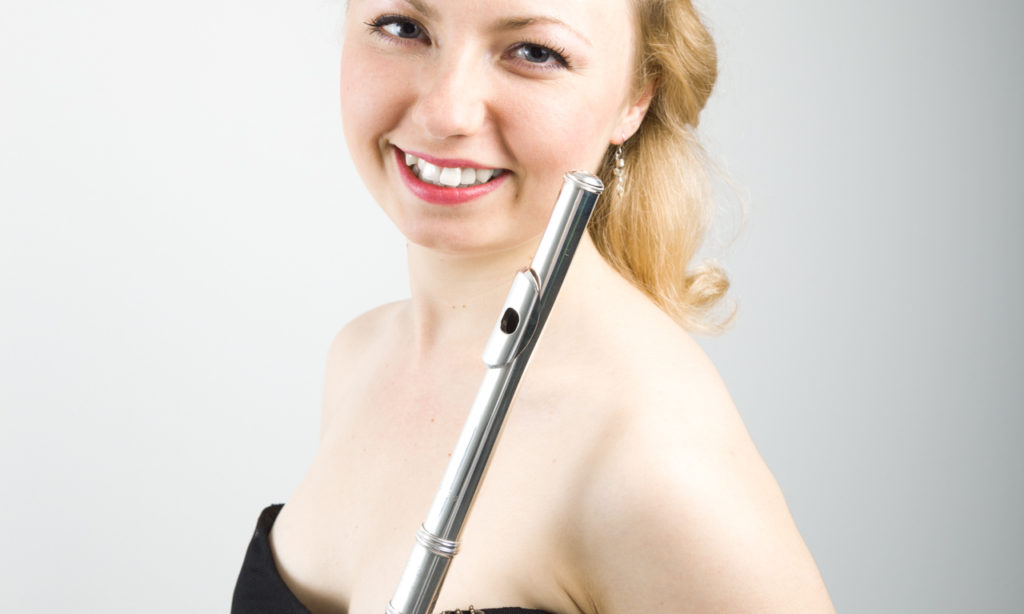
Who or what inspired you to take up flute and pursue a career in music?
Thinking back to how I’ve started flute and came to the UK, I think of the phrase “it was meant to be”.
According to my parents, every time I heard music, I would start singing, so I’ve been singing since I was a few months old. Because of my singing and love of music, my parents thought that this is something that I wanted to do or would wish to do when I grew up. So it is my parents who really made it happen, for which I will be forever grateful .
One day my mom was on the tube and heard a young girl quietly singing (she was just sitting preparing solfeggio homework). She was singing so beautifully that my mom approached mother of that girl asking where she was studying. They gave us an address of that school and few days later my mom and I went to that school and apparently as soon as I’ve entered the door to the school I said “I will be studying here”. That turned out to be one of three finest music schools in whole Russia – called Gnessin Special Music School.
Even though I was only six years old and it was a 3 hour commute to that school every day, I was so determined to study there. First I started on piano, but as the school was a special music school (similar to The Purcell School or Chetham’s School of Music in UK), my piano teacher demanded that we bought piano so that I could practice at home. As we didn’t have money for piano, I was transferred to a recorder, which was the cheapest instrument at the time. The system in the school was that you played recorder first and then when you were 10 or 12 years old, you transferred to other woodwind instrument. When the time came for me to choose which instrument I wanted to play, I couldn’t make up my mind.
One day I got a CD from a friend. The person who gave it to me didn’t know who was playing or what they were playing, as they’d got a copy of it from someone else who also didn’t know who was playing on CD. I put that mysterious CD into the CD player and almost stopped breathing when I heard it. It was the first time that I’d heard such a deep, mesmerising and enchanting sound of the flute. It was just a simple charming French suite, but the musicianship and this amazing sound had a great impact on me. I remember saying then “if a flute can sound like this – I would like to play the flute”.
Who or what were the most important influences on your musical life and career?
So here my story continues. A couple of years later, I went to a competition in Romania, where I became friends with two flute players – one from Israel, other from South Korea. One day I received a letter from my Korean friend with a list of summer schools that she recommended for me to attend. My English wasn’t that great then, so looking at the websites of the summer schools, trying to choose, I am not sure how I’ve made my choice – probably again that magical “meant to be”.
The summer school took place in Surrey with flautist William Bennett. It changed my life and opened my eyes to a whole new world of flute playing. The level playing was so high and William Bennett’s teaching so musical and inspiring, that the whole experience of summer school made me suddenly want to practice rather than having to practice. I realised straight away that William Bennett (also known as “Wibb”) was THE teacher I wanted to study with and I was very happy to hear that he liked my playing and suggested I audition for the Royal Academy of Music. I was very lucky to get a full scholarship from the Royal Academy of Music and so I was able to come London and study.
One day (I think that was my 2nd year at RAM), I brought the Godard Suite to Wibb for a lesson. He said: “before we start the lesson, listen to this recording”. He put the recording on his Gramophone. It was that very recording that I’ve heard when I was 11 and that made me take up the flute. I asked: “WHO is playing?!” And Wibb replied: “Me. Why?”
I feel that was meant to be….. Wibb continues to be my endless inspiration.
(via)
Puccini’s Madama Butterfly – Teatro alla Scala
Aaron Eckhart on Playing a Real-Life Individual

Though Bleed for This — the biopic of Vinny Pazienza, a boxing champion that made a comeback after breaking his neck in a car accident — hasn’t performed well in theaters, one of the most praised aspects of the film is Aaron Eckhart‘s performance as Kevin Rooney, Paz’s trainer.
Two important aspects of the role that Eckhart felt compelled to do justice to was Rooney’s physical and vocal attributes — which included gaining weight, shaving his head to look as if he were balding, and even stuffing tissues in his nose to help sound like Rooney. He reveals, “Anything I improvised it came from Kevin’s language verbatim. I listened to so much tape of him talking that anything I said in the movie that wasn’t scripted was actually what Kevin would say. That really helped me out. To this day, I could just start talking [like Kevin] and do entire interviews that I listened to of him. I always had him in my ear, in my phone. I was always watching, always talking in his voice.”
Paying that much attention to Rooney’s voice was essential to Eckhart’s respect for the character — especially since it is based on a real person. He explains, “You have respect and reverence for your characters and the fact that you’re going to epitomize that person for the rest of their lives. They’re going to be judged based on your performance by millions of people. You have a certain responsibility. I tried to match what Kevin looked like at that time, which was overweight. It wasn’t something I did because I wanted to show off. It wasn’t about ego; it was about how do I look like this guy? I’m a relatively skinny, in shape or whatever. I quit working out and started eating cheese pizzas and just gained the weight.”
(via)
Acclaimed Japanese Jazz Pianist Yōsuke Yamashita Plays a Burning Piano on the Beach
News: Mamma Mia! team reunites for Tina Turner musical
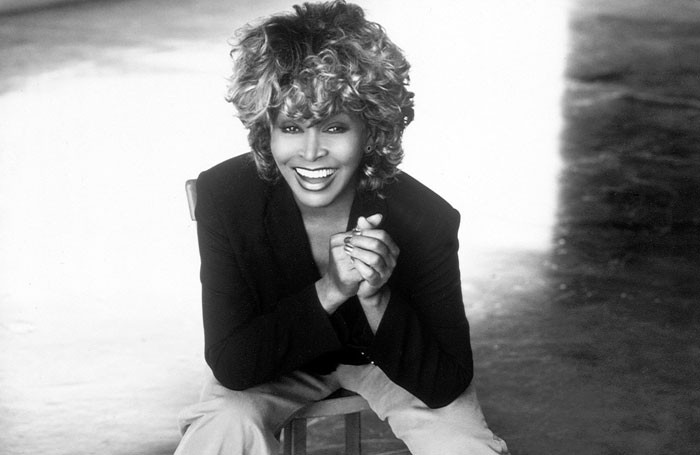
Mamma Mia! director Phyllida Lloyd has reunited with the musical’s choreographer and designer to develop a show based on Tina Turner’s life
“We have been working on the musical for over a year now and today I am delighted to be able to share our news as we begin the next chapter of our journey. It has been wonderful to collaborate with Katori and Phyllida and to have my story nurtured by such an amazing creative team is thrilling. London has always had a very special place in my heart and it’s wonderful to be back.”
(via)
A Way To Make Your Memory More Anxiety-Proof

I think retrieval practice could also represent a fundamentally different approach to learning. Where efforts to play from memory are baked into the learning process from the very beginning.
When I was a kid, memory was something I never thought about until I had gotten a piece totally learned. I saw it as a task to engage in during the “polishing” stage of learning a piece, to get it ready for performance. But how might our approach change if we saw memorization as an integral part of learning a piece from Day 1? Not as some add-on at the end of the learning process?
I know some musicians who do this. Who spend the first week or so “learning” a piece so that they can play it from memory, however imperfectly and haltingly, from a very early stage. And a 2007 study (download PDF here), which follows a concert pianist as she learns Debussy’s Clair de Lune, found that a deliberate effort was made to emphasize memory from the very beginning, even if it meant “muddling” along in a start-and-stop-and-pause-and-think kind of way at the outset.
This was a completely foreign idea to me, but in light of this study, is starting to make a lot of sense.
(via)