• Skip to primary navigation
  • Skip to content

RESPIRO E MOVIMENTO®

DISCOVER YOUR REAL POTENTIAL

  • Book a session
  • Events
  • Testimonials
  • Blog
  • Gallery
  • Media
  • Contact

Respiro E Movimento

What Makes An Audition ‘Thumbs Up’ Or ‘Thumbs Down’

April 28, 2016 By Respiro E Movimento · Follow us: Facebook · Twitter · Instagram · YouTube

Thumbs up and down

Actress Holly Williams, who recently jumped to behind the casting table, shares some tips.

1. Look like your headshot.  When all I have to look at and remember you by is your photo, let it look like you. So much of casting is outside your control. Looking like you headshot is not one of them…

2. Make your resumes easy to read. I spent more time trying to hunt for information on your resume than I did watching your audition. Go to Paul Russell’s ACTING: MAKE IT YOUR BUSINESS book, turn to page 86 and follow the industry standard. I probably missed a marvelous part of your audition because I was searching for something that I should be able to find at a glance.

3. Keep your audition material up to date. Make it a goal to keep your audition material polished and ready to go when unexpectedly requested. This is in your control (see the pattern here?).

4. Be yourself. Have fun. Don’t speak unless spoken to. Put your professional game face on. Live in the moment once your audition begins. Politely thank them for their time and leave. If they are interested in more they will ask.

Photograph by Martin Shapiro.

(via)

Filed Under: ACTING, ACTORS, AUDITION, BOOKS, CASTING, THEATRE

The Importance Of Practicing Tricky Passages In Rhythm

April 28, 2016 By Respiro E Movimento · Follow us: Facebook · Twitter · Instagram · YouTube

Piano player

Noa Kageyama, Ph.D., performance psychologist and musician teacher, shares his take on rhythmicity and performance.

Like every other instrumentalist, I had to take piano lessons in grad school. I had a very thoughtful student-teacher who observed that I had a tendency to play at a tempo which matched the most well-learned sections of the piece. So when I was playing parts that were comfortable for me and felt secure, I sounded great (not “great” in the literal sense, but you know, passable, for a non-pianist who practiced maybe 10 minutes the night before the lesson). But when I got to the sections which were less secure, I’d often fumble around in a panic or even flat-out stop while I organized my fingers for the next phrase. And even if I got the general rhythm of the music ok, played the notes mostly at the right time, and kept things going, the rhythmicity of my movements was off.

He acknowledged that it’s fun to hear ourselves playing the good parts in tempo, but encouraged me to put my ego on hold, and play at a more sustainable tempo, based not on the best-learned sections, but on the weakest passages. So that when I played through the piece, I would be able to comfortably play the most difficult parts without feeling quite so rushed and frantic when I got there.

To be clear, this is not about practicing with a metronome per se. Because you can still play in time, but with herky-jerky shifts that have poor rhythmicity. The idea, is that if faced with a difficult shift (as an example), it’s probably not enough to just practice the movements involved in the shift, and functionally getting from note A to note B. If we really want to maximize consistency and accuracy, we may have to practice the rhythmicity of the shift as well. So that whether we are practicing slowly, at tempo, or even above tempo, the rhythm of the shift is itself a target of our practice efforts.

Photograph by Hugo Enrique Garcia Ximenez.

(via)

Filed Under: LEARNING, MUSIC, MUSICIANS, PERFORMANCE ANXIETY, PIANO, RHYTHMICITY

The Body Is Living Art

April 28, 2016 By Respiro E Movimento · Follow us: Facebook · Twitter · Instagram · YouTube

Anna Halprin

Anna Halprin helped pioneer the experimental art form known as postmodern dance and referred to herself as the breaker of modern dance.

Filed Under: ART, BALLET, BALLET DANCERS, DANCE, DANCERS, INSPIRING, MOVEMENT, QUOTES

Paramour: Musical Theater Meets Acrobatics

April 27, 2016 By Respiro E Movimento · Follow us: Facebook · Twitter · Instagram · YouTube

Paramour

Prepare to get swept off your feet by PARAMOUR, a rapturous and passionate new experience that unites the signature spectacle of Cirque du Soleil with the storytelling magic and music that define Broadway. Set in the glamorous world of Golden Age Hollywood, this groundbreaking event spins the tale of a beautiful young actress forced to choose between love and fame.

Cirque du Soleil’s first Broadway venture, “Paramour,” is off to an unusually strong start at the box office, drawing large crowds to see this musical-theater-meets-acrobatics spectacle at the cavernous Lyric Theater.

Photograph by Sara Krulwich.

(via)

Filed Under: ACROBAT, ACTING, ACTORS, CIRQUE DU SOLEIL, DANCE, DANCERS, NEWS, STORYTELLING, THEATRE

Creating A Sculpture

April 27, 2016 By Respiro E Movimento · Follow us: Facebook · Twitter · Instagram · YouTube

w-dayna-marshall-christopher-peddecord

“Dancing is creating a sculpture that is visible only for a moment.”

EROL OZAN


Ballerina: Dayna Marshall.

Photograph by Christopher Peddecord.

Filed Under: BALLET, BALLET DANCERS, BREATH, DANCE, DANCERS, MOVEMENT, PHOTOGRAPHY, QUOTES

Using The Phones To Show The Dancers Their Bodies And Their Movement

April 27, 2016 By Respiro E Movimento · Follow us: Facebook · Twitter · Instagram · YouTube

dancers Les Grands Ballets Canadiens-4-1

Peter Quanz has created ballets for some of the world’s leading ballet companies. Here is part of an interesting interview on his work as a choreographer.

KM You make bold choices and continually seek out opportunities to collaborate – how have these different experiences informed your perspective as a choreographer?

PQ I am currently collaborating with Montréal Danse for the creation of a new piece. To spark the creative genesis of the piece, Artistic Director, Kathy Casey proposed a question to me – “How would you make a dance if you didn’t consider the audience?”. That flummoxed me, because for me, one of my hang ups is trying to gauge what an audience is going to relate to. But if you always try to make something an audience will like, soon you will end up only sitting in the audience with them.

We started out with an initial two week rehearsal period. We spent the better part of it figuring out different ways of connecting as a group of people, when I suddenly realized that what was most interesting about this collaboration was the bond that we had as a team. The idea became how to find a way to create a social connection with the audience: essentially, a “social experiment”.

We are now building a durational production where the whole audience is animated the whole time through technology. They will be using their phone and their signals will be turned on. We are playing with people’s connection to their phones. We are seeing the phone as an extension of their bodies, as an extension of themselves. We are playing with the idea of how we can be drawn together through this immediate technology while not getting so disconnected from ourselves physically that it ceases to be dance.

KM An interesting paradox.

PQ Oh it’s been fantastic! We are finding ways of using the phones to show us our bodies and our movement in ways you can’t see in a normal performance. We are using video that is taken live, utilizing different perspectives to see parts of an image; using the settings on the phone to both create light or diminish what you see in an image. This is how we build “community” in this performance; and we risk in being brought close together with an audience in an artistic relationship, which is very exciting.

No one on our team has ever done a project like this. We are learning how to define what is happening without over defining things, because this choreography is not about steps. One of our dancers coined the phrase “aesthetic of the situation”.

I’m interested in revealing how artists think in spontaneous ways, how they make choices based on their knowledge of movement and performance; I’m curious about dancers themselves being the vulnerable material from which our experience emerges.”

The work with dancers I have in Montréal requires a sensitivity to an ever shifting relational dynamic – between the artist, their relationships to technology and the structure we have all defined as a group. In contrast with that process, I’ve gone off to work with very classical ballet companies setting choreography that is highly determinate of the music and relates closely to architectural structures in movement, which of course has to be very precise.

Photograph by John Hall.

(via)

Filed Under: AUDIENCE, BALLET, BALLET DANCERS, CHOREOGRAPHY, DANCE, DANCERS, MOVEMENT, TECHNOLOGY

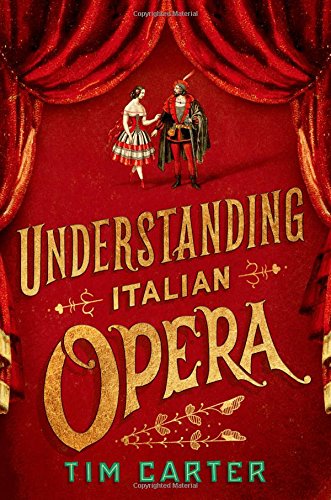
Understanding Italian Opera

April 26, 2016 By Respiro E Movimento · Follow us: Facebook · Twitter · Instagram · YouTube

Understanding Italian Opera


Opera is often regarded as the pinnacle of high art. A “Western” genre with global reach, it is where music and drama come together in unique ways, supported by stellar singers and spectacular scenic effects. Yet it is also patently absurd — why should anyone break into song on the dramatic stage? — and shrouded in mystique.

In this engaging and entertaining guide, Understanding Italian Opera, renowned music scholar Tim Carter unravels its many layers to offer a thorough introduction to Italian opera from the seventeenth to the early twentieth centuries.

Filed Under: BOOKS, DRAMA, LEARNING, MUSIC, OPERA, OPERA SINGERS

  • « Previous Page
  • Page 1
  • …
  • Page 201
  • Page 202
  • Page 203
  • Page 204
  • Page 205
  • …
  • Page 210
  • Next Page »

Copyright © 2026 · Respiro e Movimento®· All rights reserved

  • Facebook
  • Twitter
  • Instagram
  • YouTube