• Skip to primary navigation
  • Skip to content

RESPIRO E MOVIMENTO®

DISCOVER YOUR REAL POTENTIAL

  • Book a session
  • Events
  • Testimonials
  • Blog
  • Gallery
  • Media
  • Contact

MUSIC

What’s Working In Indie Music Today?

May 18, 2016 By Respiro E Movimento · Follow us: Facebook · Twitter · Instagram · YouTube

Shannon Curtis

Ask singer songwriter Shannon Curtis about the key to her success as an independent musician, and she’ll tell you — literally — to hit the road.  She’ll encourage you to start touring with the help of your audience.

  1. Touring is the best way to interact with your audience and build your fanbase.
  2. Performing live can bring in more money than recordings, publishing and merchandise combined.
  3. You could win over more fans and make more money playing houses rather than clubs.
  4. Use social media to stay in close touch with her community, noting that Facebook is her most active channel.
  5. The New Artist Model is such a valuable tool.  That inspired me to put together a sponsorship application.

(via)
Filed Under: MUSIC, MUSICIANS, SINGERS, SUCCESS

Do Your Music Videos Pass This 10-Point Test?

May 17, 2016 By Respiro E Movimento · Follow us: Facebook · Twitter · Instagram · YouTube

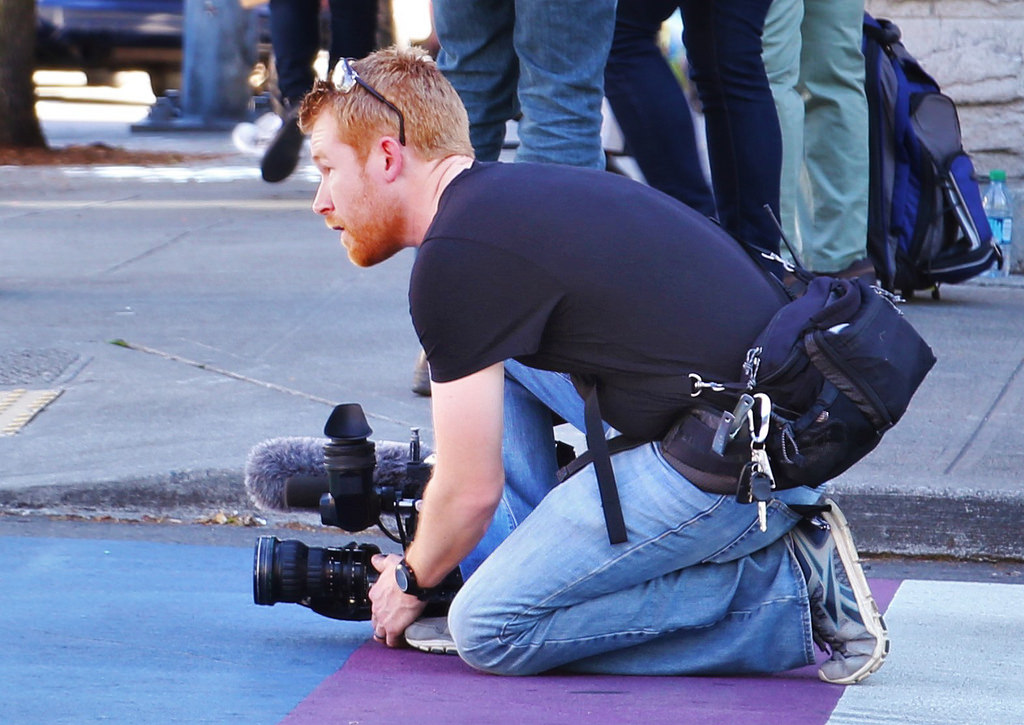
camera man

Ask yourself the following questions. According to the Creator Academy, you don’t need to answer “yes” to every single one in order to make a quality video. But the more times you hear yourself saying “yes,” the more confident you should feel that you’re onto something good.

1. Shareability — Is the video relatable, topical, or remarkable? Does it help someone solve a problem? Will the viewer feel cool or knowledgeable when they share the video with friends?

2. Conversation — Does this video help me communicate with my fans, either directly IN the video, or as a conversation starter for other interactions (in the comments section on YouTube or elsewhere)? Will I appear comfortable and authentic?

3. Interactivity — Does the video involve the audience in some way? Does it ask a question of them, showcase their participation, or encourage them to contribute to future videos?

4. Consistency — Is there an element in this video that occurs throughout all my videos? A familiar face, setting, technique, or theme? Is the video “packaged” in a way that seems consistent with my other videos? Am I posting on a schedule?

5. Targeting — Do I know who this video is FOR? Who is my audience, and is this video going to entertain or inform that audience? Will that audience be interested in only THIS video, or will they enjoy my other videos too?

6. Sustainability — Do I have what it takes to keep doing this?

7. Discoverability — Will my video show up in YouTube search results and be recommended as a related video? Am I using smart keywords and titles?

8. Accessibility — Can a new viewer watch this video and appreciate it without having seen any of your previous videos? In other words, can this video stand alone?

9. Collaboration — Is there an opportunity to work with another artist with a loyal following on YouTube? Can I feature them in such a way so they’re proud of the results, and will want to share this video with their audience?

10. Inspiration — Do I really want to make this video?


Photograph by Sea Turtle.

(via)

Filed Under: MUSIC, MUSICIANS, SINGERS, SONG, VIDEO

Let The Dream Begin

May 11, 2016 By Respiro E Movimento · Follow us: Facebook · Twitter · Instagram · YouTube

let the dream begin

Filed Under: MUSIC, OPERA, OPERA SINGERS, QUOTES, THE PHANTOM OF THE OPERA

What Is A Mechanical Royalty?

May 4, 2016 By Respiro E Movimento · Follow us: Facebook · Twitter · Instagram · YouTube

In a nutshell: every time a song you’ve written is manufactured to be sold in a CD, downloaded on a digital music retail site, or streamed through services like Spotify and Apple Music, you are owed a mechanical royalty.

(via)

Filed Under: MUSIC, MUSICIANS, ROYALTY

What Music Is For

May 3, 2016 By Respiro E Movimento · Follow us: Facebook · Twitter · Instagram · YouTube

what music is for

Miranda Wilson, an internationally performing cellist, says,

Music is not a daily vitamin or a nasty vegetable that you have to eat before you can have ice cream. Music is worth studying because music is wonderful.

Music isn’t just wonderful. It’s sublime, profound, challenging, polarizing, life-changing. Brain scientists have demonstrated that music activates our pleasure circuits.

Music is dangerous.

Music is so dangerous that even a dissonant interval between two notes–the tritone–was considered so subversive by the medieval church that they called it the “devil in music.” The implication is clear: music breaks rules. Music is above the law.

Music affords us a chance to create beauty in a world that is full of ugliness.

Photograph by Dasha.

(via)

Filed Under: MUSIC, MUSICIANS

Freddie Mercury & Montserrat Caballe: How Can I Go On

April 29, 2016 By Respiro E Movimento · Follow us: Facebook · Twitter · Instagram · YouTube

Enjoy Freddie Mercury & Montserrat Caballe on “How can I go On”, from the album, Barcelona. Freddie wrote 12 songs that they recorded together including the opening song for the Winter Olympics in Barcelona, Catalonia.

Filed Under: FREDDIE MERCURY, MONTSERRAT CABALLE, MUSIC, MUSICIANS, OPERA SINGERS, SINGERS, VIDEO

The Importance Of Practicing Tricky Passages In Rhythm

April 28, 2016 By Respiro E Movimento · Follow us: Facebook · Twitter · Instagram · YouTube

Piano player

Noa Kageyama, Ph.D., performance psychologist and musician teacher, shares his take on rhythmicity and performance.

Like every other instrumentalist, I had to take piano lessons in grad school. I had a very thoughtful student-teacher who observed that I had a tendency to play at a tempo which matched the most well-learned sections of the piece. So when I was playing parts that were comfortable for me and felt secure, I sounded great (not “great” in the literal sense, but you know, passable, for a non-pianist who practiced maybe 10 minutes the night before the lesson). But when I got to the sections which were less secure, I’d often fumble around in a panic or even flat-out stop while I organized my fingers for the next phrase. And even if I got the general rhythm of the music ok, played the notes mostly at the right time, and kept things going, the rhythmicity of my movements was off.

He acknowledged that it’s fun to hear ourselves playing the good parts in tempo, but encouraged me to put my ego on hold, and play at a more sustainable tempo, based not on the best-learned sections, but on the weakest passages. So that when I played through the piece, I would be able to comfortably play the most difficult parts without feeling quite so rushed and frantic when I got there.

To be clear, this is not about practicing with a metronome per se. Because you can still play in time, but with herky-jerky shifts that have poor rhythmicity. The idea, is that if faced with a difficult shift (as an example), it’s probably not enough to just practice the movements involved in the shift, and functionally getting from note A to note B. If we really want to maximize consistency and accuracy, we may have to practice the rhythmicity of the shift as well. So that whether we are practicing slowly, at tempo, or even above tempo, the rhythm of the shift is itself a target of our practice efforts.

Photograph by Hugo Enrique Garcia Ximenez.

(via)

Filed Under: LEARNING, MUSIC, MUSICIANS, PERFORMANCE ANXIETY, PIANO, RHYTHMICITY

  • « Previous Page
  • Page 1
  • …
  • Page 23
  • Page 24
  • Page 25
  • Page 26
  • Page 27
  • Next Page »

Copyright © 2026 · Respiro e Movimento®· All rights reserved

  • Facebook
  • Twitter
  • Instagram
  • YouTube