MUSIC
Bach’s Most Famous Organ Piece Played on Wine Glasses
Why Music Ownership Matters?
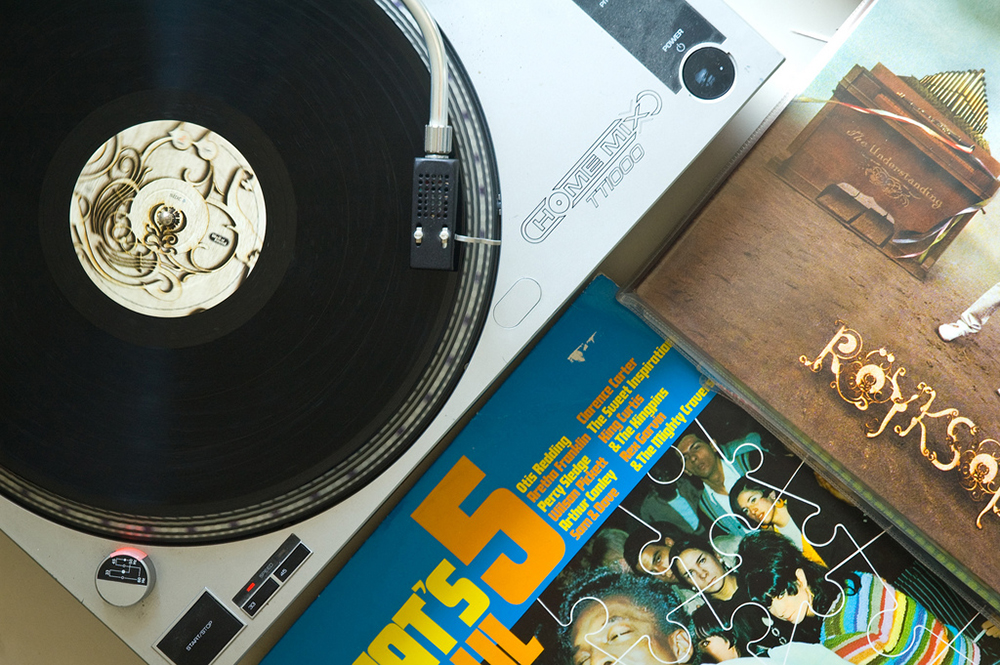
This is why art that can be embodied in a physical object generates more economic value than art than merely exists as an intangible. My wife is a modern dance choreographer, and she sees firsthand how hard it is to build a sustainable financial platform for creative works that exist as ephemeral experiences. The same is true of other creative fields — go check out the list of the most expensive photographs sold last year, and see how many were physical prints versus digital rights. You will find that every one on the list was a physical object. Even in the internet age, the passionate art lover wants to own the work of art. I suspect that some smart scholar could even measure and quantify the value added to art when it becomes objectified.
This connection between ownership and passion is vitally important to the economics of music. If you eliminate the former, you erode the latter. Yet there’s an even bigger danger to a music ecosystem that gives up on ownership.
(via)
How To Activate Your Brain’s Ability To Learn

In music, you have scales. In Jiu Jitsu, it’s drilling. Most of us just call it practice. Whatever you label it, many believe that greatness, heck even mere competency, requires training a skill well past proficiency. It’s continuing to practice your free throw even after you’ve nailed every shot. It’s playing through that song one more time even though you’ve made no mistakes. Scientists call this training past the point of improvement ‘overlearning.’ And a recent study in Nature Neuroscience suggests that it might improve performance by altering chemicals in the brain that “lock” in training.
(via)
Interview: Gwen Reed, Double Bassist
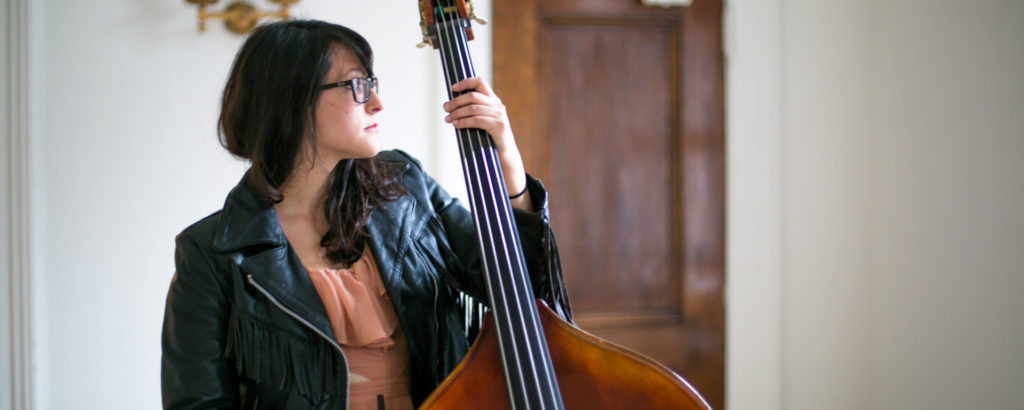
Who or what inspired you to take up the double bass and pursue a career in music?
My entire family are musicians, so I have always grown up around music. It was never forced on me, but when I was four I saw a school orchestra with a violin soloist and told my mom I wanted to play that too! I didn’t switch to double bass until many years later, when the music played by my own school orchestra wasn’t challenging enough for me on the violin, that I decided to pick up a new instrument. I saw the double basses at the back of the class and just fell in love. I also secretly wanted to join the jazz band instead, so it worked out perfectly.
Who or what were the most important influences on your musical life and career?
My teachers and the musical community I grew up in have always been a huge source of inspiration for me. While Tucson, Arizona might not be known for its musicians, it has a wonderful music scene that was always encouraging to me as a young musician. I would perform recitals and gigs for musicians I had known my entire life, who would always give me new opportunities to challenge me and introduce me to different aspects of the life of a working musician. The chances I was given to perform with the professional musicians from a young age kept me inspired to work hard and always be striving to be the best I can be.
(via)
Why Your Brain Likes Music?

Because music tickles the same brain system as sex and drugs.
“The fact that music listening triggers a well-defined neurochemical response suggests an evolutionary origin for music,” Adiel Mallik writes, with the caveat that you shouldn’t over-interpret the results. “[I]t is also possible that music has developed to exploit an already existing reward system that evolved for other purposes, such as recognizing and responding appropriately to various human and animal vocalizations,” researchers add. Like the saying goes, one species’ howl is another’s bass drop.
(via)