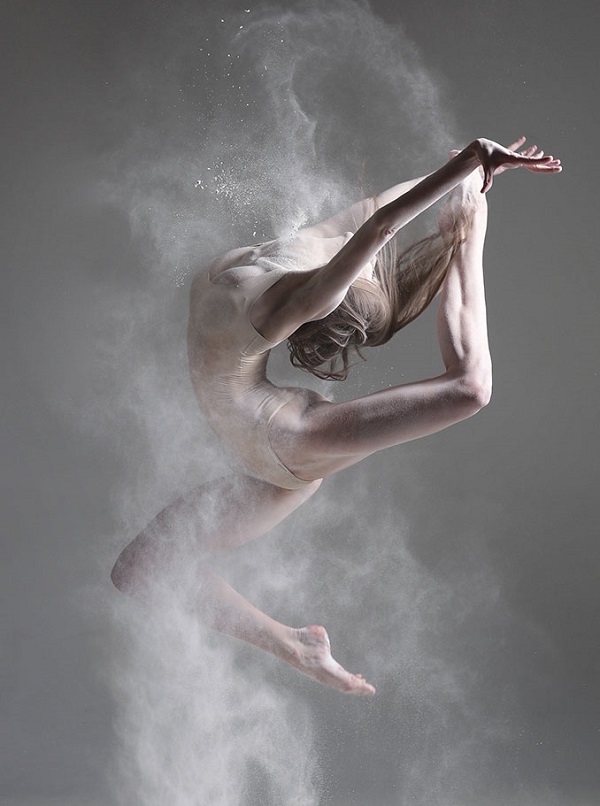


Photography by Alexander Yakovlev
(via)

How can we create a greater focus on plié in class?
Texture. We can play with different speed, rhythms and texture with plié in class. A slow, continuous, four count plié that has a melting quality will feel very different than a quick and light two count plié that has a bouncing quality. A dancer who understands the physicality of each will understand the reason why one might be better served than the other depending on the movement or circumstance.
Core Strength. To feel comfortable working in a deeper plié, dancers need to develop their core strength to easily maintain their posture. Once the dancer is connected to their core, they will have an easier and more enjoyable time working through transition steps with ease. They will also be more likely to take risks in how much they travel through the space and play with level changes.
Feel Their Feet On The Floor. The more a dancer can feel an even weight distribution between their feet, the more they will pay attention to the connection they feel from their core through their leg. The dancer who pliés while feeling their feet spread and open on the floor will have a different connection to their entire leg line through plié than the dancer who is gripping their toes. The dancer that can open their feet will also become more aware of how they are using them in other transitioning movements through plié.
Finding Opposition. A plié is a movement that expands in all directions, but many dancers think a plié simply goesdown. If the dancer has an understanding of the contrasting directions of a plié, they will find more length throughout their entire body to support their movement. By finding more length, they will be able to feel their lines differently and find more release and grounding.
(via)

a-b. From passé, you rotate slight forward to an attitude position and lift your knee as high as it can go while your hips stay square. You have to seperate your femoral head while rotating it to get to this position. then you just have to extend the heel forward till your leg is fully extended.
c-e. I teach my students to start shifting their weight into their standing leg, and aligning the opposing hip. I tell them to use the full power of the backs of their leg to rotate forward, bring the leg even more slightly infront of their body allow the look of maximum turnout. Then bring the knee into the front of your armpit using your psoas, and pressing down through the student’s core to get the maximum stability and correct tension saving the hips. Then guiding through the heel, like the later part of a ron de jambe en l’iar. So instead of thinking of extension as a line, you have to think of it as a circular motion… like turnout… like everything in ballet. Use your hamstring to supply the support needed. But the higher your leg gets, the easier it should feel. It is simply physics, as the weight is now all shifted into your standing leg, freeing up your working leg.
f. Then, for those students who are hypermobile, and have mastered the ability to rotate the extension upwards, I let my students shift their weight even more into their standing leg, and then like a teetertotter shift their hips even more to get those last six inches of extension. Unfortunately, this puts a lot of pressure on the lower back, so you have to be strong and pretty advanced to achieve it.
(via)


(via)

(via)
