• Skip to primary navigation
  • Skip to content

RESPIRO E MOVIMENTO®

DISCOVER YOUR REAL POTENTIAL

  • Book a session
  • Events
  • Testimonials
  • Blog
  • Gallery
  • Media
  • Contact

BRAIN

How Do Musician’s Brains Work While Playing?

December 7, 2016 By Respiro E Movimento · Follow us: Facebook · Twitter · Instagram · YouTube

Musicians' brain

When musicians play instruments, their brains are processing a huge amount and variety of information in parallel. Musical styles and strengths vary dramatically: Some musicians are better at sight reading music, while others are better at playing by ear. Does this mean that their brains are processing information differently?

This is a question posed by Eriko Aiba, an assistant professor in the Graduate School of Informatics and Engineering at the University of Electro-Communications in Tokyo, Japan. During the 172nd Meeting of the Acoustical Society of America and the 5th Joint Meeting with Acoustical Society of Japan, being held Nov. 28-Dec. 2, 2016, in Honolulu, Hawaii, Aiba will present research that delves into the various ways the brain engages in music signal processing.

Aiba began learning to play the piano when she was five years old, and quickly realized that musicians might be roughly divided into two groups: sight readers and those who play by ear.

“When considering a human brain as a computer, playing a musical instrument requires the brain to process a huge amount and variety of information in parallel,” explained Aiba. “For example, pianists need to read a score, plan the music, search for the keys to be played while planning the motions of their fingers and feet, and control their fingers and feet. They must also adjust the sound intensity and usage of the sustaining pedal according to the output sound.”

(via)
Filed Under: BRAIN, MUSIC, MUSICIANS, PLAYING

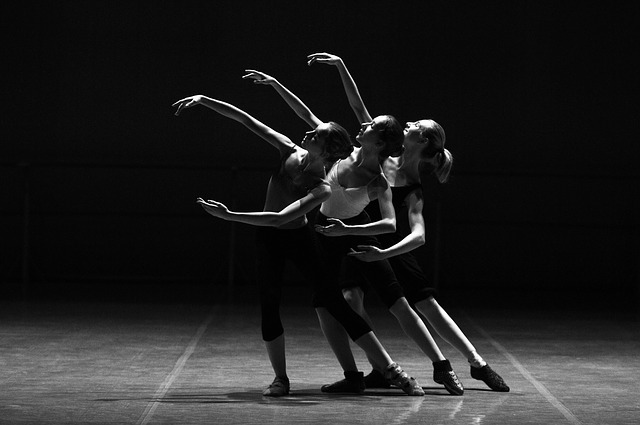
The Brain As Choreographer, Dancer And Spectator

July 11, 2016 By Respiro E Movimento · Follow us: Facebook · Twitter · Instagram · YouTube

brain ballet

The Choreographing Brain

Brain dominance begins early – 22 days after conception the spinal cord and brain appear. Week 4 the eyes, nose, ear and mouth form. Week 28 thalamic brain connections form to mediate sensory input. The brain is a three pound winked mutable (changeable) mound influenced by lived moving experience, bodily feelings, perceptions, culture, society, and the environment.

The brain is comprised of about 100 billion electrically active neurons (cells), each connected to tens of thousands of its neighbors at perhaps 100 trillion synapses (the spaces between neurons where information transfers can occur). These atoms of thought relay information through voltage spikes that convert into chemical signals to bridge the gap to other neurons.

Many parts of the brain make a dance

More than 400 studies related to interdisciplinary neuroscience reveal the hidden value of dance. For instance, we acquire knowledge and develop cognitively because dance bulks up the brain. Consequently, the brain that “dances” is changed by it. As neuroscientist Antonio Damasio points out, “learning and creating memory are simply the process of chiseling, modeling, shaping, doing, and redoing our individual brain wiring diagrams.”

Dance is a language of physical exercise that sparks new brain cells (neurogenesis) and their connections. We thought that humans had limited brain cells that decreased with age. But now, beginning my eighth decade, I’m still dancing—now flamenco, belly dance, jazz, and salsa!

The neuron connections are responsible for acquiring knowledge and thinking. Dancing stimulates the release of the brain-derived protein neurotropic factor that promotes the growth, maintenance, and plasticity of neurons necessary for learning and memory. Plus, dancing makes some neurons nimble so that they readily wire into the neural network. Neural plasticity is the brain’s remarkable abil­ity to change through­out life.

(via)

Filed Under: BALLET, BALLET DANCERS, BRAIN, CHOREOGRAPHER, CHOREOGRAPHY, DANCE, DANCERS

  • « Previous Page
  • Page 1
  • Page 2

Copyright © 2026 · Respiro e Movimento®· All rights reserved

  • Facebook
  • Twitter
  • Instagram
  • YouTube