OPERA
Richard Wagner – Tristan und Isolde: Act II
The Killing Flower
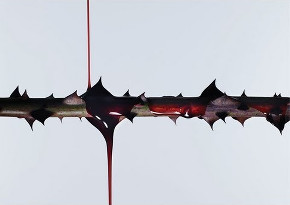
The Killing Flower is an opera by Salvatore Sciarrino. Both Italian and English versions exist and it was the latter that was given, in semistaged form, at Walter Hall as part of the Toronto New Music Festival last night. It’s a very distinctive work and not easy to form a full appreciation of on a single hearing. The plot is straightforward enough. There’s a duke and duchess. She falls in love with a guest. They are betrayed by a servant. He kills the guest and then her. But all this happens in a highly abstracted way (made even more abstract by not being fully staged). As the composer puts it:
My theatre is ‘post cinema’ theatre, beginning with the way the scenes are laid out – they proceed by dry blocks that ‘subtract’ in order to get the point across.
(via)
10 of the Greatest Bass-Baritone Roles
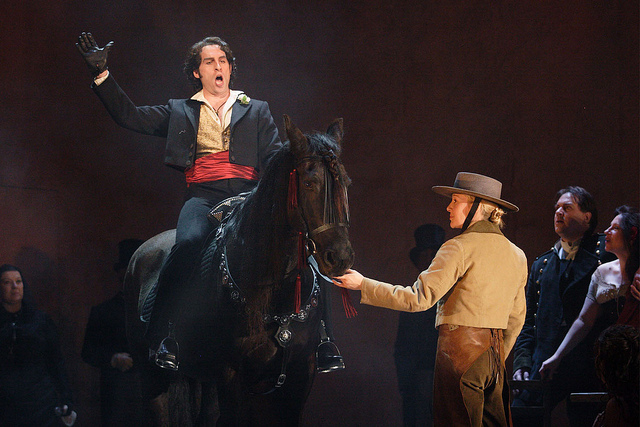
- Figaro – Mozart’s The Marriage of Figaro
- Dulcamara – Donizetti’s L’elisir d’amore
- Boris – Musorgsky’s Boris Godunov
- Escamillo – Bizet’s Carmen
- Hans Sachs – Wagner’s Die Meistersinger von Nürnberg
- Sir John Falstaff – Verdi’s Falstaff
- Scarpia – Puccini’s Tosca
- Jokanaan (John the Baptist) – Richard Strauss’s Salome
- Nick Shadow – Stravinsky’s The Rake’s Progress
- The Protector – Benjamin’s Written on Skin
(via)
Montserrat Caballe as Cleopatra “Se pieta” G. Cesare
Jennifer Davis On The Language Of Opera

Much to her mother’s delight, Davis did decide to veer towards the stage, making the change after graduating from University College Dublin with a degree in English Literature, when she applied for a Masters in Singing at DIT’s Conservatory of Music and Drama. At that point, opera was as foreign to her as the many languages she’d be required to learn – but mastering Russian, German, French and Italian opened up a whole new way for the soprano to explore emotion.
‘Through another language you find a different kind of expression, it’s something quite remarkable. I’ve found Russian to be the most beautifully expressive language, containing such specific words for relaying emotions, and I wouldn’t have ever known that if I hadn’t learnt to sing it,’ she says.
Davis’s love of literature has put her in good stead; of all the heroines in the repertory, she sees herself to be most like the bookworm Tatiana in Tchaikovsky’s Eugine Onegin – an opera adapted from the novel by Alexander Pushkin.
‘I read a lot and I think that informs me as a performer. I think you’re more open to directors and speaking about different characters if you have a big frame of reference. I believe we are singing actresses,’ she says.
(via)