• Skip to primary navigation
  • Skip to content

RESPIRO E MOVIMENTO®

DISCOVER YOUR REAL POTENTIAL

  • Book a session
  • Events
  • Testimonials
  • Blog
  • Gallery
  • Media
  • Contact

Respiro E Movimento

Jennifer Lin: Improvising On Piano, Aged 14

June 16, 2016 By Respiro E Movimento · Follow us: Facebook · Twitter · Instagram · YouTube

Pianist and composer Jennifer Lin gives a magical performance, talks about the process of creativity and improvises a moving solo piece based on a random sequence of notes.

Filed Under: CREATIVITY, PIANIST, PIANO, TED TALK

Cirque Du Soleil: 20 Years Under The Sun

June 16, 2016 By Respiro E Movimento · Follow us: Facebook · Twitter · Instagram · YouTube

An anniversary tribute to Cirque du Soleil.

Filed Under: ACROBAT, BOOKS, CIRQUE DU SOLEIL

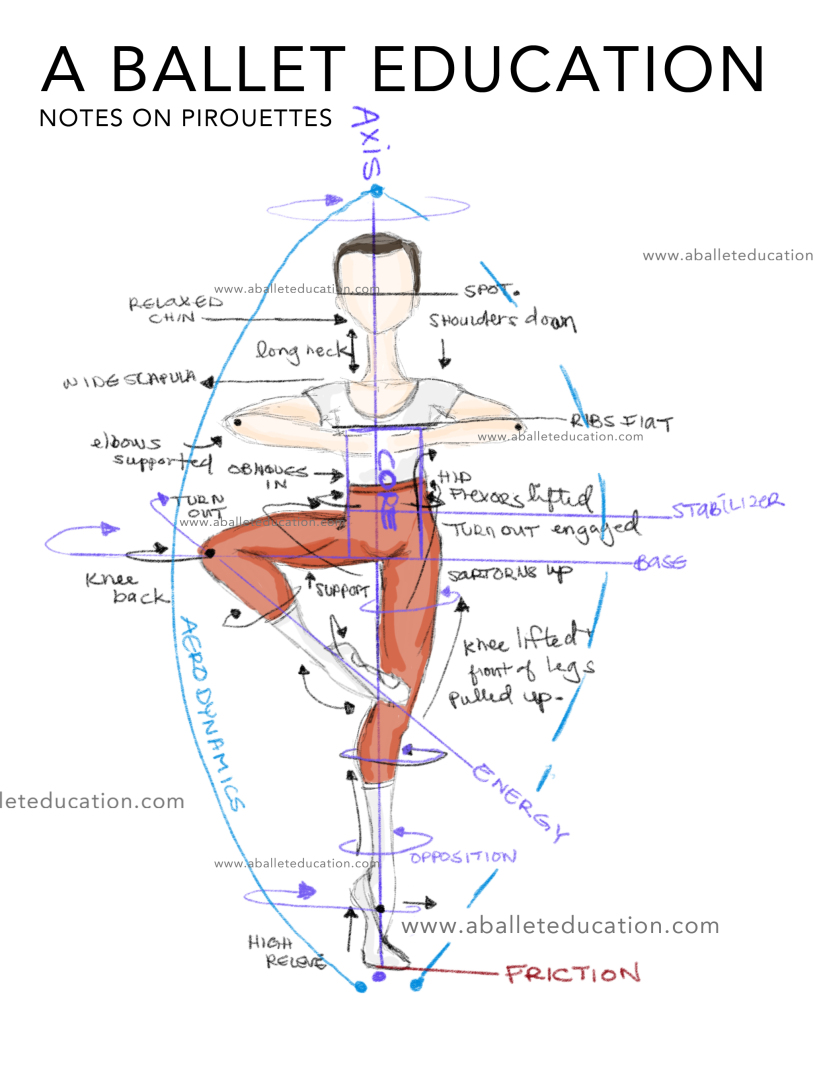
Notes On Pirouettes

June 16, 2016 By Respiro E Movimento · Follow us: Facebook · Twitter · Instagram · YouTube

notes-on-pirouettes-a-ballet-education

There are a variety of ways to approaching pirouettes, and most of them start with how you prepare… Yes, you can prep in fifth, which is actually how I teach pirouettes to young kids, but the standard is prepping in fourth.

Open Fourth (double plié): The preparation actually happens rather quickly, as the focus is usually on the transition to get into the fourth position to build momentum.

(via)

Filed Under: BALLET, BALLET DANCERS, ILLUSTRATIONS, MOVEMENT

Nessun Dorma ~ Luciano Pavarotti

June 15, 2016 By Respiro E Movimento · Follow us: Facebook · Twitter · Instagram · YouTube

Filed Under: LUCIANO PAVAROTTI, OPERA, OPERA SINGERS

Would You Pay $849 for Tickets to ‘Hamilton’?

June 15, 2016 By Respiro E Movimento · Follow us: Facebook · Twitter · Instagram · YouTube

10ticket-react-web-master768

On Wednesday, the producers of the megahit musical “Hamilton” announced that they were raising the price for premium seats to $849.

Reactions:

“As a New Yorker who used to go to the theater regularly, the economics of this ‘premium ticket’ pricing causes me to stay home. I can pay it, BUT I WON’T,” said Benjamin of New York

“Now we know why many folks in the east, particularly in new york, are against raising the minimum wage to $15 per hour (effective in a few years),” said jb of St. Louis. “These many folks need to save money so they can pay $849 per seat to a show.”

“Greed. Greed. Greed. Period,” wrote Peter of New York.
(via)

Filed Under: PRICE, THEATRE

Why Being Too Quick To Offer Feedback Can Degrade Learning

June 15, 2016 By Respiro E Movimento · Follow us: Facebook · Twitter · Instagram · YouTube

Feedback for optimal learning

76 college students were recruited for a study designed to explore how the timing of feedback might affect the learning process.

They were split into 3 groups, and asked to learn a relatively straightforward motor task1.

The goal of the motor task was to be able to execute the specific movement, and have it take exactly 1000 milliseconds. Sort of like telling someone that they have to conduct a bar of 3/8, and their movements have to take precisely 1 second from one downbeat to the next.

Everyone was given 90 practice trials to learn this new skill, and were given their time score after each attempt, so they could get a sense of how well they were doing.

But not everyone received their time score (i.e. feedback) about their performance at the same time.

One group – the instantaneous feedback group – was allowed to see their time score instantly, as soon as they completed the motor task.

Another group – the delayed feedback group – had to wait 8 seconds before being shown their time score.

The third group – the delay/estimation group – had to wait 8 seconds before getting their time score too. But in addition, they had to estimate what their time score was, and report their best guess 4 seconds after finishing each practice attempt.

Retention tests

During the practice phase, there were no significant differences in performance between the 3 groups. They all performed better as practice went on of course, but improved their performance at about the same rate.

However, we know from other research, that the rate at which our performance improves during practice is NOT a very good indication of how effectively we’re learning. As in, just because the level of our playing improves rapidly (or not) during today’s practice session, doesn’t mean that we’re going to be able to play at this level tomorrow or next week.

So the researchers did some “retention” tests, to see how well the participants would be able to perform this new skill after taking a break. They also took the timer away, so none of the participants received any feedback about their time score, or how they were doing.

10 minutes later…

The first set of retention trials was done 10 minutes after their initial training. Which is not a huge gap, but you know, sometimes we can get into a groove and feel good about a passage, but when we come back to it a few minutes later, it’s gone back to crap again, as if we hadn’t worked on it at all.

In any case, at the 10-minute retention test, there were no significant differences in performance between the three groups.

2 days later…

But then they had everyone come back to the lab 2 days later. And this is where the differences in learning between the groups began to reveal itself.

Those who received instantaneous feedback during practice performed the worst, with time scores that averaged 156.9 milliseconds off of the target time. Their performance also seemed to be a bit more erratic.

Those who received feedback after an 8 second delay, did better. Their average scores were 131.3milliseconds off of the target time (a 17.7% difference).

The participants in the delay/estimate group, who had an 8-second delay plus were asked to estimate their own performance after each trial, did the best. Their average time score was 90.8milliseconds off of the target time (a 53.4% difference).

Takeaways

I once had a tennis coach who made me call out “good” or “bad” after hitting each ball. Not in terms of whether the ball went in the court or not, but in terms of whether I made good contact. The idea being, for me to become increasingly less dependent on his feedback, and more in tune with my own sense of whether I was hitting the ball cleanly or not.

To me, the study suggests that we can sometimes give others too much feedback about their performance. Specifically, that providing immediate feedback all the time can stunt the development of one’s error-detection.

(via)

Filed Under: FEEDBACK, LEARNING

Stillness

June 14, 2016 By Respiro E Movimento · Follow us: Facebook · Twitter · Instagram · YouTube

Stillness

Filed Under: ACTING, ACTORS, QUOTES, STILLNESS

  • « Previous Page
  • Page 1
  • …
  • Page 186
  • Page 187
  • Page 188
  • Page 189
  • Page 190
  • …
  • Page 210
  • Next Page »

Copyright © 2026 · Respiro e Movimento®· All rights reserved

  • Facebook
  • Twitter
  • Instagram
  • YouTube