• Skip to primary navigation
  • Skip to content

RESPIRO E MOVIMENTO®

DISCOVER YOUR REAL POTENTIAL

  • Book a session
  • Events
  • Testimonials
  • Blog
  • Gallery
  • Media
  • Contact

Respiro E Movimento

Hiplet: Hip Hop and Ballet

September 5, 2016 By Respiro E Movimento · Follow us: Facebook · Twitter · Instagram · YouTube

Hip Hop and Ballet


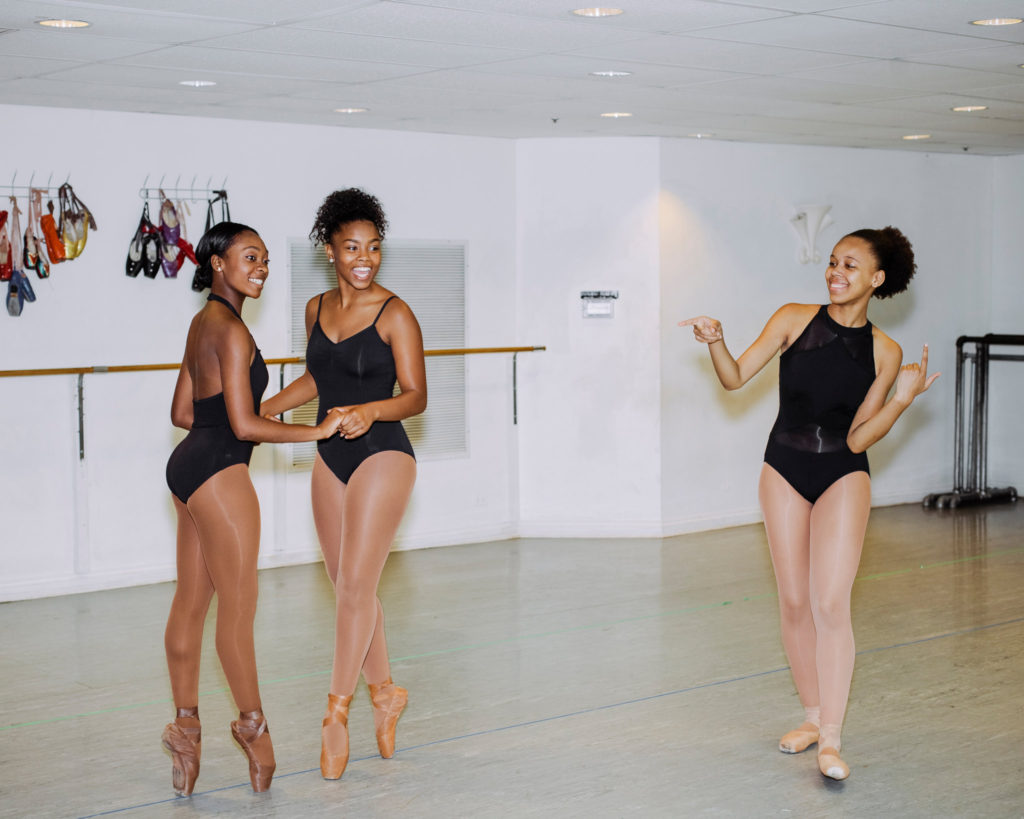
What happens when you mix hip-hop and ballet?

You get hiplet, one of the more curious hybrids to make its way out of the dance world into popular culture.

Conceived by Homer Hans Bryant, the artistic director and founder of the Chicago Multi-Cultural Dance Center, hiplet (pronounce it “hip-lay” to rhyme with ballet) showcases dancers on pointe as they twist and dip to the floor in a loose translation of hip-hop movement. These young swans, largely African-American and ages 12 to 18, are purposeful, arch and knowing. (For now, the hiplet dancers are all female, but if Mr. Bryant achieves his dream of starting a professional hiplet company, he said he would plan on adding men.)

In ballet, pointe, a term derived from “sur la pointe” — or on the tip of the toe — is how dancers convey the illusion of flight or weightlessness. Pointe work is an essential component of ballet; it is also important in hiplet, but here pointe work has a different, more grounded effect. Dancers master movements like the hiplet strut — walking on pointe with hips that sway from side to side — or bend their knees until their buttocks nearly brush the floor while hopping on pointe and swishing their arms back and forth. Nia Lyons, an 18-year-old hiplet dancer, calls this the duck walk.

If ballet aims for the ethereal, hiplet, generally danced to pop music, is more concerned with earthiness. It has soulfulness, too; while the lower half of the body can be sharp and percussive, the upper half — how the arms connect with the back — conveys a natural flow.

(via)

Filed Under: BALLET, BALLET DANCERS, HIP HOP, MOVEMENT

Actors on Actors: Will Smith & Benicio Del Toro

September 2, 2016 By Respiro E Movimento · Follow us: Facebook · Twitter · Instagram · YouTube

Filed Under: ACTING, ACTORS, BENICIO DEL TORO, WILL SMITH

The Best and The Worst Country For Traveling Musicians

September 2, 2016 By Respiro E Movimento · Follow us: Facebook · Twitter · Instagram · YouTube

THE BEST: Switzerland

Exploring Basel, Switzerland

Hats off. One of the wealthiest countries in the world, no wonder they treat every artist like the Rolling Stones. Best hospitality on earth, hands down. The locals all look like super models. I’ve never had a soul-crushing gig in this country. It’s almost always open bar for performers and great pay. The clubs curate nights with passion and the sound guy is never a chump. The promoter cooks up a premium dinner, and we’ll sit around with the staff and eat family style. People here are reserved, but incredibly nice and stoked on live music. Nice hotels free of bed bugs and pubes are almost always provided.

  • Artist Pay: 5/5
  • Hospitality: 5/5
  • Crowds: 5/5
  • Transit: 5/5

THE WORST: Vietnam

Hard Rock Cafe Vietnam, “Tiny Victories” LP release show

Don’t get me wrong, I love Vietnam. I loved it so much that I lived there for two years. But Asia in general is a bitch for indie music. It simply hasn’t developed yet. The war truly killed the arts scene in Vietnam, as communism relocated the artists out of the cities and crushed creativity. I can’t talk smack about Vietnam, because it simply hasn’t had time to develop musically. I have played a few epic landmark gigs in Saigon, but all in all it is a cover band’s paradise with minimal original music landscape. It’s been 3+ years since living there, so assume it’s improving.

  • Artist Pay: 3/5
  • Hospitality: 2.5/5
  • Crowds: 2.5/5
  • Transit: 1/5

(via)

Filed Under: MUSIC, MUSICIANS, TRAVELING

Joyce DiDonato ~ Abbracciami

September 2, 2016 By Respiro E Movimento · Follow us: Facebook · Twitter · Instagram · YouTube

Filed Under: JOYCE DIDONATO, OPERA, OPERA SINGERS, VIDEO

Actors and Casting: It’s a Numbers Game

September 1, 2016 By Respiro E Movimento · Follow us: Facebook · Twitter · Instagram · YouTube

Actor-Casting-Director-Stats

Earlier this month casting director David Rapaport — who casts The Flash, Arrow, Supergirl, and other CW shows — gave his Twitter followers a glimpse at just how difficult his job can be — and he also gave actors a look at what odds they’re facing when they go in for an audition.

For three roles, Rapaport and his team viewed 2684, 2055, and 1354 potential actors.

Most didn’t make the cut. For the role with 2684 candidates, only 58 were selected for callbacks — that’s just a hair over 2%. While the odds were a little better for the role that had 1354 candidates (131 were selected), that still amounts to just a 10% selection rate. Of course, ultimately three of those approximately 6093 auditioning actors will end up with roles.

What are you doing to make sure you set yourself apart from the rest of the pack?

(via)

Filed Under: ACTING, ACTORS, CASTING

John Krasinski on his “Lottery-Ticket Life”

September 1, 2016 By Respiro E Movimento · Follow us: Facebook · Twitter · Instagram · YouTube

John Krasinsky on his lottery ticket life

Filed Under: ACTING, ACTORS, QUOTES

Feet And Pointe Shoes

September 1, 2016 By Respiro E Movimento · Follow us: Facebook · Twitter · Instagram · YouTube

Feet and Pointe Shoes

The foot is a complex structure made of 26 bones & ligaments, muscles, tendons and nerves.


This photograph shows a pair of pointe shoes worn for rehearsals.  You can see some of the customization carried out by the dancer – especially the vamp which has been cut into a v (often to make the shoe appear longer and to accommodate bunions) and then sewn to hold the shoe
together.  Toe pads of all shapes, sizes and materials are used inside the shoe to cushion the toes and elastics, which are sewn in to give security around the heel area, are used to stop the shoe from slipping off the heel (often a percieved fear rather than an actual one).

There are three types of foot – Greek, Egyptian and Peasant.  A Greek (or Morton’s) foot has a longer second toe and narrow width foot, an Egyptian foot has a long first toe and then the others taper with a narrow width foot, and finally the Peasant (or Giselle) foot has three toes the same length and is a medium width foot.

It’s worth mentioning here that it’s the dancers foot that makes the ‘pointe’, not the shoe.  Essentially, the pointe shoe is a covering for the delicate bones of the feet, to allow the dancer to extend their line and to jump and turn as the choreography demands.

Photograph by Bex Singleton.

(via)

Filed Under: BALLET, BALLET DANCERS, POINTE SHOES

  • « Previous Page
  • Page 1
  • …
  • Page 162
  • Page 163
  • Page 164
  • Page 165
  • Page 166
  • …
  • Page 210
  • Next Page »

Copyright © 2026 · Respiro e Movimento®· All rights reserved

  • Facebook
  • Twitter
  • Instagram
  • YouTube