
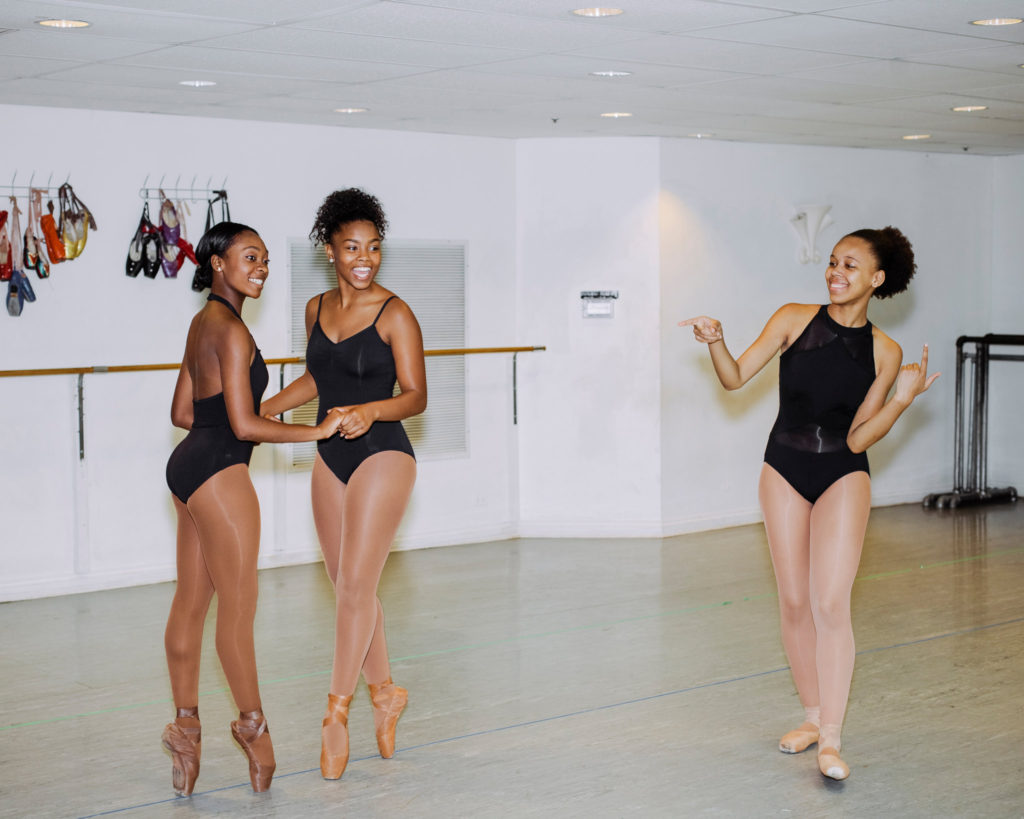
Conceived by Homer Hans Bryant, the artistic director and founder of the Chicago Multi-Cultural Dance Center, hiplet (pronounce it “hip-lay” to rhyme with ballet) showcases dancers on pointe as they twist and dip to the floor in a loose translation of hip-hop movement. These young swans, largely African-American and ages 12 to 18, are purposeful, arch and knowing. (For now, the hiplet dancers are all female, but if Mr. Bryant achieves his dream of starting a professional hiplet company, he said he would plan on adding men.)
In ballet, pointe, a term derived from “sur la pointe” — or on the tip of the toe — is how dancers convey the illusion of flight or weightlessness. Pointe work is an essential component of ballet; it is also important in hiplet, but here pointe work has a different, more grounded effect. Dancers master movements like the hiplet strut — walking on pointe with hips that sway from side to side — or bend their knees until their buttocks nearly brush the floor while hopping on pointe and swishing their arms back and forth. Nia Lyons, an 18-year-old hiplet dancer, calls this the duck walk.
If ballet aims for the ethereal, hiplet, generally danced to pop music, is more concerned with earthiness. It has soulfulness, too; while the lower half of the body can be sharp and percussive, the upper half — how the arms connect with the back — conveys a natural flow.