
CREATIVITY
Do Creative People Really See the World Differently?

Creativity is associated with ways of seeing, to borrow a phrase from John Berger, but could our actual visual perception affect creative output? That’s what three Australian researchers tried to find out.
The more open you are, the more you see, which is why researchers have long used the following video to highlight the dangers of inattentional blindness—being so focused on one task you engage in a sort of tunnel vision (like stopping your car in the middle of the street to text).
(via)
Walking Encourages Creativity
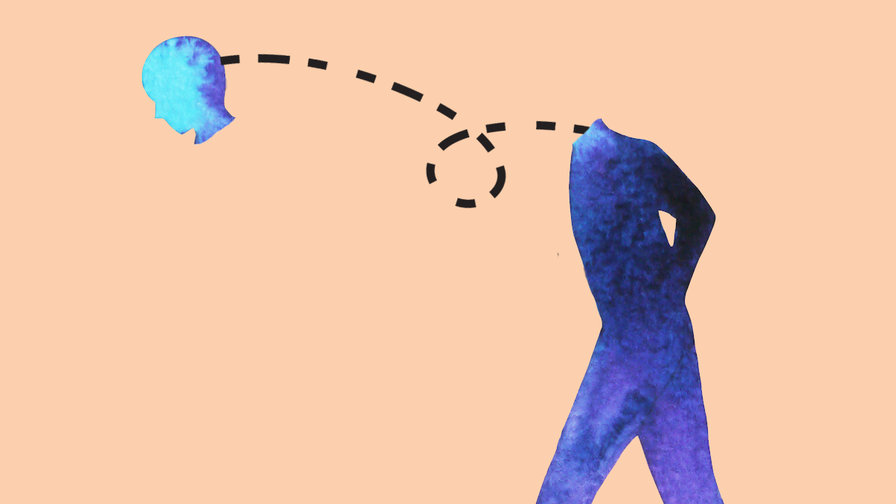
As movement is a natural mood enhancer, a link between positive mood and divergent thinking may play a role in these scores. The authors note that negative moods have also been shown to increase creativity as well, so it appears that any movement away from an emotional baseline is useful for creative thinking.
The exact causes as to why walking inspire creativity are still unknown, though this study puts forward a number of potential reasons. Most important, the authors conclude, is that we move. Data might be mixed but anecdotes and test scores are not.
(via)
Jim Henson Creates an Experimental Animation Explaining How We Get Ideas (1966)
(via)
How To Raise Creative Children Who Can Change The World
What It Means If Your Mind Wanders When You’re Practicing
I used to think that mind-wandering was something that just happened when my brain was being lazy. That I simply had to will my way to greater focus. But this study makes me wonder if will-power is not the answer. And that it would be more productive to use the occurrence of mind-wandering as a diagnostic tool.
In other words, if our minds are more likely to wander when we are practicing something too easy or too difficult, perhaps the best thing to do when we catch ourselves zoning out is to pause for a moment and ask why that just happened.
Is what we’re working on too easy? If that’s the case, then maybe we haven’t set a challenging enough goal for what we’re working on. Instead of simply aiming for 5 “perfect” repetitions in a row, perhaps it would be more engaging (and increase the difficulty factor a smidge) to make each repetition slightly different than the one prior. To make the passage slightly more nuanced. More exciting. Greater dynamic contrast. Faster. In other words, to engage in repetition without repetition (ala this music example, or this sport example).
Alternately, is what we’re working on too difficult? Maybe we’re nearing the end of a practice session and getting too tired to think clearly and creatively. In moments like this, a water break, or a little stretch and walk outside could help.
Or perhaps the problem we’re trying to solve is a bit beyond what we have the knowledge and skill to solve at the moment. Well, that’s ok too. If we just keep plugging along at the stuff that is in our RPL, our skills will continue to grow, and before we now it, we’ll be moving on to solve those no-longer-slightly-too-challenging problems too.
(via)